
Lieferung heute & morgen

Qualitätsgarantie

Willkommens-Angebote freischalten: KOSTENLOSE Lieferung | Bis zu 80 % RABATT | Kostenlose 30-Tage-JoyPlus-Testphase
App herunterladen
Garden solar lights don’t need a mains connection and can usually be installed without tools. Even so, not every solar garden light is right for every outdoor space. It’s not just the design or colour-changing features that matter: consider the location, IP rating, battery capacity and the kind of light you want.
Claims such as “up to 8–12 hours” generally assume suitable charging conditions. Shade from walls or trees, or a poorly positioned panel, reduces the available energy. Charging can also take longer in autumn and winter.
Before you buy, check:
The IP rating should be clearly stated. IP44 protects against splashing water and solid objects above a certain size, but it isn’t designed for immersion in water. IP67 offers greater protection against dust and temporary immersion under the relevant test conditions.
For example, an IP44 solar light is suitable for lawns, flower beds and paths exposed to normal weather. For areas that are constantly exposed to the elements or prone to flooding, a light with a higher IP rating may be a better choice. Even with IP67, make sure cable connections, seals and the solar panel are positioned correctly.
RGB solar lights add colourful accents, highlight flower beds or create a decorative ambience. For finding your way along a path, warm-white solar lights or neutral- to cool-white lights are often easier to see by. A colour-changing feature doesn’t automatically provide even path lighting.
Solar lights with ground spikes are practical for garden paths and flower beds because you can push them into soft ground without permanent fixtures. On hard or stony ground, however, the spike may not be stable. Check the light’s dimensions and the ground conditions before you buy.
Material descriptions such as plastic or stainless-steel effect tell you about the finish, but don’t indicate durability on their own. The stated IP rating, permitted temperature range and cleaning instructions are also important.
Look for:
Solar-powered outdoor lights work most reliably when the panel gets enough light each day. Regularly cleaning it with a soft cloth helps prevent dust and pollen from reducing its charging performance.
Warm white at around 2700 K tends to create a subtle look in the garden and works well on patios, by entrances and in seating areas. 6500 K looks noticeably cooler and can be useful for finding your way or making markers easy to see. With a smart RGB-CCT light, you can adjust the colour temperature in an app, depending on the model.
For solar path lights, it’s also worth considering the beam angle. Small decorative lights can mark out a route, but they may not provide enough light for safety or practical tasks.
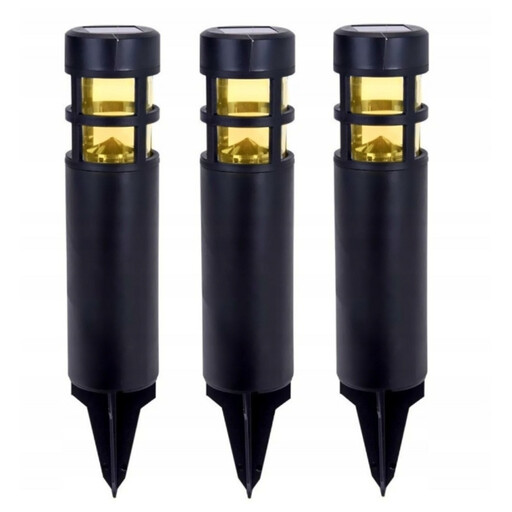
Why this product suits this need: This set of three is a good choice if you want to spread several small pools of light along a path, flower bed or lawn edge without installing fixed wiring.
The product description states that the lights switch on automatically at dusk and are easy to position in direct sunlight. Even so, check the specific level of water protection before use.
Three lights for flexible placement; solar-powered with automatic switch-on, according to the product details.
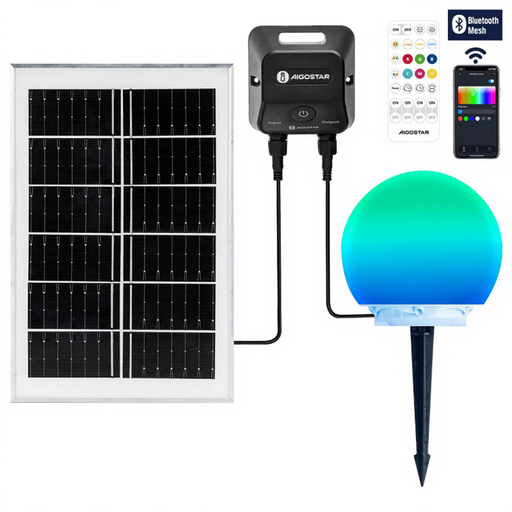
Why this product suits this need: This recessed light is aimed at anyone looking for a controllable option for a patio, paths or a larger garden, with the ability to adjust the light colour using Bluetooth Mesh.
The IP67 rating is clearly stated. The separate solar panel can also be angled towards the sun independently of where the light is installed.
RGB and white light from 2700 to 6500 K; according to the product details, a 4000-mAh lithium battery, 5-W solar panel and up to 24 hours of illumination.
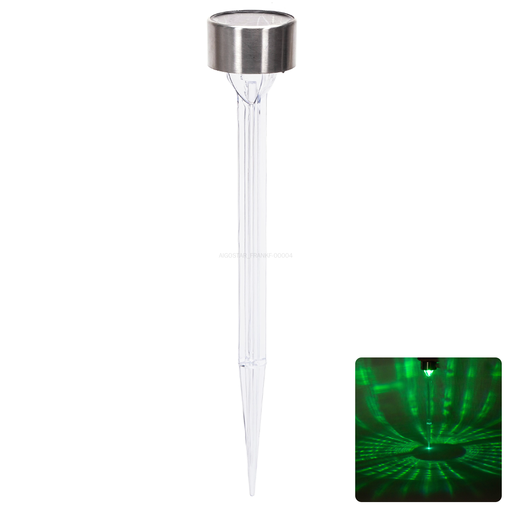
Why this product suits this need: This compact solar ground light is ideal if you want to add a decorative marker to individual garden paths, lawn edges or flower beds, and prefer quick installation with a ground spike.
The product details state the charging time, run time and IP44 rating. This makes it easier to check whether the light is suitable for your location.
RGB light, ground-spike installation, 200-mAh Ni-MH battery and, according to the product details, 8–12 hours of illumination after 4–6 hours of charging.
We’ve put together a complete, regularly updated list of products that meet these strict selection criteria and fully comply with the safety regulations in force in the EU.
Don’t place solar lights directly under trees or against walls that are permanently in the shade. For lights with ground spikes, the soil should be soft enough to push the spike in, but firm enough to keep it stable. Keep the solar panel free from leaves and heavy dirt.
Before using the light for the first time, it’s a good idea to charge it fully as instructed by the manufacturer. Don’t leave IP44 lights standing in puddles or allow them to be submerged. At the end of their useful life, batteries and electronic components should be taken to the designated collection points, not put in household waste.
Lifespan depends on the battery, LED, weather, charging cycles and care. Some product details state that the LED can last up to 15,000 hours. That doesn’t necessarily mean the whole light or its battery will last just as long.
Common causes include too little direct sunlight, a dirty panel, low temperatures or an ageing battery. First, check the location and clean the panel. If the light still doesn’t last long despite getting enough sunlight, the battery may no longer be able to store its full capacity.
They don’t need a mains connection while in use. The panel charges the built-in battery during the day. Running costs are therefore generally lower than for mains-powered lights, although you should still factor in the purchase price, battery wear and any replacement parts.