
Lieferung heute & morgen

Qualitätsgarantie

Willkommens-Angebote freischalten: KOSTENLOSE Lieferung | Bis zu 80 % RABATT | Kostenlose 30-Tage-JoyPlus-Testphase
App herunterladen
Garden tools need to match the task, your height and how often you use them. A bargain purchase can turn out to be the wrong choice if the secateurs are only suitable for small branches, the leaf rake is unstable or a weed puller does not reach deep enough. That is why our selection is based on verifiable specifications such as cutting diameter, working width, material, handle length and drive type.
Descriptions such as “extra strong” or “suitable for all branches” reveal very little. The key specification is the stated maximum cutting diameter. Bypass secateurs with a capacity of 15 or 19 millimetres are designed for fresh shoots. For dry wood or thicker branches, you need loppers with a lever or ratchet mechanism.
Hedge trimmers are not judged by motor power alone, either. Cutting length, tooth spacing, weight, noise and vibration all affect whether the tool is suitable for a small hedge or longer periods of use.
A soft grip alone does not automatically make a garden tool comfortable. During longer jobs, overall weight, lever length, handle width and posture are more important. A telescopic shaft can extend your reach, but excessive weight can make the tool harder to control. For older people or anyone with limited mobility, a weed puller with a long shaft may be more suitable than a short-handled tool.
Steel blades, metal tines and aluminium shafts differ in durability and maintenance requirements. After gardening, remove soil, sap and moisture. Blades benefit from occasional oiling, while metal parts should be stored in a dry place. For battery-powered tools, the charger, battery care and safe storage should also be considered before buying.
Bypass secateurs use two blades that glide past each other and are typically suitable for fresh branches. Anvil loppers drive the blade against a fixed surface, making them suitable for dry wood. A ratchet mechanism distributes the required force over several squeezes.
Check the following before buying:
Electric secateurs reduce the effort required by hand, but they call for particular care: keep your hands away from the cutting area, activate the safety switch when the tool is not in use and remove the battery before cleaning.
For lawn care and clearing leaves, the working width is crucial. An adjustable leaf rake can save time over large areas, while a narrow hand rake is better for working between plants. For garden tools with a shaft, your height, reach and the tool’s weight should all be a good match.
The adjustable garden rake from MADLAND extends to 160 centimetres and has a maximum working width of 67 centimetres. Its 15 metal tines are designed for leaves, dead grass and light garden debris. Clean the tines after use and store the rake in a dry place.
A cultivator or hand fork loosens the top layer of soil, works through potting soil and can remove small weeds. For compacted soil, sturdy steel tines and sufficient leverage are important. A short-handled tool can offer greater precision in flower beds and window boxes, while a longer shaft reduces the need to bend repeatedly during longer jobs.
A weed puller with a foot pedal penetrates the soil more easily, but should only be used on suitable ground. Very stony or heavily compacted soil may require considerably more effort.
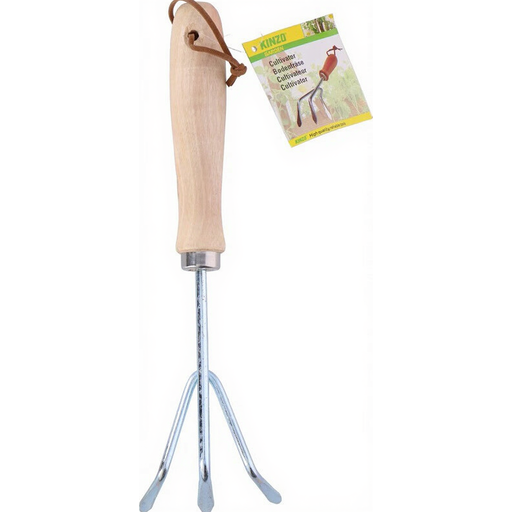
Why this product suits this profile: This compact hand tool is suitable for planting beds, window boxes and smaller soil-preparation jobs. Weighing 109 grams, it is lightweight and easy to store.
The stated dimensions and weight clearly show that it is designed for precise handwork rather than large areas.
Steel head, wooden handle and compact dimensions for loosening soil and removing weeds in small areas.
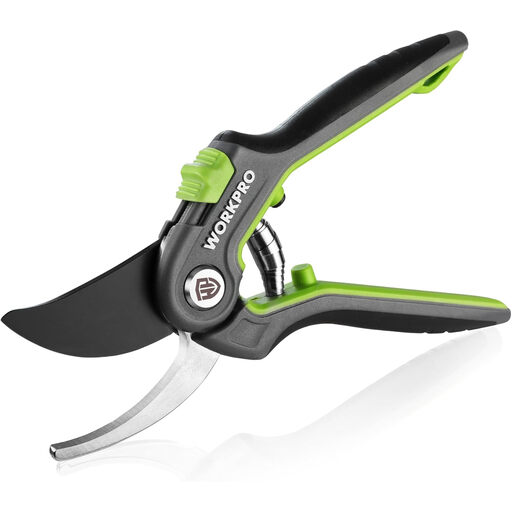
Why this product suits this profile: For regular pruning of fresh branches, these secateurs offer a defined capacity of up to 19 millimetres and an SK5 steel blade.
The cutting limit prevents the tool from being used for branches that are too thick. A safety lock supports secure storage.
Bypass cutting, automatic spring opening, non-slip handles and coated SK5 blade.
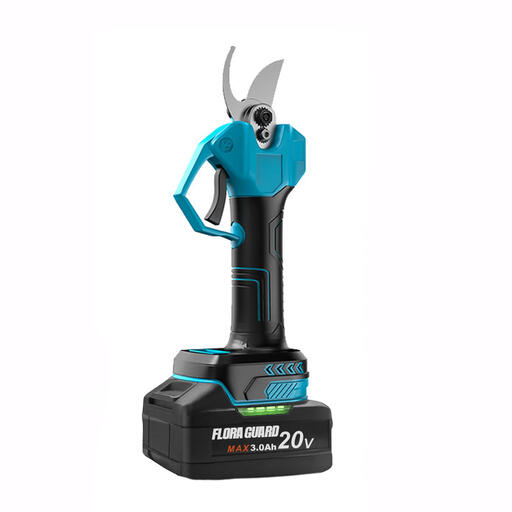
Why this product suits this profile: These electric secateurs are designed for thicker branches up to 35 millimetres and come with two 3000-mAh batteries and a 1-A charger.
The specific 35-millimetre limit clearly defines the tool’s intended use. The safety switch must be activated before storage and cleaning.
Cordless operation, steel blade, ergonomic handle and two batteries for longer periods of use.
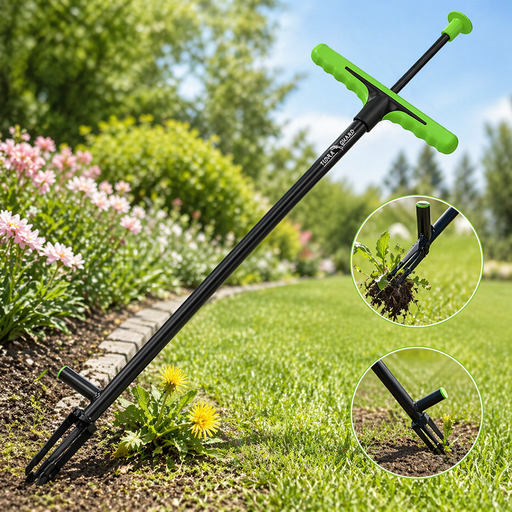
Why this product suits this profile: The 100-centimetre shaft, four steel claws and foot pedal make it possible to remove certain weeds without having to work bent over for long periods.
The design is clearly intended for pulling out weeds and is not described as a universal tool for every type of soil.
Long shaft, foot plate and four hardened steel claws; protective gloves and sturdy footwear are still required.
We have put together a complete, regularly updated list of products that fully meet these strict selection criteria and the safety regulations applicable in the EU.
The service life of garden tools depends heavily on how they are used and stored. Follow this routine:
For a typical home garden, the basics are secateurs for fresh shoots, a leaf rake, a spade or shovel, a cultivator or hand fork and a weed puller. Add a hedge trimmer if you have hedges. Your choice should be based on the plants and areas you actually have.
There is no single fixed service life. Material, workload, maintenance and storage conditions all play an important role. Steel blades should be cleaned regularly and resharpened when necessary. Bent tines, loose connections or damaged handles are all reasons to stop using the tool.
Running costs mainly consist of the electricity used for charging, possible blade servicing and eventual battery replacement. When choosing a product, you should therefore check battery capacity, the number of batteries supplied, the charger and spare-parts availability. For a few cuts, manual secateurs may be more economical; if you prune frequently, a battery-powered model may be more practical.