
Lieferung heute & morgen

Qualitätsgarantie

Willkommens-Angebote freischalten: KOSTENLOSE Lieferung | Bis zu 80 % RABATT | Kostenlose 30-Tage-JoyPlus-Testphase
App herunterladen
Choosing the right garden toy can make all the difference to the joy of outdoor play. However, the market is flooded with products whose quality and durability often only become apparent after purchase. Many parents and grandparents invest in toys that become brittle or reveal safety defects after just one season. This guide shows you what to look for to avoid such disappointments and make an informed decision.
Before we delve into the selection criteria, it's important to understand the typical problems that lead to dissatisfaction.
To ensure your chosen outdoor toy is durable, safe, and worth the price, you should check three core parameters.
The material is the foundation for the longevity and safety of garden toys. Look for specifications like UV-resistant plastic (often polypropylene (PP) or high-quality ABS). These materials retain their colour and flexibility even with prolonged sun exposure. For wooden toys, a weatherproof treatment or varnish is necessary to prevent rot and splintering. The craftsmanship should be clean, with no sharp edges or burrs.
Toys sold in the EU must bear the CE mark. This confirms that the product meets basic safety and health requirements. Even more telling is compliance with the EN 71 standard. This European standard for toy safety is divided into several parts and tests, among other things:
The manufacturer's age recommendation is more than just a rough guideline. It takes into account the child's motor skills and cognitive development. For example, a child's wheelbarrow for a three-year-old should be lightweight and easy to manoeuvre, while a model for older children can be more robust. A good kids' lawn mower mechanically mimics the movement and sounds of a real device, stimulating the imagination without relying on fragile electronics.
Here are some product recommendations tailored to different needs and play preferences, which take the above criteria into account.
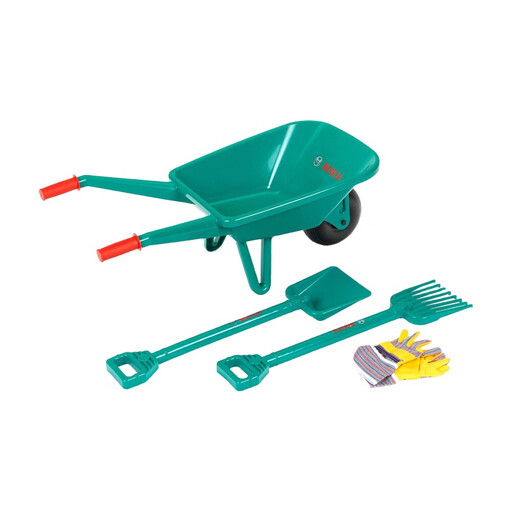
Why It's a Great Fit: Ideal for children who love to help in the garden and imitate adults. The set encourages role-playing and playfully imparts an understanding of nature and gardening.
According to the manufacturer, the set is made of robust, UV-resistant plastic, which ensures durability outdoors and counteracts the problem of material fatigue.
The complete package of a wheelbarrow, shovel, and rake offers diverse play opportunities and promotes motor skills.
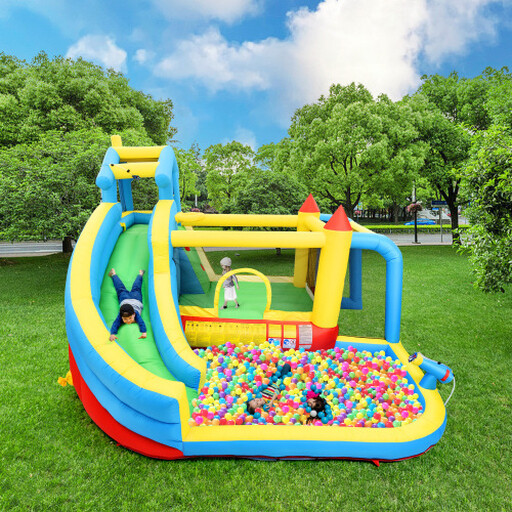
Why It's a Great Fit: For families with enough garden space looking for an attraction for active children. This bouncy castle combines jumping, sliding, and even garden water toys.
The tear-resistant PVC Oxford fabric and the surrounding safety net directly address safety concerns. Clear specifications on the maximum load (135 kg) and the number of children (3) prevent improper use.
The 5-in-1 functionality (bouncing area, slide, water pool, basketball hoop, football net) offers high and long-lasting play value for various interests.

Why It's a Great Fit: Perfect for sporty kids' garden games. It promotes hand-eye coordination and movement. Thanks to its height adjustability, the toy grows with the child.
The base, which can be filled with water or sand, provides the necessary stability and prevents tipping. According to the manufacturer, the product meets the EN 71 safety standard.
The height adjustability of the stand from 100 cm to 150 cm allows for long-term use across multiple age and growth stages.
We have compiled a complete, up-to-date list of products that fully meet these strict selection criteria and safety regulations.
Always look for the CE mark and, if possible, for compliance with the EN 71 standard. Check the product for a stable construction, rounded edges, and solid craftsmanship. For larger equipment like a bouncy castle or a climbing frame, ground anchors are essential for secure fastening.
Clean the toy regularly with mild soapy water to remove dirt and debris. To maximise the lifespan of even UV-resistant plastic, it is advisable to store the toy in a dry place like a shed or garage over the winter. This protects it from extreme cold and frost, which can put additional stress on the material.
Most manufacturers provide an age recommendation, often starting at 3 years and going up to about 10 years. However, the crucial details are the product's specific information on the maximum total weight capacity and the permissible number of children who can jump at the same time. Adhering to these specifications is vital for safety.