What should you look for when choosing?
First decide whether you’ll play files directly from a USB stick or use a separate source device. Then check the power supply, the image size you need and the setup against the planned screening location.
| What matters |
What should you check before buying? |
Who is this especially relevant to? |
| Playing local files |
Documented USB video playback or an HDMI input; test your own video and audio files in advance. |
If I want to screen directly from a USB stick without Wi-Fi, I need a playback method that works with my files. Around 28% of consumers put direct playback first. |
| Picture visibility in ambient light |
Check the image size and brightness needed at the screening location; don’t assume ANSI and ISO lumens are directly comparable. |
If there’s still some light at the garden spot, I want to assess the planned image size and the right operating mode there. Around 22% of consumers prioritise picture visibility. |
| Screening without a mains socket |
Consider the built-in battery, the battery-life mode and the power supply for the source device. |
If there’s no suitable socket at the screening location, the battery needs to last through the video, setup and breaks. Around 22% of consumers prioritise being able to use their device without mains power. |
| Setup and image size |
Match the projection distance to your preferred image width; plan for a stable position at the actual location. |
If space is limited or the screening area changes often, I want to be able to adjust the distance and image size to suit. Around 17% of consumers pay particular attention to space and setup. |
| Audio for the group |
Check the built-in speakers or audio outputs, and test how clearly you can hear from the planned seating area. |
If spoken explanations are important for the group, I want everyone to be able to hear them clearly from their seats. Around 11% of consumers prioritise speech clarity. |
Joybuy products for garden screenings
The Joybuy products below are portable projectors for changing screening locations. For local files, check the playback method you’ll need; for battery-powered use, check the runtime conditions for the specific model.
 No image available
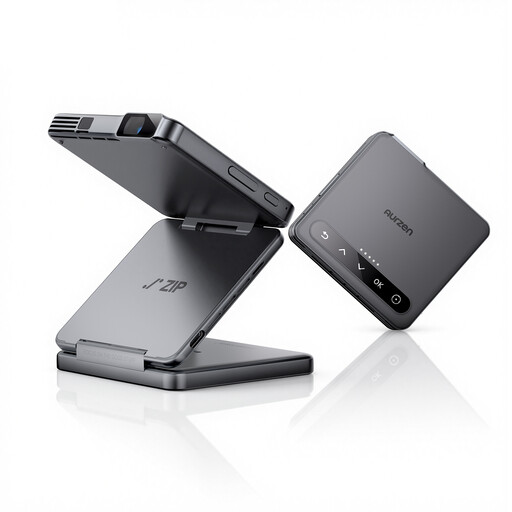
Aurzen Tri-Fold DLP Mini Projector
The built-in battery is useful for changing screening locations; compare your planned screening time with the quoted battery life.
5000mAh battery; up to 1.5 hours of battery life; ToF autofocus; 4K support.
View at Joybuy
 No image available
2026 Projector with Built-in Apps
This model could work as an option for playing local videos over HDMI, provided your laptop and connection are compatible.
HDMI compatibility; 180° rotation; 50–100% digital zoom; stated image size of 50–200 inches.
View at Joybuy
 No image available
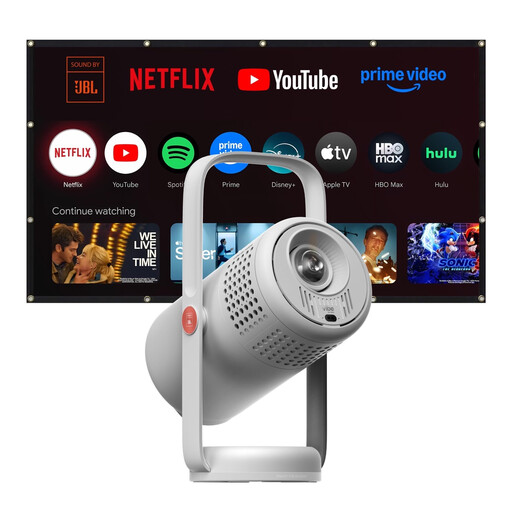
XGIMI Vibe One
If you want to mirror content from a compatible device, check that the specific mirroring method works with your source.
250 ISO lumens; integrated 160° stand; autofocus and keystone correction.
View at Joybuy
 No image available
XGIMI Elfin Flip Laser
The foldable design is a useful feature for changing screening locations; check the playback method you’ll need for local files.
1080p; 1600 ISO lumens; autofocus; foldable design.
View at Joybuy
 No image available
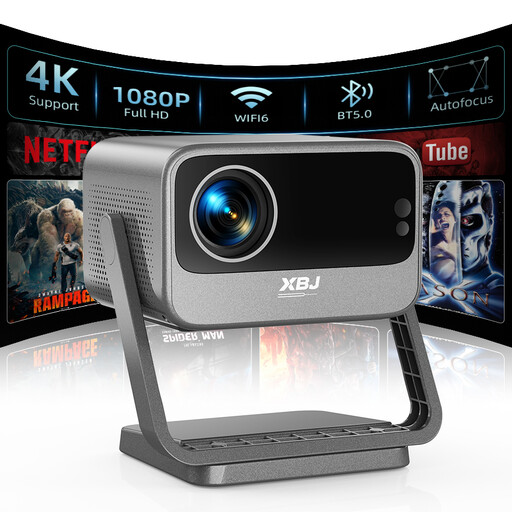
XBJ Portable Projector
The rotating stand is a practical feature for flexible setups; you’ll still need a suitable source device to play local videos.
Native 1080p; 700 ANSI lumens; 280° rotating stand; autofocus, keystone correction and obstacle detection.
View at Joybuy
Frequently asked questions
Can I play videos directly from a USB stick instead of using Wi-Fi?
Yes, if the specific model supports local playback. TCL describes USB-A, IM Player and USB drive selection for the PlayCube. If the stick isn’t recognised, TCL recommends trying one formatted as FAT32. Test your own video and audio files before the screening.
Will the stated battery life be enough for an evening screening?
Not necessarily, as battery life also depends on the operating mode. XGIMI quotes up to 2.5 hours of video playback for the MoGo 4 in Eco mode; TCL gives 2.5 to 3 hours for the PlayCube in Eco mode and notes that higher brightness reduces battery life. Plan around the video length and the picture mode you need, and remember to account for the power supply to your source device too.
How should I plan the setup at an allotment?
First measure the available distance and choose a stable position facing a suitable projection surface. TCL describes autofocus and automatic keystone correction for the PlayCube; a tripod for adjusting the height is available separately. If you’re using the projector outdoors, follow the safety and environmental guidance for your chosen device.
What should I consider when choosing image size and brightness?
Check the image size, distance and brightness mode you’ll need at the planned screening location. Manufacturer figures in ANSI and ISO lumens use different standards and aren’t directly comparable without further checks, so don’t assume they’re equivalent.
Do I need special rights to screen my garden project videos?
This depends, among other things, on who’s watching and whether the video includes third-party music, images or film clips. For public playback or screenings, the relevant provisions of §§ 15 and 19 UrhG apply. The GEMA advises that music at relevant club events should be registered in advance. Check the rights for the specific occasion rather than assuming that “my own videos” automatically means you have permission.


