For small quantities of garlic
If you’re chopping just a few cloves during your class, you’ll want to control the texture without having to get a large appliance out. Tefal and Tescoma list garlic as suitable for their manual models.


For a few cloves of garlic and no plug socket, a manual mini chopper is an obvious choice if the manufacturer lists garlic as suitable for that specific model; Tefal and Tescoma both do. If you have several ingredients to prepare, an electric model can reduce the manual effort, provided you have access to power and enough worktop space. Check the recommended quantity and how to clean each part, rather than choosing based on bowl capacity or wattage alone.
If you’re chopping just a few cloves during your class, you’ll want to control the texture without having to get a large appliance out. Tefal and Tescoma list garlic as suitable for their manual models.
If you regularly have other ingredients to prepare alongside garlic, weigh up the reduced effort against the need for power and storage space. Kenwood lists garlic as suitable for the Duo Prep CHP80.000SI, while WMF describes a compact electric chopper for a range of ingredients.
If the appliance needs cleaning between uses, check the care instructions for the bowl, blade and lid. Tefal and WMF give different care instructions for removable parts; the German Federal Institute for Risk Assessment recommends using separate kitchen utensils for raw and ready-to-eat food.
For a weekend cookery class, first decide what matters most: small, controlled portions, preparing several ingredients, easy cleaning or being able to use the appliance without a plug socket.
A good fit if: you’re preparing small quantities of garlic without power and want to control the process step by step. Tefal and Tescoma list garlic as suitable for their manual models.
The trade-off: You’ll need to operate it by hand, and care instructions vary by model and component.
A good fit if: you’re preparing ingredients repeatedly during your class, have a plug socket and want to reduce the amount of handwork. Kenwood lists garlic and pulse operation for the Duo Prep CHP80.000SI.
The trade-off: The motor and accessories need power and storage space. Bowl capacity or pulse operation alone doesn’t prove that the appliance is suitable for processing a single clove.
| Buying priority | What to look for | Who is this important to? |
|---|---|---|
| Small quantities of garlic | Check whether the manufacturer lists garlic as suitable for the exact model and what quantity the instructions recommend. Tefal and Tescoma list garlic as a suitable ingredient. | When I’m chopping just a few cloves in class, I want to control the texture with individual actions. Around 36% of consumers are particularly interested in small, controlled portions of garlic. |
| Preparing ingredients repeatedly | Check how the complete model operates and what quantity it’s designed to handle. Kenwood lists garlic, a 0.5-l bowl and pulse operation for the Duo Prep CHP80.000SI. | When I’m preparing several ingredients, I want to save effort without overlooking the space and power requirements. Around 29% of consumers prioritise preparing ingredients repeatedly with less manual effort. |
| Cleaning between uses | Check the care instructions for the blade, bowl and lid separately. WMF lists removable, dishwasher-safe parts; Tefal says to wipe the lid of the K13304 clean. | When several people or ingredients are taking turns, I want to be able to clean the parts reliably. Around 21% of consumers pay particular attention to cleaning between uses. |
| Using it without a plug socket | Check whether you can use the appliance at your intended workspace and how it operates. The manual Tescoma HANDY is designed for garlic and is not dishwasher-safe. | When there’s no plug socket available at my workspace, I still want to be able to use the appliance and am happy to do the work by hand. Around 14% of consumers prioritise using an appliance without power. |
The 1.5-l capacity given for the Rommelsbacher MZ 500 describes the bowl, not a confirmed minimum quantity for garlic. Rommelsbacher recommends a different appliance for small quantities of pesto; this doesn’t tell you the minimum quantity of garlic it can process.
Check the instructions and the ingredients and quantities recommended for your model.
With just a few cloves, you may need to process them in several batches, or find the appliance impractical for everyday use in your class.
For the Tefal K13304, the manufacturer says the bowl and blade are dishwasher-safe, but the lid should be wiped clean. Tescoma says the HANDY should not be cleaned in a dishwasher.
Check the care instructions for each component of the specific model separately.
A lid that isn’t dishwasher-safe needs to be cleaned by hand as well.
A general test result from F.A.Z. Kaufkompass for the Rommelsbacher MZ 500 doesn’t confirm a particular texture or minimum quantity for garlic.
Give more weight to the ingredients and quantities specifically listed for your model than to a general test result.
The manual 5 Second Chopper K13304 is designed for small quantities of garlic without needing a plug socket.
The manual HANDY Rotary Chopper 643868.00 is an option for anyone who wants to chop garlic without power.
The electric Duo Prep CHP80.000SI is aimed at anyone who wants to prepare ingredients other than garlic, too.
The electric KÜCHENminis Chopper, with its 0.3-l bowl, is a compact option for the ingredients specified by the manufacturer.
The electric MZ 500, with its 1.5-l glass bowl, is more relevant if you’re looking at appliances for larger quantities of ingredients.
This selection includes manual models whose descriptions specifically mention garlic, as well as electric choppers for regular food preparation.
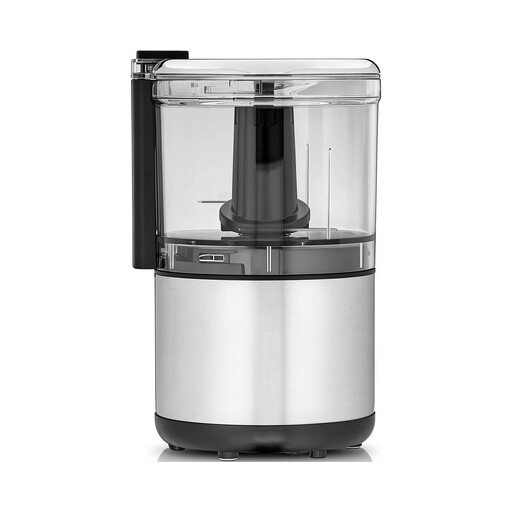 No image available
For compact food prep when worktop space is limited. The bowl holds 0.3 l; the product description mentions one-handed operation and removable dishwasher-safe parts. Unplug the appliance before cleaning it or touching the very sharp blades.
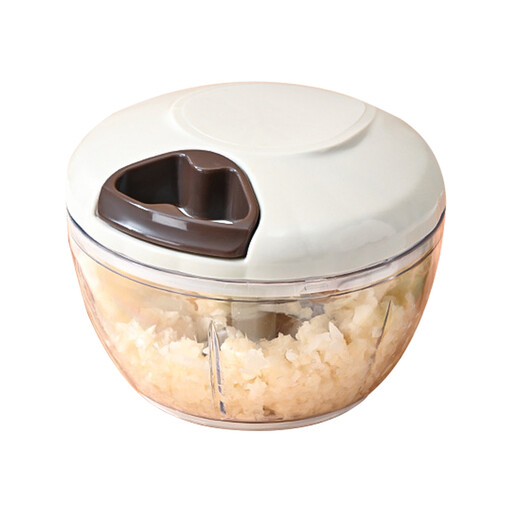 No image available
For small quantities of garlic without a plug socket. The description mentions garlic and stainless steel blades. It’s operated by repeatedly pulling the cord, allowing you to chop ingredients coarsely or turn them into a purée.
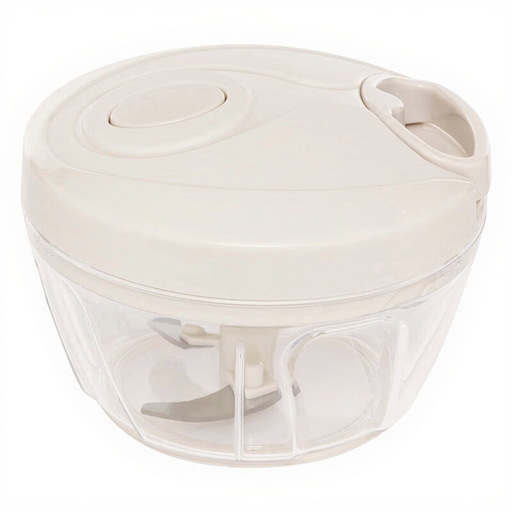 No image available
For manual chopping without a plug socket. The description mentions garlic, stainless steel blades and a pull-cord mechanism.
 No image available
For electric food prep using two bowl sizes. The description lists garlic for the low-speed setting, along with 0.6-l and 2-l glass bowls; the bowls are dishwasher-safe. The bowls and lids are not heat-resistant or suitable for use in a microwave.
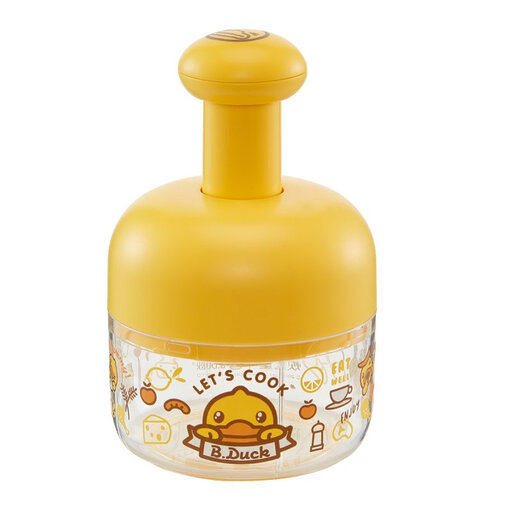 No image available
For small-scale food prep by hand, without a plug socket. The description mentions garlic, stainless steel blades and a 220-ml bowl; adjust the texture by repeatedly pulling the cord.
Work in short bursts and check the result in between. Tefal says that repeated pulls with the K13304 produce a finer texture; Kenwood lists pulse operation for the CHP80.000SI. Follow the instructions and stick to the recommended quantity for your model.
No, it depends on the model and its individual parts. For the Tefal K13304, the manufacturer says the bowl and blade are dishwasher-safe, while the lid should be wiped clean. Tescoma says the HANDY should not be cleaned in a dishwasher.
The German Federal Institute for Risk Assessment recommends using separate kitchen utensils for raw and cooked food, as well as food eaten without further cooking. Plan your cleaning routine and, where appropriate, use separate appliances to suit the class.
A fault is covered by your statutory rights against the seller; a manufacturer’s guarantee is voluntary and separate from these rights. The German consumer advice centre explains that online purchases in Germany usually come with a 14-day right to cancel. Simply changing your mind isn’t grounds for a claim under your statutory rights.
As the European Commission explains, food-contact materials placed on the market in the EU are covered by Regulation (EC) No 1935/2004. CE marking is only required when the relevant EU rules require it for that product. These general requirements don’t prove that a particular product listing complies with them.