What should you look for when buying?
Compact countertop oven
A good fit if: you’re roasting a few bulbs, have a suitable place to put it and don’t want to use a built-in space.
Consider: Check the usable area for your dish; a timer is no substitute for storing food safely after roasting.
Built-in oven
A good fit if: you need the oven for other dishes too, or want to cook garlic alongside other foods.
Consider: The dimensions of the space and the specific features need to suit your kitchen and cooking routine. Multiple shelf levels or an automatic switch-off guarantee neither the cooking result nor safe hot holding.
| What matters |
What to check when buying |
Who is it important to? |
| Keeping food safely hot |
A suitable heating method and a way to check the food’s temperature; otherwise, plan to cool it quickly. |
If I roast garlic ahead of time, I want to know how it can be stored safely until it’s served later. Consumers who prioritise this concern make up around 36 %. |
| Cooking time and coordination |
Compare the timer, available heating methods and usable shelf positions on the specific appliance. |
If you want to time garlic to go with other dishes, you need a predictable cooking process, but should still check when it is done yourself. Consumers whose main concern is planning cooking times make up around 29 %. |
| Space and portion size |
Check the external dimensions, where it will stand or how it will fit into your kitchen, and the usable area for your dish and number of bulbs. |
If my kitchen has limited space or I’m roasting just a small batch, I want an appliance that suits my kitchen and the dish I use. Consumers who prioritise space and portion size make up around 21 %. |
| Energy use and features |
For household ovens covered by the label, compare kWh per cycle and cooking mode on a like-for-like basis; choose extra features according to your actual needs. |
If you use the oven for other dishes too, you’ll want to understand its energy figures and avoid paying for features you don’t need. Consumers who prioritise energy use and features make up around 14 %. |
The figures per standard cycle on an energy label don’t automatically reflect the energy used for a specific batch of garlic or a longer period of keeping food hot. Small ovens may also fall under different rules.
Ovens at Joybuy
This selection includes built-in ovens and compact countertop appliances for roasting garlic. Compare the space they need, usable capacity, and the stated temperature and time settings.
 No image available
Comfee built-in oven, 60 cm, 70 l
An option if you want to use a built-in oven for other dishes too.
70 l, 3 kW, convection, grill, pizza function and timer.
View at Joybuy
 No image available
Woltu BF12sz mini oven, 32 l
A compact countertop option if you want to set the cooking time and temperature.
32 l, 1600 W, 100–250 °C, 60-minute timer and removable crumb tray.
View at Joybuy
 No image available
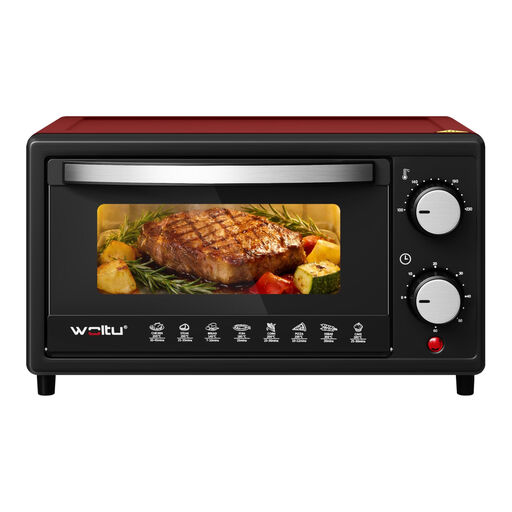
Woltu mini oven, 10 l
A small countertop oven option if you don’t need much cooking space.
10 l, 100–230 °C, top and bottom heat, and a 60-minute timer.
View at Joybuy
 No image available
Woltu mini convection oven, 28 l
A countertop oven option if you want several heating methods and an adjustable cooking time.
28 l, 100–230 °C, three heating methods and a 60-minute timer.
View at Joybuy
 No image available
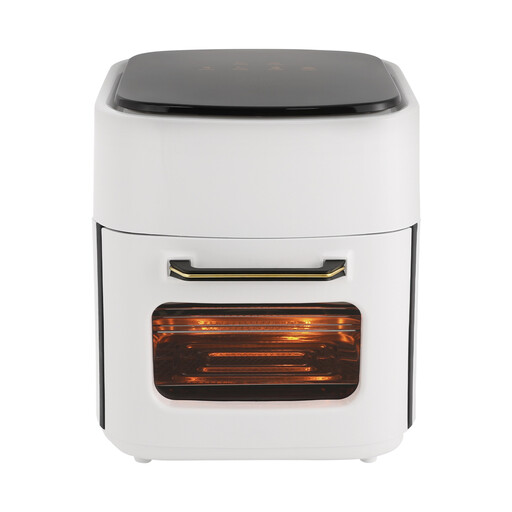
Air fryer oven, 15 l, 1400 W
A compact appliance whose description includes roasting as one of its uses.
15 l, 1400 W, 80–200 °C and a timer setting from 5–65 minutes.
View at Joybuy
Frequently asked questions
Which setting is best for roasting whole garlic bulbs?
A recipe published by EDEKA recommends 180 °C fan oven or 200 °C top and bottom heat, for 35–40 minutes on the middle shelf. These are recipe instructions for this method; cooking times may vary depending on your oven and the size of the bulb.
Can I leave roasted garlic in the switched-off oven until a later meal?
A switched-off oven doesn’t guarantee that food will be kept safely hot. The Federal Institute for Risk Assessment recommends keeping hot food at a minimum of 60 °C throughout; for longer storage, hot food should be cooled quickly to below 7 °C.
Can I store roasted garlic in oil for later meals?
The Federal Institute for Risk Assessment advises against making and storing homemade vegetable or garlic preparations in oil at home for later use. This advice applies to preparations in oil and isn’t a general statement about how long dry-roasted bulbs will keep.
What should I check before installing or positioning an oven?
Check the dimensions and installation details of the specific model against your kitchen. Bosch lists dimensions of 595 × 594 × 548 mm for the HBG7341B1; Severin lists 29,5 × 44 × 39 cm for the TO 2068. External dimensions aren’t a substitute for the installation instructions.
Do all small countertop ovens have the same EU energy label as a built-in oven?
No, that isn’t always the case: the European Commission lists small ovens as an example of products outside the scope of the cited ecodesign rules for household ovens. Check the classification of the specific appliance; for ovens covered by the rules, the label shows, among other things, kWh per conventional and fan oven cycle.


