
Lieferung heute & morgen

Qualitätsgarantie

Willkommens-Angebote freischalten: KOSTENLOSE Lieferung | Bis zu 80 % RABATT | Kostenlose 30-Tage-JoyPlus-Testphase
App herunterladen
A wrinkled suit upon arrival can seriously undermine your professional image at an important business meeting. A high-quality garment bag for your suit is therefore not an afterthought, but an essential tool for business travellers and commuters. However, the market is flooded with products whose marketing promises often fail to deliver in practice. This guide will help you avoid common purchasing pitfalls and make an informed decision.
The three most common problems with inferior suit bags are:
To ensure your investment is worthwhile, you should check three core parameters. These features separate a simple garment cover from a functional premium men's garment bag for discerning users.
The outer material is the first line of defence against dirt, impacts, and moisture. Look for robust synthetic fabrics like polyester or nylon with a high thread density, often indicated in denier (e.g., 600D Polyester). Such a material is abrasion-resistant and durable. However, the crucial feature is being waterproof. A waterproof coating or membrane ensures that the contents remain dry even in heavy rain, which is essential for business travel.
The ability to transport a suit wrinkle-free does not depend on the material alone. An effective suit garment bag features an intelligent interior design. This includes:
The size must meet two requirements: it must be large enough to accommodate a suit without compressing it too much, and at the same time, compact enough for transport. For air travel, a carry-on garment bag is ideal. Check the dimensions when folded and compare them with the carry-on luggage regulations of your preferred airline. Many models also offer a pass-through strap on the back, allowing the bag to be securely attached to a rolling suitcase, which makes transport for business travel significantly easier.
Based on the objective criteria above, we present a model that is well-suited for a specific type of user.
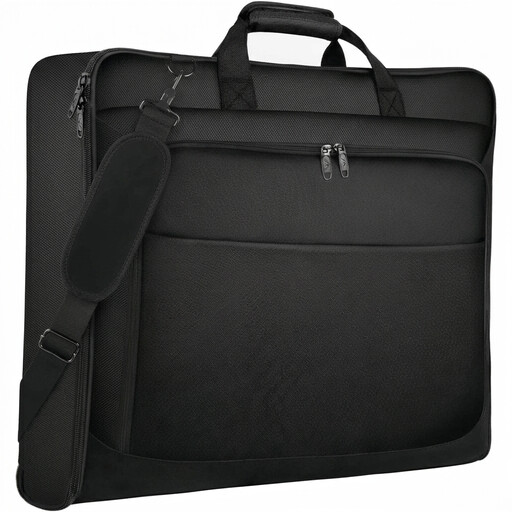
Why It's a Match: Ideal for business travellers who need to transport not just one, but up to three suits, as well as shirts, ties, and documents. The thoughtful compartment layout and robust construction are designed for frequent use and maximum organisation.
According to the manufacturer, the model is made of waterproof polyester, directly addressing the pitfall of misleading material claims. The internal system with adjustable straps and a padded central divider actively counteracts the problem of ineffective wrinkle protection.
Capacity for up to 3 suits; separate internal and external pockets for accessories and documents; trolley sleeve for attaching to a rolling suitcase.
We have compiled a complete, up-to-date list of products that fully meet these strict selection criteria and UK regulations.
1. How do you fold a suit in a garment bag correctly to avoid wrinkles? First, hang the suit on a sturdy hanger. Lay the garment bag flat and place the suit inside. Use all internal straps to secure the shoulder area and trousers. Then, fold the bag slowly and evenly along the designated fold lines. Avoid compressing the bag too tightly.
2. Can a suit bag be taken as carry-on luggage on a plane? Yes, most foldable garment bags and suit carriers are designed to comply with the carry-on regulations of major airlines. However, always check the exact dimensions (length x width x height) when folded before your flight and compare them with the airline's specifications, as these can vary.
3. Is a more expensive garment bag always a better choice? Not necessarily. Price should not be the sole criterion. A higher price often correlates with more durable materials (e.g., higher-grade polyester, branded zips) and a more thoughtful design (e.g., more compartments, better wrinkle-protection system). Focus on the core parameters mentioned above—material, construction, and functionality—to find the product that best meets your specific needs.