
Lieferung heute & morgen

Qualitätsgarantie

Willkommens-Angebote freischalten: KOSTENLOSE Lieferung | Bis zu 80 % RABATT | Kostenlose 30-Tage-JoyPlus-Testphase
App herunterladen
By the Joybuy Product Recommendation Officer, August 29, 2026
An overstuffed wardrobe or a simple lack of storage space is a common problem in many homes. A garment rack offers a practical and flexible solution for keeping clothes neatly organised. However, the market is flooded with models of dramatically varying quality. The wrong choice often leads to frustration: unstable structures that buckle under the weight of winter coats, or casters that scratch your floors. This guide will help you identify the crucial features and sidestep common purchasing pitfalls.
Before making a decision, you should be aware of the most common flaws, which often only become apparent after your purchase.
To avoid a bad purchase, focus on three objective criteria that determine durability and functionality.
The stability of a garment rack depends directly on the material used and its construction quality.
The maximum load capacity is one of the most important manufacturer specifications and should not be ignored. Consider what you plan to hang: light summer dresses have a different weight than heavy winter coats.
Different features are advantageous depending on your intended use case.
Here are some recommendations tailored to specific user profiles that meet the criteria mentioned above.
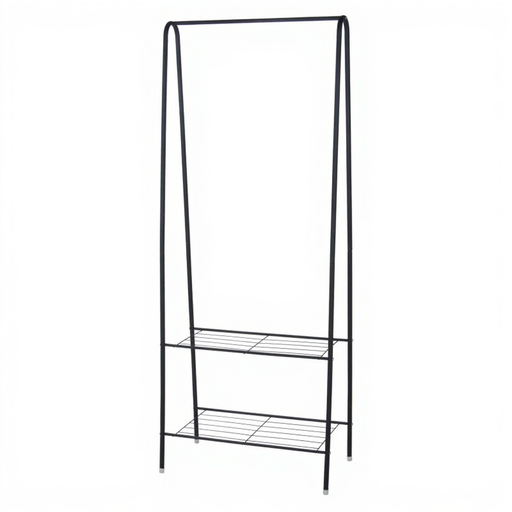
Why this model is a great fit: With its narrow 61 cm width and vertical design, this rack is ideal for small apartments, hallways, or alcoves. It combines a clothing rail with two grid shelves, making optimal use of vertical space.
The sturdy metal frame with a 16 mm tube diameter prevents the typical instability of low-cost models. The grid shelves are securely attached to the frame, providing a reliable storage surface.
Combines hanging and shelf space on a minimal footprint. Ideal for organising clothes and shoes in tight spaces.
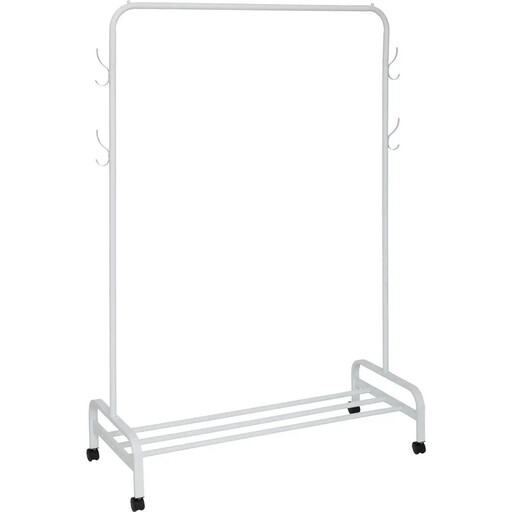
Why this model is a great fit: This rolling rack is designed for users who want to reposition their wardrobe effortlessly—whether for cleaning, seasonal reorganisation, or as a temporary solution for guests. The casters allow for easy transport between rooms.
The steel construction provides the necessary stability, while the polypropylene casters are designed for mobility. With a maximum load capacity of 30 kg, the rack is sturdy enough for everyday use.
High mobility thanks to smooth-rolling casters, combined with a practical bottom shelf and additional side hooks for accessories.
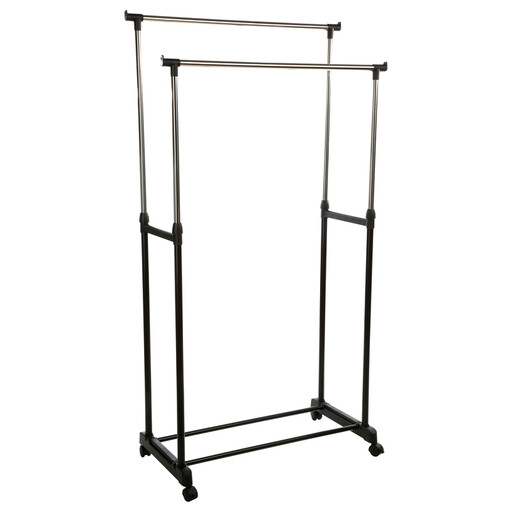
Why this model is a great fit: For users with an extensive wardrobe or many heavy items like coats and suits. The double garment rack offers plenty of hanging space, and its height adjustability allows it to accommodate long garments.
With a stated maximum load capacity of 50 kg, this model is explicitly designed for heavy loads. Two of the four casters are equipped with brakes, minimising the risk of it rolling away or tipping over when fully loaded.
High load capacity, two clothing rails, and an adjustable height (up to 158.5 cm) for maximum capacity and flexibility.
A sturdy garment rack is the foundation, but the right hangers complete the system. To make the most of your space and protect your clothes, non-slip hangers are a smart addition. Models like the 20-Pack of Rubber-Coated Metal Hangers prevent silk blouses or jackets with smooth linings from sliding off. At the same time, these space-saving hangers are often slimmer than traditional wooden hangers, thereby maximising the capacity of your clothing rail.
We have compiled a complete, up-to-date list of products that fully meet these strict selection criteria and German safety regulations.
The load capacity varies widely depending on the model and material. Simple, lightweight racks are often rated for only 10–15 kg. Heavy-duty steel models can support 30 kg, 50 kg, or even more. Always check the manufacturer's specified maximum load capacity and compare it with your needs.
With a rolling garment rack, the quality of the casters is crucial. They should roll smoothly and swivel 360 degrees. It's important that at least two of the four casters have locking brakes to secure the rack in place. The tread material should be compatible with your flooring to avoid scratches.
Choose a model with a wide, stable base. Distribute the weight of the clothing evenly along the rail. For models with shelves, place heavier items on the bottom shelf to lower the centre of gravity. Never exceed the specified maximum load capacity, and ensure the rack is standing on a level surface.