
Lieferung heute & morgen

Qualitätsgarantie

Willkommens-Angebote freischalten: KOSTENLOSE Lieferung | Bis zu 80 % RABATT | Kostenlose 30-Tage-JoyPlus-Testphase
App herunterladen
A wrinkle-free shirt in minutes before a business meeting or a smoothed-out dress straight from your suitcase on holiday – a garment steamer promises a quick fix without an ironing board. But the market is flooded with devices whose performance claims are often more marketing than reality. Many buyers soon find that their new gadget drips, loses power, or is simply unsuitable for their needs.
As your Joybuy Product Recommendation Officer, I'll help you identify the crucial features and avoid common purchasing pitfalls. This guide focuses on the objective criteria that define a reliable device, so you can make an informed decision.
Before we dive into the technical details, let's highlight the three most common issues that lead to disappointment and unnecessary expense.
To avoid buyer's remorse, you should focus on the following three technical specifications. These determine the actual performance and longevity of your device.
The most important metric for a garment steamer's effectiveness is its steam output, measured in grams per minute (g/min). This value indicates how much steam the device can produce continuously.
The size of the water tank determines how long you can steam vertically before needing a refill.
Pay close attention to whether the tank is detachable. This makes filling it under the tap and cleaning it significantly easier.
For quick use, the heat-up time is crucial. Modern devices are often ready to use in under 45 seconds. Features like a lockable steam trigger for continuous steam or a rotating handle enhance user comfort, especially during longer sessions. For frequent travellers, dual voltage support is also an important feature for using the device worldwide.
Here are a few models tailored to specific needs that are engineered to avoid the pitfalls mentioned earlier.
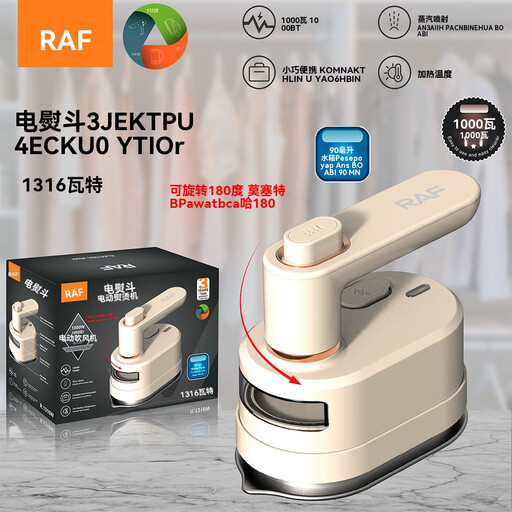
Why This Fits Their Persona: This model is extremely compact and lightweight, making it ideal for carry-on luggage. Its dual-voltage compatibility (110V-220V) ensures it works on international trips, while the rotating handle makes it easy to use in tight spaces like a hotel room.
The visible 90ml water tank is designed for 1-2 garments, and its simple, integrated construction minimises the risk of leaks in your luggage.
180° rotatable handle for flexible horizontal and vertical steaming; dual-voltage functionality for worldwide use.
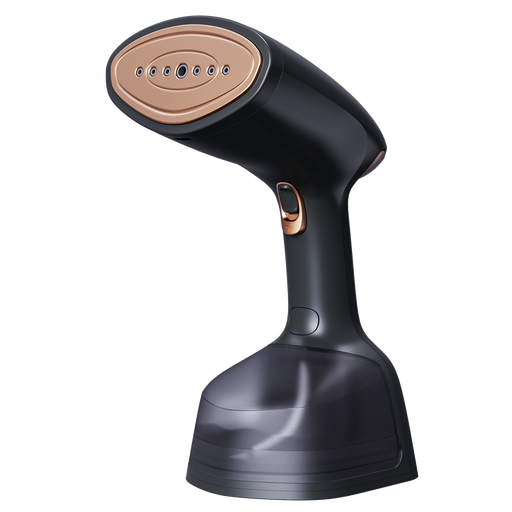
Why This Fits Their Persona: This model combines a high 1800W power rating with a large 260ml water tank. It's powerful enough for regular home use, even for multiple garments, and in many cases, it can replace an ironing board. Ideal for those in small apartments or for students.
The detachable water tank features a locking mechanism for a leak-proof design and is easy to clean, which helps prevent limescale buildup. Its high steam output (up to 28 g/min) is a true indicator of efficiency, not just its wattage.
High steam output for quick results; large, detachable water tank for extended use; fast heat-up time of under 30 seconds.
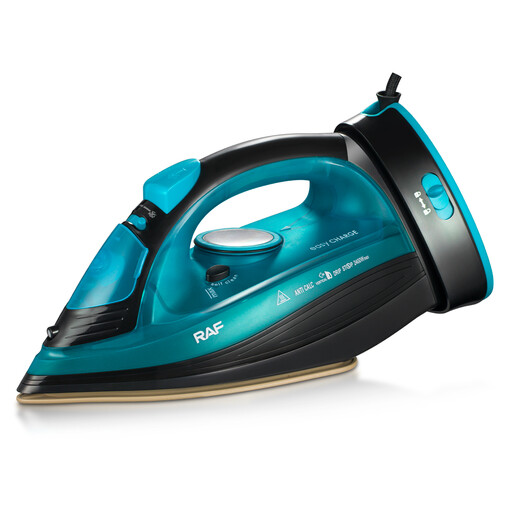
Why This Fits Their Persona: For users who want maximum flexibility, this cordless model is ideal. With no restrictive cord, you can effortlessly steam large textiles like bedding or curtains. The high power and large tank make it a full-fledged iron replacement for demanding tasks.
This model features an anti-drip function to prevent water spots and a self-cleaning system that actively combats limescale buildup, ensuring a long lifespan and consistent performance.
Cordless design with a 360° charging base for maximum freedom of movement; self-cleaning function to extend its lifespan.
We've compiled a complete, up-to-date list of products that fully meet these strict selection criteria and all relevant safety standards.
To prevent limescale buildup and extend the life of your device, using distilled or demineralized water is recommended, especially in areas with hard tap water. Some manufacturers state that a 50/50 mix of tap water and distilled water is also suitable. Always check the manufacturer's instructions in the user manual.
For most everyday tasks like smoothing shirts, blouses, dresses, and T-shirts, a powerful handheld garment steamer is an excellent alternative. It's faster, gentler on delicate fabrics, and doesn't require an ironing board. However, for very thick fabrics like heavy cotton or linen, or when sharp creases are desired (e.g., on suit trousers), a classic steam iron still has the edge.
If your device doesn't have a self-cleaning function, you can descale it manually. Fill the water tank with a mixture of one part white vinegar and two parts distilled water. Let the device heat up and release all the steam (preferably outdoors or in a well-ventilated room). Afterwards, fill the tank with pure distilled water and repeat the process to rinse out any vinegar residue. Perform this procedure every 1 to 3 months, depending on usage frequency and water hardness. Always follow the manufacturer's specific instructions.