
Lieferung heute & morgen

Qualitätsgarantie

Willkommens-Angebote freischalten: KOSTENLOSE Lieferung | Bis zu 80 % RABATT | Kostenlose 30-Tage-JoyPlus-Testphase
App herunterladen
Wrinkled clothing is a common nuisance, especially when you're short on time for traditional ironing or lack the space for an ironing board. A garment steamer, also known as a clothes steamer or handheld steamer, promises a quick fix. However, the market is flooded with devices whose marketing claims often fall short in practice. Before you make a decision, it's crucial to understand the common pitfalls that can lead to a useless purchase.
Many devices look promising at first glance but quickly prove to be impractical. Watch out for these three widespread issues to avoid making a bad purchase.
To make the right choice, you should focus on objective technical features rather than marketing messages. These three criteria are crucial for the performance and longevity of a garment steamer.
Wattage alone is only half the story. A powerful motor is essential for generating hot, dry steam. Look for devices with a power rating of at least 1000 watts; for thicker fabrics like cotton or linen, 1200 watts or more is recommended. Even more important is the continuous steam output, measured in grams per minute (g/min). A value of around 20 g/min or more ensures that the steam penetrates deep into the fibres and effectively removes wrinkles without soaking the fabric.
The water tank's capacity determines how long you can work continuously. For quick touch-ups on single items, a tank of about 150 ml is sufficient. If you plan to steam multiple garments regularly, a model with 200 ml or more is more practical. Make sure the tank is detachable and easy to fill. A key quality feature is a leak-proof design that allows for both vertical and horizontal use, making ironing without an ironing board more flexible.
A basic clothes steamer often has just a steam outlet. Higher-quality models feature a heated soleplate, usually made of ceramic or stainless steel. This plate distributes heat evenly and allows you to use the device like a travel iron directly on the fabric to smooth out stubborn wrinkles. For frequent travellers, dual-voltage compatibility (e.g., 110–240V) is also an important feature for using the device worldwide.
Instead of making a one-size-fits-all recommendation, we have identified models tailored to specific needs and use cases.
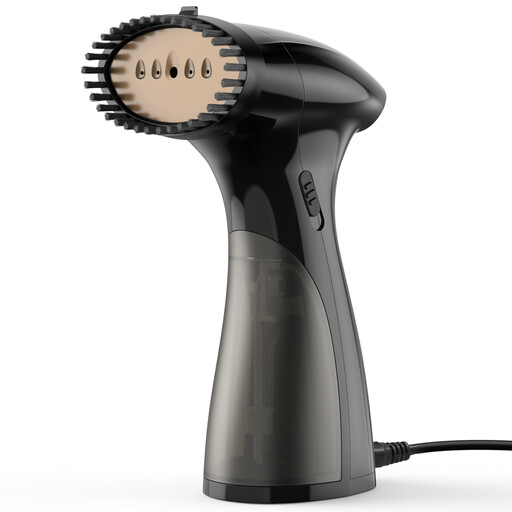
Why it's a good fit: Ideal for those looking for a straightforward and affordable solution for quick clothing touch-ups at home. The one-button operation and lightweight design make it very user-friendly for occasional use.
With 800W, the device doesn't overpromise on power, instead focusing on a solid core function. The 150mL tank offers a reasonable capacity for its class, avoiding the frustration of a tiny tank.
The 360° leak-proof design allows for both horizontal and vertical use. The included bristle brush helps steam penetrate thicker fabrics.
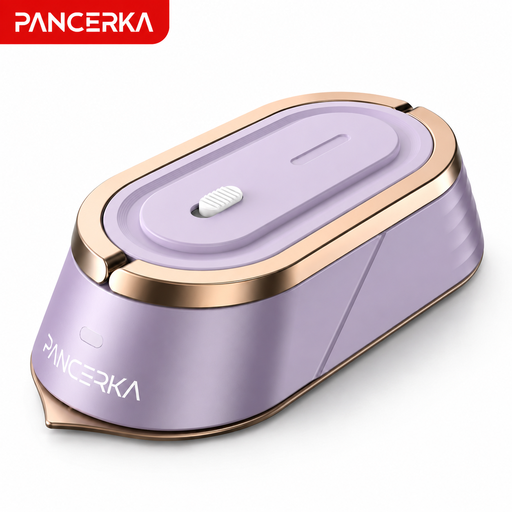
Why it's a good fit: Specifically designed for business and leisure travellers. Its extremely compact design and, most importantly, its dual-voltage capability make it a reliable companion for international travel to freshen up shirts or blouses in a hotel room.
This device is clearly positioned as a portable iron with a steam function. It avoids the misleading '2-in-1' trap by offering a true ironing function with a solid soleplate.
Its proven dual-voltage compatibility (110–240V) is the decisive feature for worldwide use, a feature missing from many competing products.
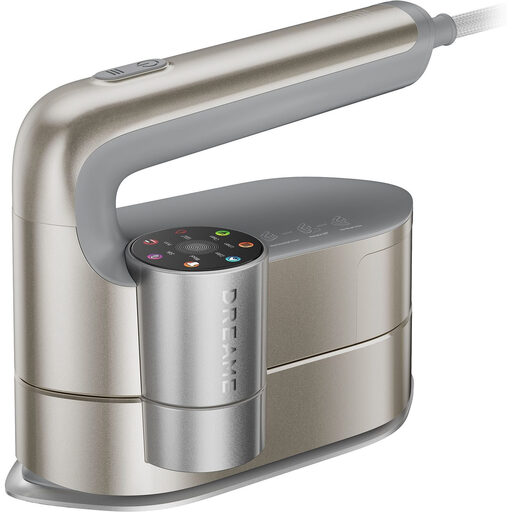
Why it's a good fit: For users who value high performance, efficiency, and thoughtful features. The combination of powerful steam output and an innovative soleplate makes it a versatile tool for the demanding household.
This model bypasses the '2-in-1' trap with a high-quality, rotating soleplate and five specific ironing modes with automatic temperature control. This ensures safe and effective treatment of various fabrics.
The 90° rotating soleplate doubles the surface area covered per pass, boosting efficiency. The self-cleaning function ensures long-lasting, consistent performance.
We have compiled a complete, up-to-date list of products that fully meet these strict selection criteria and relevant safety standards.
The frequency depends on the water hardness in your area and how often you use it. With regular use in hard water areas, descaling every 1–3 months is recommended. Some models have a built-in self-cleaning or anti-calc function. For this, follow the manufacturer's instructions.
For most everyday garments like T-shirts, blouses, or dresses, a powerful garment steamer is often sufficient. It's excellent for refreshing and de-wrinkling. However, for very thick fabrics (e.g., heavy jeans) or when sharp creases are desired (e.g., on suit trousers), a classic steam iron with high pressure remains superior.
Using distilled or demineralised water is recommended by most manufacturers. It prevents limescale buildup inside the device, which can clog the steam nozzles and shorten its lifespan. If you only use tap water, regular descaling becomes even more important.