
Lieferung heute & morgen

Qualitätsgarantie

Willkommens-Angebote freischalten: KOSTENLOSE Lieferung | Bis zu 80 % RABATT | Kostenlose 30-Tage-JoyPlus-Testphase
App herunterladen
Garment storage bags help keep clothes, duvets and seasonal textiles organised. However, not every bag is suitable for every purpose. Focusing solely on a low price or particularly large capacity claims often means overlooking important details such as the closure, material and load capacity.
This buying guide explains what individuals, families, commuters and frequent travellers should consider when buying. The selection is based on clear product features rather than blanket marketing claims.
A bag’s external dimensions do not always indicate how much clothing it can actually hold. A flat bag with long sides is better suited to suits or dresses, while bulky duvets require a wide storage bag with a larger capacity.
Before buying, you should therefore check:
A simple zip may be sufficient for use in a wardrobe. However, reinforced stitching, sturdy handles and a smooth-running closure are more important for frequent travel or heavy textiles. With vacuum bags for clothes, you should also consider the airtightness of the double seal and valve.
A transparent garment cover makes it easier to find a particular item, but it does not automatically provide complete protection against dust or moisture. The specific material and closure details remain crucial.
Vacuum bags reduce the volume of air, but they are not a substitute for a dry storage environment. Clothes should be clean and completely dry before being placed in the bag. Otherwise, odours or moisture problems may develop. In addition, delicate textiles are not always suitable for strong compression.
Materials used for garment storage include PEVA, polyethylene, polyamide, vinyl, polyester and nylon. PEVA bags are often transparent or translucent and can be wiped clean on the outside. Polyamide and polyethylene combinations are used in vacuum bags because they allow flexible, airtight bags to be produced.
Look out for:
There is no legally prescribed standard material thickness for this product category. Specific manufacturer information is therefore more useful than vague terms such as “extra robust”.
A travel garment bag or elongated garment cover is suitable for suits, shirts and dresses. Lengths of 100 to 135 cm may be relevant for different garments, but should be checked against your own wardrobe.
Large, rectangular bags are more practical for duvets, blankets and winter clothing. Models with viewing windows let you check the contents without opening the zip. If you want to store clothes while saving space, you should also check whether the bag is suitable for shelving, under-bed storage or use in a wardrobe.
Three points are particularly important with vacuum bags:
According to the HOMOH vacuum bags’ product description, the cordless pump removes the air in approximately 30 seconds. The sets contain bags measuring 40 × 50 cm, 40 × 60 cm and 50 × 60 cm. The actual compression performance depends on the contents, how full the bag is and whether it has been sealed correctly.
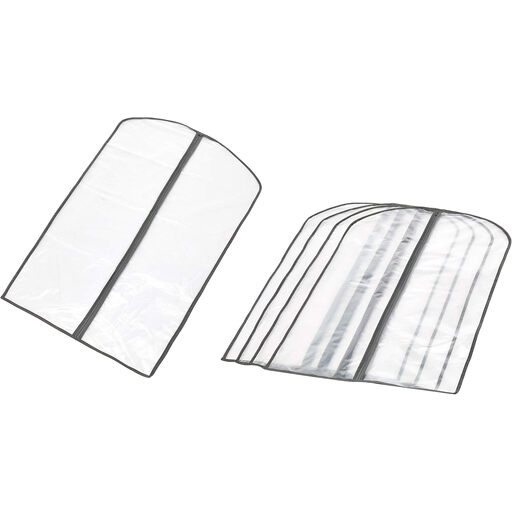
Why this product suits this profile: The 5-piece set made from translucent PEVA provides several bags for clothes, suits or seasonal textiles, making it easier to organise items in the wardrobe.
The transparent panels make the contents visible. The zip and water-repellent PEVA are clearly specified in the product description.
5 bags, translucent material and a zip for clear wardrobe storage.
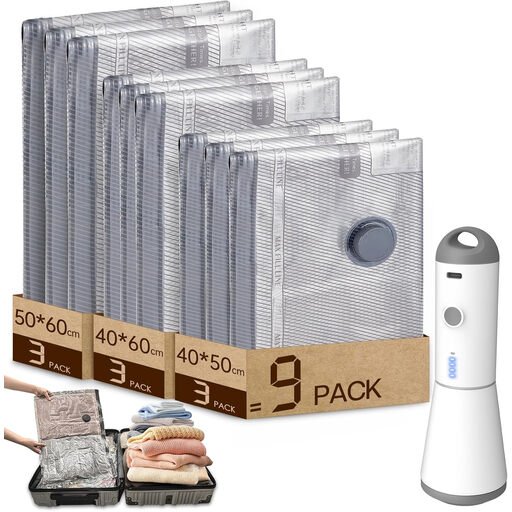
Why this product suits this profile: The set combines three bag sizes with a cordless pump and is designed for storing seasonal clothing and for travelling.
According to the product description, the bags feature a double zip seal and special valves. Three sizes reduce the risk of storing clothes in bags that are too large or too small.
9 reusable bags, three sizes and a cordless pump with a lithium-polymer battery.
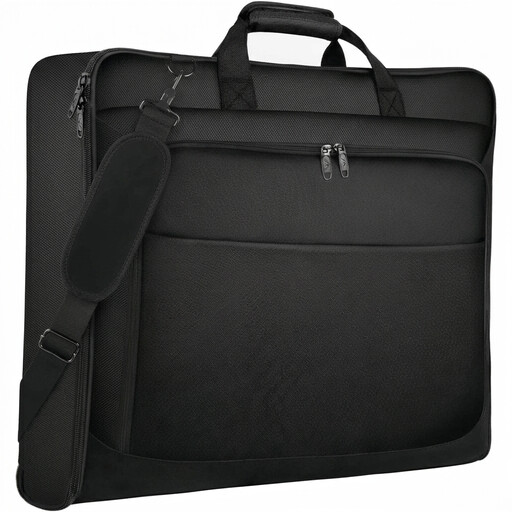
Why this product suits this profile: Commuters and frequent travellers get a model with space for up to three suits, inner straps, a shoulder strap and an attachment for a wheeled suitcase.
Rather than offering just one large main compartment, the product description lists three suit holders, two inner pockets and exterior pockets. This makes separate organisation easier.
Water-repellent polyester, two-way zips, a net weight of 1.2 kg and an attachment option for luggage.
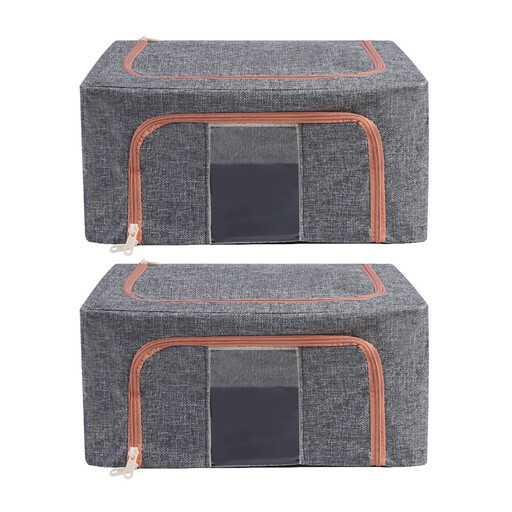
Why this product suits this profile: The bags are designed for bulky items such as duvets, blankets and out-of-season clothing, and can be used in wardrobes or under the bed.
The stated capacity of 66 litres per bag and the viewing windows make it easier to assess the available space. The manufacturer also specifies a load limit and advises against overloading.
Large capacity, two viewing windows and openings at the top and front.
We have put together a complete, regularly updated list of products that fully meet these strict selection criteria and the safety regulations applicable in the EU.
To keep garment bags with zips and vacuum bags usable for as long as possible, you should follow a few basic rules:
For delicate suits, woollen items or dresses, a classic garment bag is often more suitable than strong vacuum compression. Large bags or vacuum bags may be more practical for duvets and robust seasonal textiles.
In a cellar, you should look for water-repellent material, a well-sealed zip and a dry storage location. However, no bag can replace a controlled, dry environment. Clothes should not be placed directly on the floor.
This depends on the size, material and thickness of the textiles. Small 40 × 50 cm bags are better suited to folded garments. Larger 50 × 60 cm formats can hold several thin textiles or compact seasonal clothing. The bag should not be filled right up to the closure.
Transparent garment covers make it easier to check the contents and protect garments from friction and dust. For travelling, models with a handle, shoulder strap or suitcase attachment are more practical. For suits and formal clothing, a suit bag designed for this purpose with separate compartments is recommended.