
Lieferung heute & morgen

Qualitätsgarantie

Willkommens-Angebote freischalten: KOSTENLOSE Lieferung | Bis zu 80 % RABATT | Kostenlose 30-Tage-JoyPlus-Testphase
App herunterladen
The right mobility aid for older people should make everyday life easier without creating new obstacles. Whether you’re looking for a walking frame, wheelchair, shower chair or toilet aid to help you stand up, the key is not to choose the model with the most features. Instead, look for the right combination of dimensions, weight capacity, ease of use and suitability for the intended setting.
Three common marketing traps can often lead to the wrong purchase:
Start by considering the type of support you need:
If you need a rehabilitation aid after an operation or stroke, discuss your choice with your doctor, physiotherapist or care professional. A mobility aid is not a substitute for individual medical advice.
The right height affects your posture, comfort and ease of use. With a rollator, you should be able to adjust the handles so your arms remain slightly bent. For a commode or shower chair, seat height and width are also important, as is its position relative to the toilet.
Before buying, check:
Aluminium is usually lighter, while steel frames are often heavier. However, the material alone tells you little about whether a product is right for you. The frame design, locking mechanisms, wheels, brakes and stated maximum weight capacity all matter.
Look for a clear product description and compare the weight limit with the user’s actual weight. For a transfer chair or toilet aid to help you stand up, it’s also important to check whether the frame can be securely locked during transfers.
The brakes on rollators and wheelchairs should be easy to reach and operate. Locking brakes are particularly important when sitting down, standing up and transferring. Non-slip feet, lockable castors and safety belts can make a product easier to use, but they don’t replace using it correctly.
Before first use, check all screws, folding mechanisms, wheels and brakes in line with the instructions. Electric models should only be used with the charger supplied for them. Keep batteries dry, protect them from excessive heat and store them according to the manufacturer’s instructions.
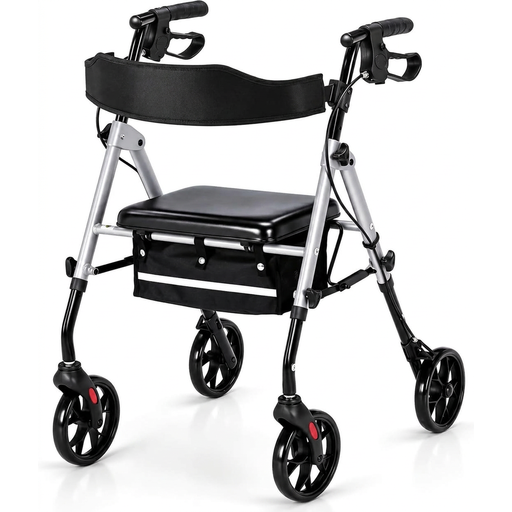
Why this product suits this user profile: This model is suitable for everyday outings and folds down to 82 × 60 × 31 cm for transport and storage. The handle height can be adjusted to five settings between 82,5 and 96,5 cm.
The folded dimensions and weight of 8,6 kg are clearly stated, making it easier to assess how much space you’ll need before buying.
20 cm wheels, an integrated seat and a stated weight capacity of up to 136 kg.
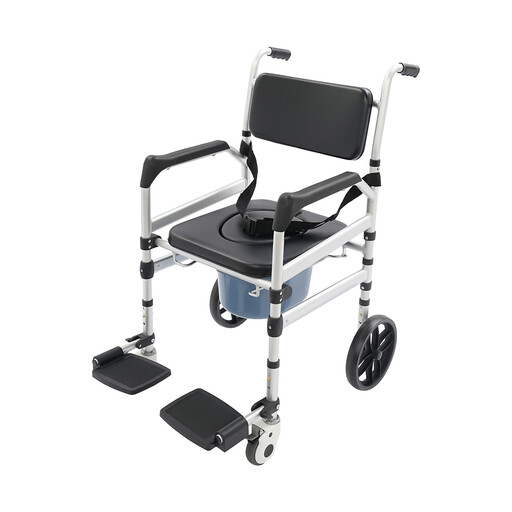
Why this product suits this user profile: This height-adjustable shower chair combines a seat, armrests, foot pedal, safety belt and removable toilet insert for use in the bathroom and care settings.
The seat height of 46,0 to 51,0 cm and overall height of 100 to 117 cm are stated. Measure your toilet and doorway before buying.
Aluminium frame, two large non-slip wheels and two lockable castors, according to the product description.
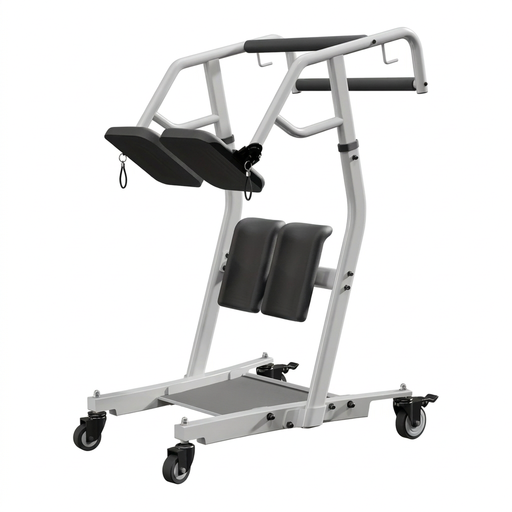
Why this product suits this user profile: This transfer chair is designed to help you move between seats. It has a rotating seat, a fold-up seat opening and lockable rear wheels.
The base width, seat height and wheel sizes are specified, so you can check whether it will fit by the bed, armchair and bathroom.
Steel frame, weight capacity of up to 180 kg and two lockable rear castors, according to the product details.
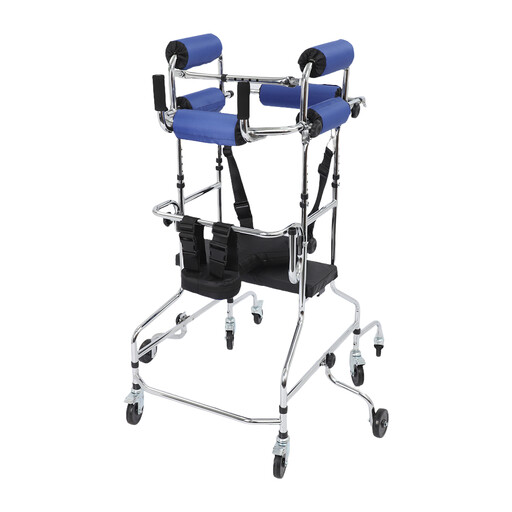
Why this product suits this user profile: This walking aid has ten height settings, five width adjustments and several brakes. These may be useful if your needs change during rehabilitation.
The adjustment options are clearly described. Before use, ask a professional to check whether the posture and controls are right for you.
Stated weight capacity of up to 100 kg, plus six brakes and eight wheels, according to the product description.
We’ve put together a complete, regularly updated list of products that meet these strict selection criteria and fully comply with the safety regulations in force in the EU.
For short distances around the home, a height-adjustable walking aid, rollator or narrow walking frame may be suitable, depending on your mobility. Measure doorways, hallways and the space available in the bathroom. A rollator with a seat also needs enough room to brake safely and sit down.
Its lifespan depends on how often it’s used, the user’s weight, the surfaces it’s used on, cleaning and maintenance. Brake cables, wheels, rubber feet, folding locks and padding are all wear parts and should be checked regularly. Electric wheelchairs also have a battery, charger and electrical components to consider. If you notice damage or unusual noises, stop using the product until it has been checked.
With manual rollators and wheelchairs, the main costs are for replacement parts, cleaning and any repairs needed. Electric models also need electricity for charging and proper battery care. When choosing shower chairs and commodes, consider the need for hygienic cleaning and whether seat pads or containers can be replaced.