If you regularly demonstrate constructions using a compass and ruler, an adjustable document camera positioned above your work surface is a sensible place to start. If you mainly have conversations and only sketch occasionally, a webcam with a desk mode may be enough. What matters is whether the frame includes your hands, how clearly the lines show up in your video conferencing app, and how the camera connects. IPEVO lists USB-UVC connectivity and a maximum capture area of 342 × 255 mm for the V4K, but the manufacturer’s specifications are no substitute for testing the camera with your own setup.
Which camera option is right for you?
Regular demonstrations on paper
If you want to show construction lines, a compass and hand movements, check whether the camera arm can be adjusted and whether the capture area is large enough for your sheet of paper. IPEVO lists these features for its V4K and DO-CAM.
Tutors who focus on conversation
If you’re usually on camera and only occasionally show a drawing, desk mode can make it easier to switch perspectives. Logitech describes Show Mode for the Brio 500, while Insta360 lists DeskView for a temporary view of your desk.
Students with limited desk space
If you want to put the camera away after a session or keep space for paper and tools, compare its folded dimensions, base and mounting options. IPEVO gives the folded dimensions of the DO-CAM as 220 × 63 × 22 mm; these measurements don’t indicate how much space it takes up when in use.
What should you look for when choosing?
First, decide whether paper will be the focus most of the time or whether you’ll only switch briefly between conversation and sketching. Then compare the field of view, space requirements and connection options with your actual desk and video conferencing app.
| What you need |
What to check before buying |
Who should pay particular attention? |
| Keep paper and fine lines visible |
Position the sheet, compass and ruler within the frame from the planned camera position, then check how the lines appear in your video conferencing app. IPEVO lists a maximum area of 342 × 255 mm for the V4K, while INSWAN gives a capture area of 420 × 315 mm for the INS-2. These are manufacturer specifications, not a guarantee that your live video will be easy to read. |
When I demonstrate constructions with tools, I want to keep both the lines and my hand movements in view. Around 36% of consumers who prioritise this are likely to feel the same way. |
| Keep your work surface clear and put the camera away |
Compare the base, arm reach and space needed to fold the camera away with the paper area you need. According to IPEVO, the DO-CAM measures 220 × 63 × 22 mm when folded; this doesn’t tell you how much space it takes up when set up. |
When my desk is short on space, I want to put the camera away after a demonstration without having to move my paper and tools. Around 22% of consumers are likely to consider this their top priority. |
| Switch between your face and your drawing |
Try switching perspectives in your app, taking the actual position of your monitor into account. IPEVO describes the DO-CAM as having a rotating head, while Insta360 describes DeskView as a temporary view of your desk. |
When I’m mostly talking and only show a sketch briefly, I don’t want to set up the paper from scratch every time. Around 21% of consumers are likely to share this as their main priority. |
| Choose the right connection |
Decide in advance whether the camera will connect to a computer for use in your video conferencing app or send its picture directly to a compatible display. IPEVO specifies the V4K as a USB-UVC camera; ELMO also lists HDMI for the MX-P3. |
When I want to connect the camera to my existing computer or screen, the entire video connection needs to work with my setup. Around 21% of consumers are likely to consider connectivity their most important requirement. |
Avoid common misconceptions
-
Assuming a high sensor resolution means clearly visible lines
A resolution figure on its own doesn’t tell you how clearly fine pencil lines will show up in the live video. The field of view and how the image appears in your video conferencing app matter too.
Place your sheet of paper, compass and ruler under the camera, then check the lines in the intended frame and app instead of comparing resolution figures alone.
-
Assuming desk mode provides a permanent overhead view
Insta360 describes DeskView as a temporary view of your desk, distinct from an overhead mount. So this mode doesn’t guarantee that the whole construction sheet will be captured properly during longer demonstrations.
If you regularly demonstrate on paper for longer periods, check the camera’s reach and compare it with an adjustable document camera.
-
Confusing USB with direct video output
The IPEVO V4K is specified as a USB-UVC camera. ELMO also lists HDMI for the MX-P3; these connection options aren’t automatically interchangeable.
Before buying, decide whether you want to use the camera through a computer in your video conferencing app or send its picture directly to a compatible display.
Key brands at a glance
IPEVO
The V4K and DO-CAM are USB document cameras for viewing paper and presenting through a computer.
- According to IPEVO, the V4K offers USB-UVC, autofocus and a maximum capture area of 342 × 255 mm. The folded DO-CAM is listed as measuring 220 × 63 × 22 mm.
- The manufacturer’s specifications don’t guarantee that fine lines will be easy to read on a video call. Check the frame and video connection with your own setup.
JOURIST
According to JOURIST, the DC530 is a USB document camera for presenting through a computer.
- JOURIST describes the DC530 as having an adjustable arm, focus lock and LED lighting.
- If you need to send the picture directly to a display, check the connections on your specific model and the full connection path to the screen.
INSWAN
According to the manufacturer, the INS-2 is a USB document camera with a larger specified capture area.
- INSWAN lists a capture area of 420 × 315 mm for the INS-2, along with an adjustable arm, LED and autofocus.
- The stated capture area doesn’t show whether fine lines will remain legible on a video call when viewing the whole sheet.
Logitech
The Brio 500 is described as having Show Mode, while Reach is a camera with an adjustable arm and a choice of mounting options.
- Logitech lists a base or desk clamp for Reach. A clamp requires a compatible desk edge.
- Desk mode doesn’t automatically provide a permanent overhead position for longer demonstrations on paper. Check the frame in advance.
Insta360
The manufacturer lists the Link and Link 2 as DeskView-compatible webcams for temporary views of your desk.
- Insta360 describes DeskView as a way to capture a view of your desk without a separate overhead mount.
- This mode may not replace an adjustable mount for regular or longer demonstrations on paper.
ELMO
The MX-P3 is a document camera that, according to ELMO, offers HDMI as well as USB.
- ELMO lists HDMI, USB and one-push autofocus for the MX-P3.
- An additional display connection isn’t automatically necessary for a video call on your laptop. Check the connections and power supply needed for your planned setup.
Joybuy products for video calls at your desk
The Joybuy products below are webcams for video calls on a computer. If you regularly demonstrate geometric constructions, pay particular attention to whether your setup can give you a suitable view of the paper and your hands.
 No image available
Full HD 1080P webcam with microphone
For video calls on a computer. For demonstrations on paper, check whether you can position the camera correctly with your setup.
Full HD 1080P; USB plug and play; microphone.
View at Joybuy
 No image available
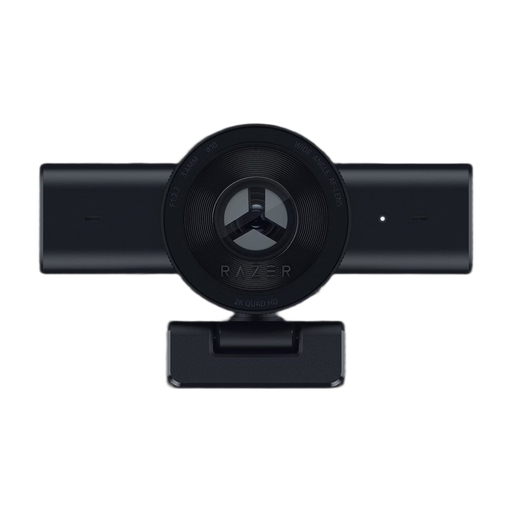
Razer Kiyo V2 X webcam, black
For video calls on a computer. For geometric drawings, check the frame over your sheet from the camera position you plan to use.
Full HD 1080p; 60 FPS; black.
View at Joybuy
 No image available
AOC 4K PRO webcam with Sony IMX363
If you’re planning to use the webcam for calls on your computer, also check whether its position will work for the view of your paper you need.
4K PRO; Sony IMX363; PDAF autofocus; two microphones; lens cover; 75° field of view; USB-A/USB-C.
View at Joybuy
 No image available
Logitech C922 Pro Stream webcam
For video calls on a computer. Before using it to show paper, check whether you can set up a suitable view of your desk.
USB connection.
View at Joybuy
 No image available
Philips 4K UHD Webcam 4000 Series, SPL6408BT/00
For video calls on a desktop computer. For views of paper, check the frame with your actual setup.
4K UHD; 8 MP; autofocus; two microphones; privacy cover; compatible with Zoom and Teams; EU version, black.
View at Joybuy
Frequently asked questions
Can I connect a USB document camera directly to an HDMI monitor?
Not just because it has a USB-UVC output: IPEVO describes the V4K as a USB camera for use with compatible applications on a computer. If you want to send the picture directly to a compatible display without a computer, check for a model with an explicitly listed HDMI output, such as the ELMO MX-P3.
How do I set up a camera for geometric constructions?
Place your paper, compass and ruler in the area you plan to use, then check the transmitted image in your video conferencing app. Also check that the app supports external cameras and that the focus setting you choose keeps lines and hand movements clear in the view you need.
What should I know when buying online in Germany if the camera isn’t suitable or is faulty?
For eligible online consumer purchases, you generally have a 14-day right to cancel from the date of delivery; exceptions and possible return costs should be taken into account. Faulty goods are covered by a statutory minimum two-year legal guarantee against the business seller. The European Union’s Your Europe website distinguishes these statutory rights from an additional manufacturer’s guarantee.
Do I need to think about privacy when filming in student accommodation?
Before sharing, check whether flatmates, personal documents or other personal information appear in the picture or audio. Germany’s Federal Commissioner for Data Protection and Freedom of Information notes that users decide which personal data are included in video communications. This doesn’t mean that every private demonstration requires special permission.


