For listening practice at a dedicated study space, wired in-ear headphones are an obvious choice if the connection is compatible and you want to avoid charging breaks. If you switch between devices or study somewhere noisy, wireless models with Multipoint or genuine ANC may be a better fit. A comfortable fit and comfortable listening volume are still key, and neither type has been shown to improve learning outcomes on its own.
Which in-ear headphones are right for you?
For listening practice at a dedicated study space
If you mainly listen to dialogues and dictations on one device and want to avoid charging breaks, wired in-ear monitors could be a good fit. The Sennheiser IE 100 PRO and Shure SE215 are examples. Before buying, check that the connection is compatible with your playback device.
For studying in a shared or noisy space
If everyday sounds compete with your recordings, look for well-fitting eartips and a secure fit. The World Health Organization recommends well-fitting, noise-cancelling headphones to help prevent people from compensating for distracting sounds by turning up the volume.
For learners using more than one playback device
If you switch between a laptop and a mobile phone while practising, an easy Bluetooth connection may be important. Sony lists Multipoint for the WF-C510; check that the feature works with your devices and suits the way you switch between them.
What should you look for when buying?
Wired in-ear monitors
A good fit if: you mainly practise on one device with a compatible audio connection and want to avoid charging breaks.
Things to consider: Check the connection and whether you need an adapter. An audio cable does not automatically mean the headphones have a microphone.
Wireless in-ear headphones without ANC
A good fit if: freedom of movement and switching between devices matter more to you than active noise cancellation. Sony lists Multipoint for the WF-C510.
Things to consider: The earbuds need charging; an ambient sound mode is not ANC.
Wireless in-ear headphones with ANC
A good fit if: you study somewhere noisy and a well-fitting earbud alone is not enough. Anker describes the soundcore P30i as featuring ANC and Transparency mode.
Things to consider: The manufacturer's ANC claims do not prove that your German recordings will be easier to understand. Fit and volume still matter.
| Priority |
What to look for when buying |
Who is this especially important to? |
| Following spoken recordings |
Try the eartips with a familiar recording; make sure the volume is comfortable and don't treat sound specifications as proof of improved learning. |
If I want to follow dialogues at a comfortable volume, a good fit matters to me. Around 33% of consumers prioritise spoken-word playback. |
| Reducing background noise |
Check the fit and passive noise isolation; only expect ANC if it is explicitly specified for the exact model. The World Health Organization advises against simply turning up the volume to compensate for noise. |
If everyday sounds interrupt my practice, I look at fit and noise isolation first. Around 27% of consumers put reducing background noise at the top of their list. |
| Connecting a device and microphone |
Check the audio output, any adapters you may need and the microphone connection for your learning app; an audio cable alone does not confirm that recording is supported. |
If I switch between devices or an exercise needs to record my answers, I check the connection and microphone first. Around 20% of consumers prioritise connectivity or recording their responses. |
| Longer sessions |
Consider the eartips and comfort; for wireless models, compare playback time per charge and the operating mode, not just the total time with the charging case. |
For longer practice sessions, comfort and whether wireless earbuds will last until the end matter to me. Around 20% of consumers consider fit and session length their top priority. |
In-ear headphone buying pitfalls
-
Confusing ambient sound mode with ANC
Sony lists an ambient sound mode for the WF-C510. An independent 2024 review of this exact model by kopfhoerer.de found that it does not have ANC.
If active noise cancellation matters for your study space, check that it is specified for the exact model variant. Transparency or ambient sound mode is not a substitute.
-
Taking battery life with the case as continuous listening time
Sony specifies up to 11 hours of music playback for the WF-C510 with ambient sound mode switched off. Anker gives up to 45 hours for the P30i including the case; this is not playback time per charge.
Compare the earbuds' playback time per charge in the operating mode you plan to use while practising.
-
Checking the connection or recording function only after buying
The 3.5 mm audio cable listed for the Shure SE215 does not confirm that it has a microphone for speaking exercises. Wired and Bluetooth models also connect to playback devices in different ways.
Check your device's audio output. For recording tasks, make sure both the headphones and the learning app support a compatible microphone connection.
Key brands to consider
Sennheiser
The IE 100 PRO is a wired in-ear monitor for practice on a dedicated playback device.
- Sennheiser lists silicone and foam eartips, as well as a detachable cable.
- Claims about noise isolation and sound quality are the manufacturer's own, not proof of improved learning outcomes. Check the connection to your device.
Shure
The SE215 is a wired monitor alternative with a detachable 3.5 mm cable.
- Shure claims up to 37 dB of passive noise reduction for the SE215 when used with its eartips.
- Actual noise reduction depends on the fit and surrounding sounds. The listed audio cable does not confirm that it has a microphone.
Sony
The WF-C510 is a wireless option for learners who switch between devices.
- Sony lists Multipoint and up to 11 hours of continuous music playback with ambient sound mode switched off.
- An independent 2024 review of the WF-C510 found that it does not have ANC. The battery life is a manufacturer's maximum claim, not a guarantee for every study situation.
soundcore
The P30i is a wireless in-ear option with ANC and Transparency mode.
- Anker claims up to 10 hours of playback per charge, or up to 45 hours with the case.
- These are the manufacturer's claims, not an independent test of how clearly German exercises can be understood.
Joybuy products for listening practice
Here you'll find wired and wireless in-ear headphones for listening practice. Some product names mention a microphone or noise cancellation. Compare the connections and features with your device and the specific exercise you need to do.
 No image available
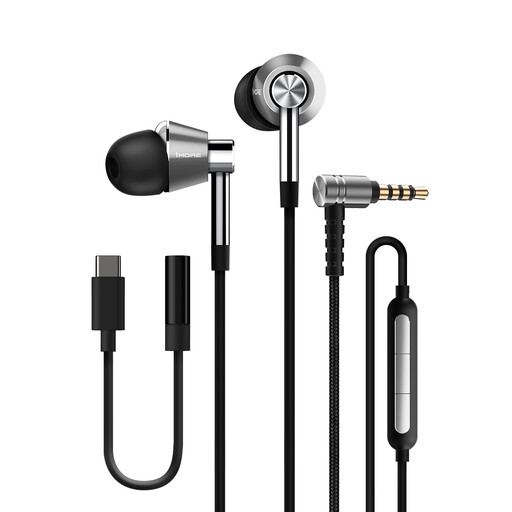
1MORE E1001 Triple Driver wired in-ear headphones, silver
For listening practice on a dedicated device if you prefer wired in-ear headphones; check your playback device's connection.
Product name: Triple Driver, wired, MEMS microphone.
View at Joybuy
 No image available
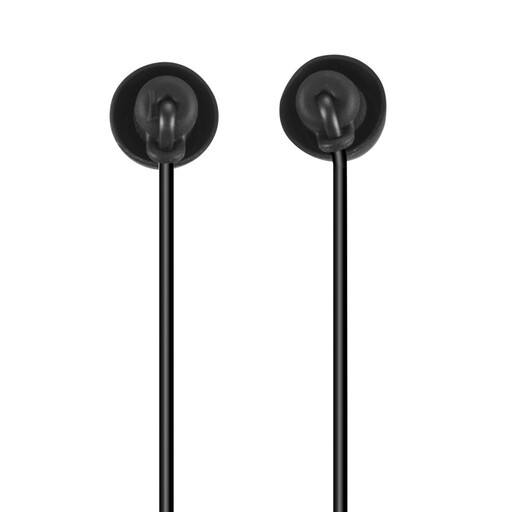
Calm Headphones in-ear headphones with microphone, USB-C, black
For a device with a compatible USB-C audio output; a microphone is useful if your exercise records your answers.
Product name: USB-C, microphone, black.
View at Joybuy
 No image available
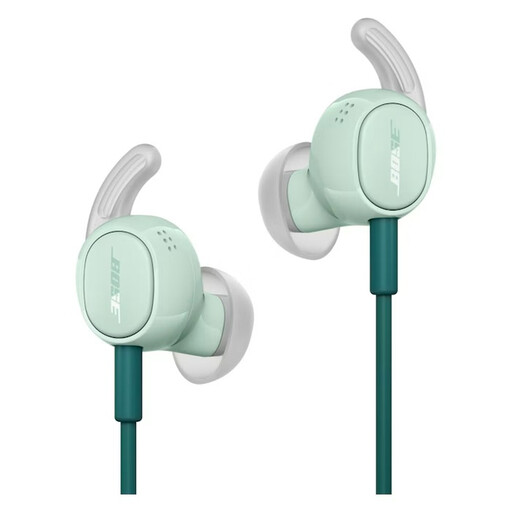
Bose wired noise-cancelling earbuds, Dewdrop Mint
For a study space with distracting background noise if you're looking for wired in-ear headphones with noise cancellation; check that the connection is compatible with your device first.
Product name: wired, noise-cancelling, Dewdrop Mint.
View at Joybuy
 No image available
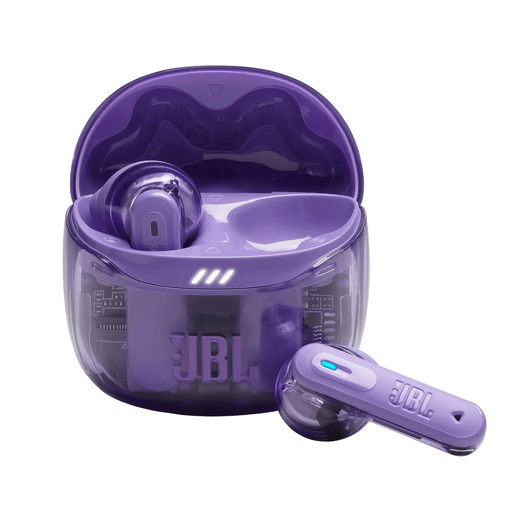
JBL TUNE Flex 2 True Wireless NC earbuds, Ghost Purple
For learners looking for wireless in-ear headphones in a noisy environment; bear in mind that True Wireless earbuds need to be charged.
Product name: True Wireless, NC, Ghost Purple.
View at Joybuy
 No image available
Sony MDR-EX110AP earphones with microphone, Metallic Black
For listening practice where a microphone and smartphone controls suit your needs; check the connection to your study device.
Product name: microphone, smartphone controls, Metallic Black.
View at Joybuy
Frequently asked questions about in-ear headphones for German listening practice
Do I need a microphone just for listening practice?
No, not if you're only playing recordings. If your learning app needs to record your answers, check the microphone input and the microphone function of the specific headphones; an audio-only cable does not confirm that this feature is available.
How should I set up in-ear headphones for longer practice sessions?
Try the supplied eartip sizes with a familiar spoken recording and start at a low volume. The World Health Organization points out that volume, duration and frequency of exposure to loud sounds affect the risk to your hearing. It recommends well-fitting, noise-cancelling headphones to help prevent people from compensating for distracting sounds by turning up the volume.
What should I do if the headphones are faulty?
For a consumer purchase in the EU, the legal guarantee is separate from any voluntary warranty. The EU's Your Europe website states that you are entitled to a minimum two-year legal guarantee from the date you receive the goods; the circumstances of the purchase and the fault determine the specific claim.
How should I dispose of old or faulty in-ear headphones?
The German Environment Agency advises against putting waste electrical equipment in household rubbish. You can drop it off free of charge at a recycling centre or at a retailer.


