What should you look for when buying?
First, check that the microphone captures your pronunciation clearly enough. Then make sure the connection, room and comfort suit your workspace.
It helps to consider four different priorities when choosing a headset. The table shows what to check for each one and who is most likely to need it.
| What matters | What to check before buying | Who is this most important for? |
|---|
| Pronunciation details and microphone position |
Check that the microphone boom is adjustable, then test it with typical sounds. Shure’s SM35 guide recommends positioning it at the corner of your mouth rather than directly in front of it; Audacity suggests aiming for a maximum peak level of around −6 dB. |
If I need to assess individual sounds and quiet word endings, I test the microphone position and level in a sample recording. Around 36% of consumers put pronunciation detail first. |
| A compatible connection |
Check that the USB-A, USB-C or analogue plugs match your available sockets, then select the microphone as the recording source in your software. Jabra documents USB-A or USB-C connections depending on the Evolve2 30 SE version; RØDE describes the NTH-100M as having a TRRS cable and splitter. |
If I want to record on my computer without a separate audio device, I check the plugs and inputs before selecting the recording source. Around 29% of consumers prioritise a straightforward connection. |
| Background noise and audio processing |
Listen to a test recording made in your usual room and check the microphone modes available in the app you use. Zoom documents different microphone modes, but you should listen for yourself to see how they affect the sounds in your recording. |
If there’s an audible fan or other background noise, I want to hear how my voice sounds in the actual recording rather than relying on a filter alone. Around 21% of consumers prioritise handling background noise. |
| Fit and monitoring during longer lessons |
Check the fit, ear cushions, cable routing and monitoring during a longer test. The German Social Accident Insurance recommends taking the intended use into account when choosing a headset. |
If I’m recording several lessons back to back, the fit and monitoring need to work for the full session. Around 14% of consumers prioritise comfort over longer periods of wear. |
Brands to consider
The examples below refer to documented product ranges and connection options, rather than making a general judgement about the brands.
RØDE
The NTH-100M combines closed-back over-ear headphones with a detachable boom microphone, and RØDE also describes it as suitable for content production.
- RØDE describes the microphone position as designed to reduce plosives.
- Check the TRRS connection or the supplied splitter for separate sockets. The manufacturer’s specifications are no substitute for testing it with the sounds in your lesson.
Audio-Technica
The BPHS1 is a broadcast headset with closed-back headphones and a movable dynamic microphone boom.
- For the BPHS1 version, Audio-Technica documents an XLR microphone plug and a 6.3 mm headphone plug.
- These connections won’t plug straight into a single USB port; check whether your existing audio setup supports both signal paths. The BPHS1-XF4 version has a different cable configuration.
Logitech
The H390 is a wired USB computer headset. Logitech documents USB-A and USB-C versions, both with controls on the cable.
- The documented versions have volume and mute controls on the cable.
- Noise reduction advertised by the manufacturer isn’t independent evidence of how clearly pronunciation details will come through in your recording.
Jabra
The Evolve2 30 SE is a USB headset designed for computer communications, documented in both mono and stereo versions.
- Jabra documents two microphones and different USB connections depending on the version.
- In its technical datasheet dated 8 April 2025, Jabra announced that the original USB-A and USB-C SKUs would be replaced by USB-C/A SKUs in 2025. So check the exact product version.
beyerdynamic
The wired, closed-back MMX 300 PRO is an analogue headset alternative originally positioned for gaming.
- beyerdynamic specifies a condenser microphone with a cardioid pickup pattern and two 3.5 mm plugs for PC use.
- Being designed for gaming doesn’t automatically make it suitable for pronunciation lessons. Test a recording in the room you plan to use and check that it’s comfortable for the length of your sessions.
Joybuy products at a glance
The Joybuy picks below include USB and 3.5 mm connections, as well as a wireless model with an additional 3.5 mm cable. Before buying, check which connection is intended for the microphone recording you need and the input on your device.
 No image available
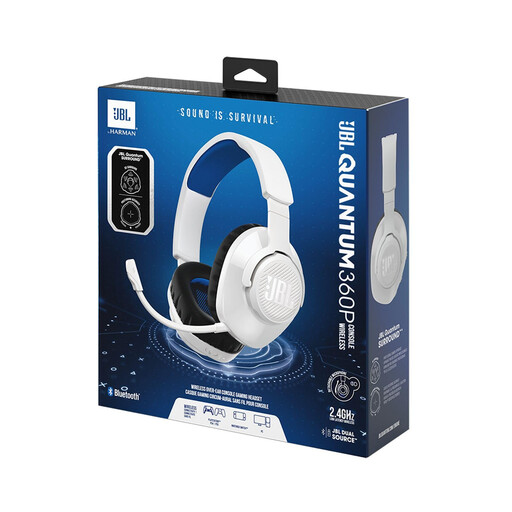
JBL Quantum 360P Wireless Over-Ear Gaming Headset, White
Could be an option for voice recordings with a boom microphone; test how clearly it captures pronunciation using the connection you’ll actually use.
Described as a wireless headset with Bluetooth and a detachable 3.5 mm cable. A 3.5 mm audio connection is needed for wired use.
View at Joybuy
 No image available
Logitech H540 Stereo Headset
A USB option for recording on a computer, provided its connection is compatible with the USB-A version.
Specifications include a USB-A connection, an adjustable microphone, and volume and mute controls.
View at Joybuy
 No image available
Logitech 960 Stereo Headset
Could work for computer recordings if you’re looking for a wired USB headset with an adjustable microphone.
Specifications include a USB connection, a 2.4 m cable, and volume and mute controls. A USB port is needed for the computer connection described.
View at Joybuy
 No image available
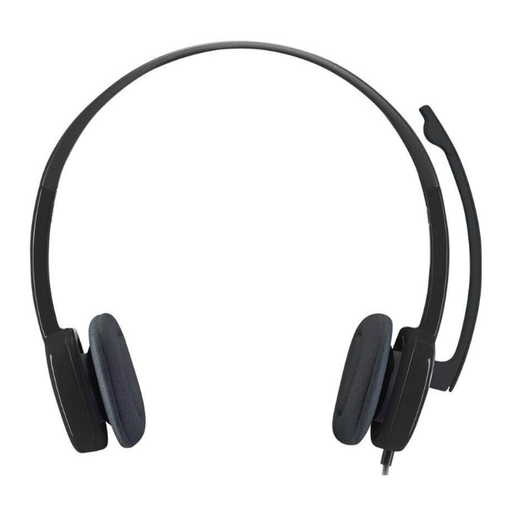
Logitech H151 Stereo Headset
An analogue option if your computer or recording device has a compatible 3.5 mm audio connection.
Specifications include an adjustable microphone boom that rotates through 180°, plus volume and mute controls on the cable. The connection is a 3.5 mm audio jack.
View at Joybuy
 No image available
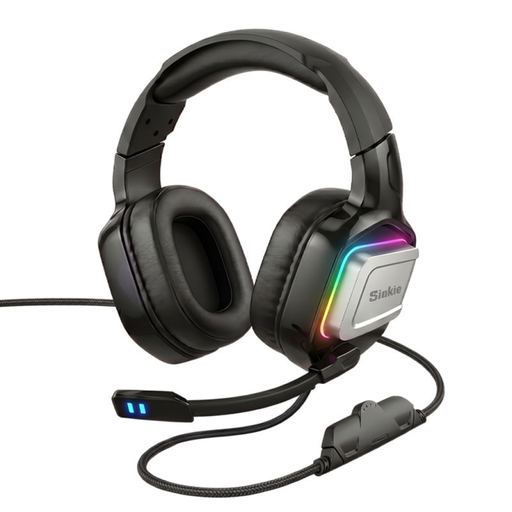
Siukie L200 Gaming Headset with Microphone
Could be an option for voice recordings with a flexible boom microphone, if your device has a compatible 3.5 mm audio connection.
According to the product description, audio runs through the 3.5 mm connection, while the USB connection is for RGB lighting.
View at Joybuy
Frequently asked questions
Where should the boom microphone sit when recording pronunciation?
For a test recording, position it to the side of your mouth rather than directly in front of your breath. Shure’s SM35 guide recommends placing it at the corner of your mouth to reduce plosives; then check the level and clarity using your own headset.
How do I set up recording on my computer?
First, check that the specific USB or jack version is compatible with your device, then select the connected microphone input in your recording software. Make a short test recording and check the level; Audacity’s manual suggests aiming for a maximum peak level of around −6 dB.
Can I remove all background noise after the lesson?
Don’t assume that every sound can be removed afterwards. Audacity describes noise reduction for steady background sounds such as fan noise, but not for one-off sounds such as a door slamming. So make a test recording in your usual room first and listen to it.
What extra audio equipment might a broadcast headset need?
The documented Audio-Technica BPHS1 requires a compatible XLR microphone input and a 6.3 mm headphone output. If your setup doesn’t have these connections, you may need additional compatible audio equipment; check your sockets against the exact cable version before buying.
Can I record someone else’s voice for a lesson in Germany?
Section 201 of the German Criminal Code (StGB) makes it a criminal offence to record another person’s private spoken words without authorisation; this is not the same as recording your own voice. If other people are taking part or can be heard, check in advance that you’re authorised to record them and share the recording as planned.


