
Lieferung heute & morgen

Qualitätsgarantie

Willkommens-Angebote freischalten: KOSTENLOSE Lieferung | Bis zu 80 % RABATT | Kostenlose 30-Tage-JoyPlus-Testphase
App herunterladen
Anyone looking to buy German tinned meat online will find a wide selection of tinned sausages, ready meals in jars and long-life meat dishes. However, products can vary considerably in meat content, seasoning, allergens, portion size and storage requirements. A low unit price therefore says little about whether a product is actually suitable for your household.
Terms such as “goulash”, “luncheon meat” or “sausage in a jar” initially describe the type of product. The ingredients list is what really matters. For example, a tin of beef goulash may contain 51% beef, while the remaining content consists of sauce, water, starch and vegetables. With meat in its own juices, the meat content is likewise not automatically the same as the net weight.
Unopened tins of meat can usually be stored at room temperature. Even so, you should pay attention to the best-before date, storage instructions and condition of the packaging. Tins or jars with damaged seals, bulging lids or visible damage should not be added to your basket. After opening, many products must be refrigerated and eaten within a few days.
Depending on the recipe, German tinned sausages may contain mustard, celery, gluten, milk or soya. Even products without obvious cereal ingredients may contain relevant allergens in their spice mixes or sauces. Check the ingredients and allergen information on the product page and packaging before buying.
The quantitative ingredients declaration shows what proportion of meat or liver the product contains. For example, Eifeler Liver Sausage 160 g is listed as containing 75% pork and 15% pork liver. According to the product information, Müllers Fine Liver Sausage in a Jar contains 58% pork and 24% pork liver.
Corned beef can have a higher meat content: Exeter Corned Beef 340 g is listed as containing 91.5% cooked beef and 5% beef. For a well-informed choice, you should also check the levels of salt, fat and sugar, as well as any thickeners and preservatives.
The pack size should match your usual consumption. A 160 g jar is suitable for a small household or a single meal, while 400 to 500 g packs may be more practical for several portions.
Unopened products are normally stored in a cool, dry place away from direct sunlight. Once opened, follow the relevant manufacturer’s instructions. For Eifeler Liver Sausage, the product information states that it should be refrigerated after opening and eaten within a few days. Küstengold Mini Bockwurst should also be refrigerated after opening and eaten within three days.
For sausages, hot water is usually sufficient. Jeden Tag Hot Dog Sausages, for example, are heated in hot, non-boiling water for around five minutes. Tinned goulash can be heated on the hob or in a suitable microwave-safe container. The specific instructions on the packaging always take precedence.
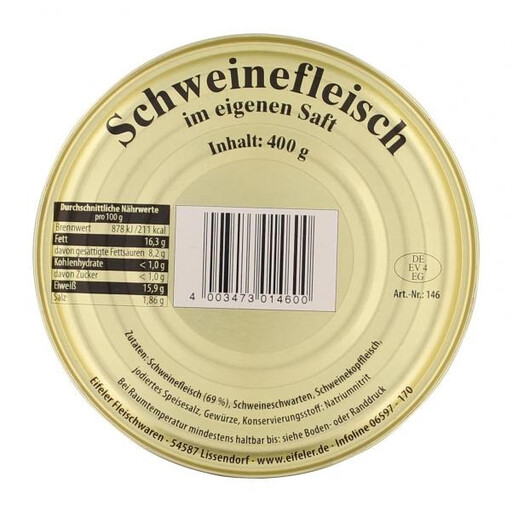
Why this product suits this profile: The 400 g tin is a manageable size for cold meals, quick pan-fried dishes or simple everyday meals.
The stated meat content of 69% makes the composition easier to understand than choosing based on the product name alone.
400 g net quantity, less than 1 g of carbohydrates per 100 g and room-temperature storage according to the product information.
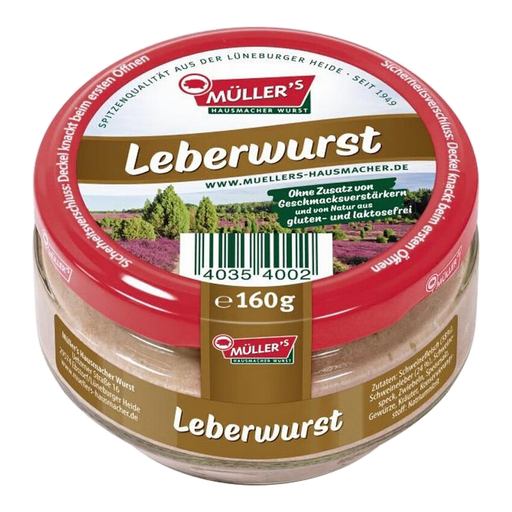
Why this product suits this profile: The jar format and traditional recipe are ideal for shoppers looking for a classic liver sausage to spread on bread.
The product information states that it contains 58% pork and 24% pork liver, with no declared allergens. The packaging should still be checked before consumption.
160 g jar, ready to eat and, according to the supplier, with a minimum unopened shelf life of 96 days; refrigerate for two to three days after opening.
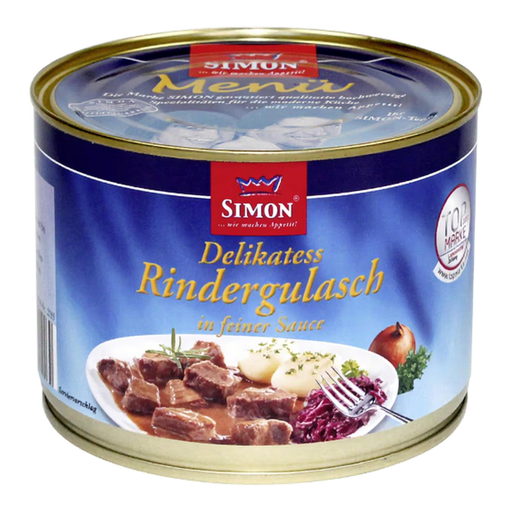
Why this product suits this profile: The 500 g tin is suitable for several portions, camping, stocking up or enjoying a hot meal without lengthy preparation.
The ingredients list states 51% beef and identifies gluten and celery as allergens. This makes it easier to choose the product according to specific dietary requirements before buying.
500 g net quantity, 8.5 g of protein per 100 g and preparation on the hob or in the microwave according to the product description.
We have put together a complete, regularly updated list of products that fully meet these strict selection criteria and the safety regulations applicable in the EU.
For a traditional cold meal, alternatives to liver sausage in a jar include luncheon meat, brawn and pork mince or lard-based products. According to the product information, Eifeler Meat Paste 400 g contains 43% pork and 11% cooked ham. If you prefer individual portions, you can choose mini Bockwurst such as Küstengold Mini Bockwurst 6 x 30 g or Wiener sausages from Meica.
For quick hot meals, suitable options include Eifeler Paprika Goulash 400 g, Simon Pork Goulash in Sauce 300 g or Buss Cevapcici in Sauce 300 g. It is worth checking the preparation method for these products: some packs are heated in a bain-marie, while others need to be transferred to a microwave-safe container.
Luncheon meat is also highly versatile. According to the ingredients declaration, Chung Jung One Luncheon Meat contains 93% pork and can be fried in slices, served cold or added to rice and pan-fried dishes. Exeter Chicken Luncheon Meat, on the other hand, is listed as containing 80% mechanically separated chicken and includes wheat starch.
Shelf life varies from product to product and is determined by the best-before date on the jar or tin. According to the product information, some of the products mentioned have an unopened minimum shelf life of around 48 to 96 days. The date on the packaging is always the definitive guide to storage life. After opening, tinned meat should be refrigerated and usually eaten within two to three days.
No. Many liver sausages, corned beef and luncheon meat products are ready to eat and can be enjoyed cold. Bockwurst, Wiener sausages and hot dog sausages are often heated in hot, non-boiling water. Goulash and other ready meals from a tin should be heated thoroughly in accordance with the instructions on the packaging.
Before buying, check the highlighted allergens in the ingredients list. Common allergens include mustard, celery, gluten, milk and soya. Statements such as “May contain traces of …” indicate the possible presence of unintended traces. If you are unsure, always refer to the current labelling on the product packaging.