
Lieferung heute & morgen

Qualitätsgarantie

Willkommens-Angebote freischalten: KOSTENLOSE Lieferung | Bis zu 80 % RABATT | Kostenlose 30-Tage-JoyPlus-Testphase
App herunterladen
A remote-controlled car that responds to hand movements fascinates children and adults alike. It promises action, technology, and a completely new way to play. However, the market is flooded with models whose actual performance often falls short of their lofty advertising claims. Before you make a purchase that ends in disappointment, it's crucial to understand the typical weaknesses and know what really matters.
As a Joybuy Product Recommendation Officer, I'm here to help you separate the wheat from the chaff. This guide will show you the most common purchasing pitfalls and explain the key technical features, so you can find a model that delivers long-lasting fun.
Many buyers get frustrated shortly after their purchase because the expensive toy doesn't live up to its promises. Pay close attention to these three points to avoid buyer's remorse:
To avoid the problems mentioned above, you should check a few technical specifications. These parameters are crucial for the performance and longevity of your remote-controlled car.
Battery capacity is measured in milliampere-hours (mAh). A higher value generally means a longer runtime.
A reliable connection between the transmitter and the vehicle is essential.
Durability and the range of functions determine the long-term play value.
Based on the criteria above, we have compiled a selection of products that cater to different needs.
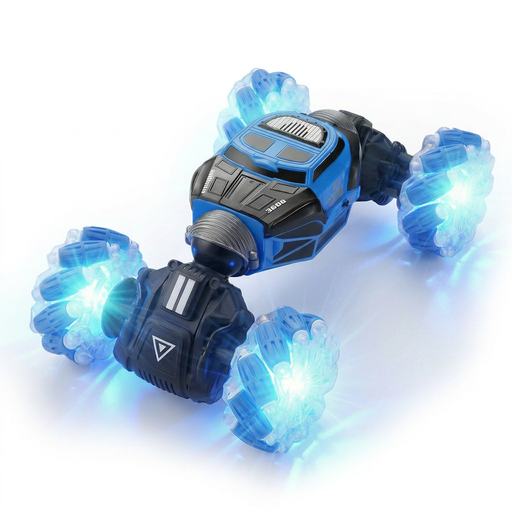
Why it's a match: This model is aimed at users looking for the full feature package. It combines intuitive gesture control with a classic remote and delivers maximum action thanks to its all-wheel drive and stunt modes.
The 1200 mAh battery allows for a runtime of over 30 minutes. The dual control mode offers a reliable alternative if gesture control is impractical in certain situations. The 4WD system makes it ready for off-road terrain.
Two control options (gesture watch and classic remote) for maximum flexibility. Comprehensive stunt functions including 360° rotation and side-to-side drifting.
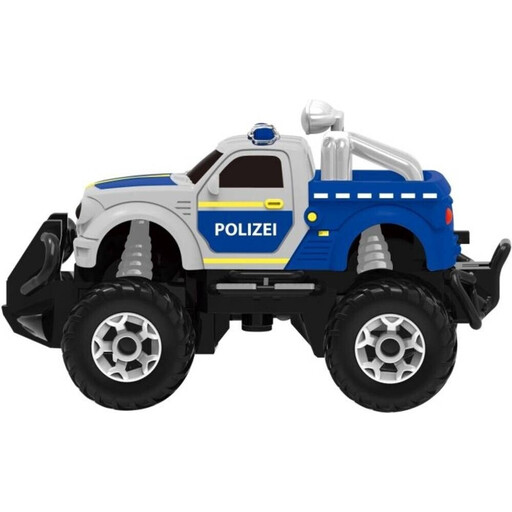
Why it's a match: Ideal for younger children or beginners looking for a straightforward and robust RC vehicle. It focuses on the fundamentals of remote-controlled driving without the complexity of gesture control.
This model forgoes complex stunt or gesture functions, opting instead for a proven, classic remote with 2.4 GHz technology. Its simple design makes it more resilient for everyday use.
Simple four-way control (forward, back, left, right) that is easy for children aged 5 and up to learn. Integrated light effects provide extra fun.
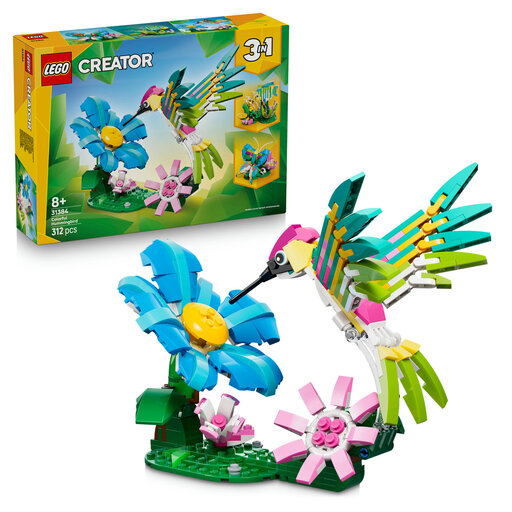
Why it's a match: An excellent alternative for children who love technology and construction. Instead of controlling a pre-built vehicle, they can get creative and discover mechanical principles in a playful way.
As a building set, it bypasses the typical problems of RC vehicles like battery and control weaknesses. LEGO is known for its consistently high material quality and clear, easy-to-understand building instructions.
The 3-in-1 concept offers long-lasting play value, as the same bricks can be used to build three different models (hummingbird, butterfly, fish). Promotes fine motor skills and spatial reasoning.
We have compiled a complete, up-to-date list of products that fully meet these strict selection criteria and German safety regulations.
The battery life heavily depends on the model and its battery capacity (mAh). Basic models often last only 15–20 minutes. Look for models with a capacity of at least 1000 mAh, like the featured Tokky model with 1200 mAh, to achieve a playtime of 30 minutes or more.
That depends on the drive system and tires. An off-road remote-controlled car with all-wheel drive (4WD) and treaded rubber tires can easily drive on grass, firm sand, and slightly uneven terrain. For drifts and high-speed maneuvers, smoother surfaces like asphalt, tiles, or parquet flooring are more suitable.
Generally, yes. Controlling the car with hand movements is intuitive, but it requires some practice and coordination at first. A model that also includes a classic remote control is a great choice. This allows the child to be gradually introduced to gesture control without getting frustrated. Adult supervision is recommended during the initial phase.