
Lieferung heute & morgen

Qualitätsgarantie

Willkommens-Angebote freischalten: KOSTENLOSE Lieferung | Bis zu 80 % RABATT | Kostenlose 30-Tage-JoyPlus-Testphase
App herunterladen
A remote-controlled car that responds to hand movements is a captivating blend of technology and fun. However, the market is saturated with models whose actual performance often falls short of their advertising claims. Before you make a decision, it's crucial to understand the common pitfalls that can lead to disappointment. This guide will help you separate quality from hype and find a model that delivers lasting enjoyment.
Authored by: Joybuy Product Recommendation OfficerDate: July 28, 2026
Many buyers report similar issues that can quickly sour the experience. Pay attention to these three critical points to avoid a bad purchase.
To avoid these problems, you should check three central technical parameters before buying. These reveal the true quality and performance of the vehicle.
The type of drivetrain determines where the car can go. A simple two-wheel drive (2WD) is usually only suitable for smooth indoor surfaces. For outdoor use on grass, gravel, or sand, an off-road RC car with 4WD (four-wheel drive) is essential. This provides the necessary traction and stability. Also, look for a robust suspension and flexible tires that can absorb shocks. Models advertised as a 360-degree stunt car require a special design that enables quick spins and flips.
A stable connection between the transmitter and the vehicle is critical. Modern RC cars use a 2.4 GHz frequency, which allows for interference-free control even with multiple vehicles nearby. For an RC car with wristband control, the quality of the built-in G-sensor is decisive. It should translate hand movements precisely and without noticeable lag. A second, traditional remote included in the package is a bonus, as it offers an alternative, often more precise, control method.
Battery capacity, measured in milliampere-hours (mAh), is a direct indicator of runtime. Look for models with at least 1000 mAh to ensure a playtime of 20 minutes or more. A USB-rechargeable battery is convenient, but a replaceable battery is even better, allowing you to buy a spare for uninterrupted fun. The body should be made of durable ABS plastic. For a toy car for ages 6 and up, safety certifications like the CE mark and compliance with the EN 71 toy safety standard are indispensable. Additional features like an RC car with lights and sound effects are attractive but consume extra power.
Here are some recommendations tailored to different user profiles and requirements.
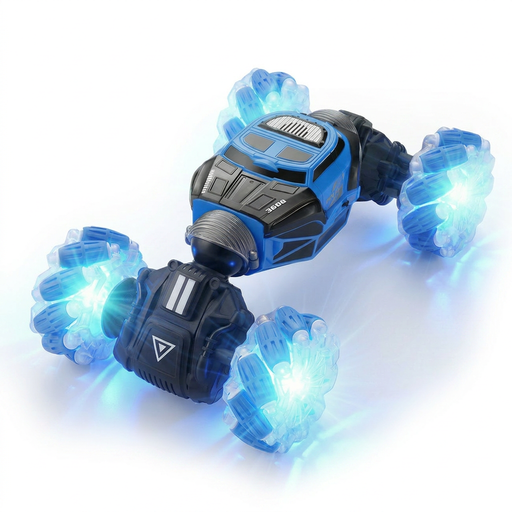
Why This Fits Their Persona: This model is ideal for children aged 6 and up and teens looking for a versatile and action-packed driving experience. The combination of intuitive gesture control and a precise traditional remote offers variety for different play scenarios.
The 1200 mAh battery provides over 30 minutes of playtime according to the manufacturer, sidestepping the short battery life trap. The body made of ABS plastic and the 4WD drivetrain ensure the necessary durability for off-road use.
Dual control system (gesture wristband and 2.4 GHz remote). Four-wheel drive for off-road driving and 360-degree stunt functions.
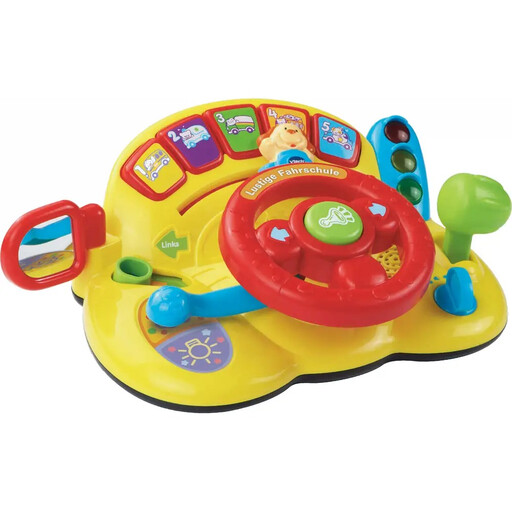
Why This Fits Their Persona: An excellent choice for toddlers from 12 months old. It offers a safe and age-appropriate introduction to vehicle-themed interactive toys without the complexity of a real RC car.
This toy avoids the trap of buying a device that is too complex for a young child. Instead of remote control and battery management, the focus is on haptic elements like a steering wheel, gear stick, and buttons.
Promotes fine motor skills and playfully teaches first facts about animals and numbers. Three play modes and melodies provide long-lasting engagement.
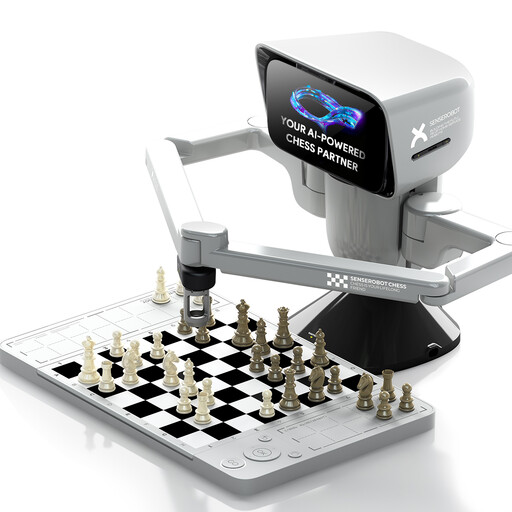
Why This Fits Their Persona: Perfect for older children, teens, and adults who seek a strategic challenge and are fascinated by modern robotics. It's less a toy and more an interactive training partner.
This is a high-quality, specialized product. It avoids the "disposable toy" trap by offering a durable, technologically advanced solution for a specific hobby that grows with the user's skill level.
An AI-powered opponent with a physical robotic arm that moves the pieces. It connects digital play via an app with a real, physical gaming experience.
We've curated a complete, up-to-date list of products that fully meet these strict selection criteria and German safety regulations.
1. How long does the battery on a gesture-controlled RC car really last? The actual battery life depends heavily on the model and the intensity of use. As a rule of thumb, look for a battery capacity of at least 1000 mAh. This typically allows for an active driving time of 20 to 30 minutes. Models like the Tokky QX031, with their 1200 mAh battery, even offer over 30 minutes of playtime according to the manufacturer. Always check the product specifications.
2. Is gesture control difficult for children to learn? No, most systems are designed for intuitive operation. Control is typically via a wristband where simple hand and arm movements are translated into driving commands (forward, backward, turn). Children from about six years old often get the hang of it within a few minutes. It is advisable to conduct the first driving attempts in an open and safe environment.
3. What should I look for in terms of safety, especially for a toy car for ages 6 and up? Safety is the top priority. Look for the CE mark, which confirms that the product meets EU requirements. Additionally, it should comply with the European toy safety standard EN 71. The material must be robust and shatterproof (e.g., ABS plastic), and there should be no sharp edges. For battery-operated toys, the battery compartment must be securely screwed shut, and the charging process should always be supervised by an adult.