
Lieferung heute & morgen

Qualitätsgarantie

Willkommens-Angebote freischalten: KOSTENLOSE Lieferung | Bis zu 80 % RABATT | Kostenlose 30-Tage-JoyPlus-Testphase
App herunterladen
An RC car that responds to a wave of the hand, performs spins, and climbs over obstacles is at the top of many wish lists. Gesture control technology has transformed the classic RC car into an interactive experience. However, not all models live up to the promises made by their often-impressive packaging. Before you make a decision, it's important to know the common weaknesses that often only become apparent right out of the box.
This guide will help you understand the technical features that define a durable and entertaining gesture-controlled car, and show you how to separate exaggerated marketing claims from solid facts.
The selection is vast, and many products advertise similar features. However, certain flaws repeatedly lead to disappointment, quickly rendering a promising toy useless.
To avoid these problems, you should focus your attention on three core technical areas. These parameters are the primary determinants of the vehicle's performance, durability, and play value.
A reliable control system is the foundation of any good RC vehicle. Look for models equipped with a 2.4 GHz remote control system. This frequency is largely resistant to interference and allows multiple vehicles to operate simultaneously without their signals affecting each other. For gesture control, the quality of the sensor in the wristband is crucial. Models that also include a classic handheld remote offer a valuable alternative and a reliable backup.
The off-road capability and the ability to perform stunts depend directly on the drivetrain and wheels.
The durability of a toy designed for action is determined by its material.
Based on the criteria above, we have identified several models that are well-suited for different user profiles.
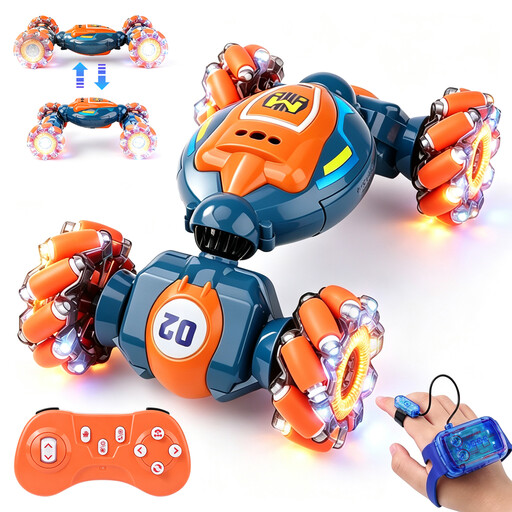
Why this model is a great fit: Ideal for kids who are fascinated by spectacular effects. The combination of glowing Mecanum wheels, spray mist, and the ability to drift sideways offers high visual appeal and diverse play opportunities. A perfect gift for kids looking for something special.
The dual control system (handheld remote and gesture wristband) minimises the potential for frustration from inaccurate controls. The body, made of thickened ABS plastic, is designed for durability.
The omnidirectional Mecanum wheels enable complex driving manoeuvres like sideways drifting, which are impossible with standard wheels. The set includes batteries for both the car and the gesture wristband.
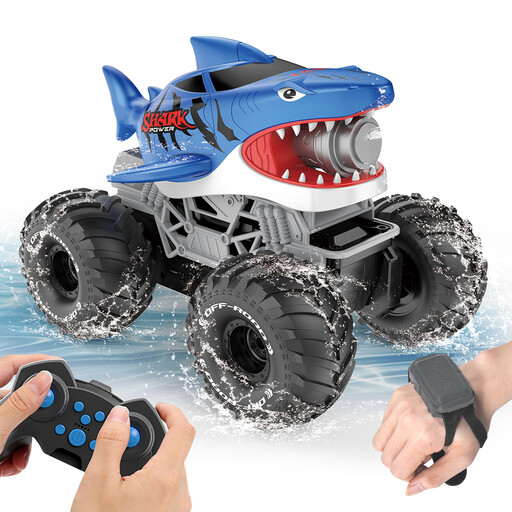
Why this model is a great fit: Perfect for kids who want to play indoors, outdoors, and even in the water. Its amphibious design and 4-wheel drive make it a versatile companion for lawns, puddles, and uneven terrain. A great toy for boys who love adventure.
The waterproof construction and robust propeller-tires are specifically designed for use in various environments, avoiding the pitfall of fragile mechanics. Two included batteries address the problem of short playtime.
The ability to drive on both land and water is a clear unique selling point. The manufacturer-stated playtime of approx. 40 minutes with both batteries is above average.
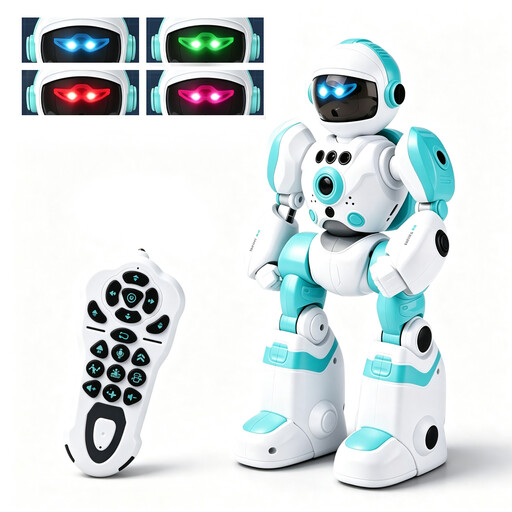
Why this model is a great fit: For kids whose interests go beyond just vehicles. This robot uses gesture sensing not only for movement but also for dances and interactions. Features like programming and voice recording offer added educational value.
By embedding gesture control into a broader spectrum of functions, it's not just an isolated gimmick. The focus is on interaction, which shifts expectations away from pure driving precision. The robust design is optimised for indoor use.
The combination of gesture control, programmability, music and dance functions, and voice recording in one device provides a comprehensive STEM play experience (Science, Technology, Engineering, and Mathematics).
We've compiled a complete, up-to-date list of products that fully meet these strict selection criteria and safety regulations.
1. How long does the battery last on a gesture-controlled RC car? The battery life varies depending on the model and intensity of use. Look for products that come with two rechargeable batteries. Such sets often provide a total playtime of 30 to 50 minutes. Checking the battery capacity (e.g., 500 mAh) in the product description also gives a good indication.
2. Is gesture control difficult for younger children (e.g., 5 years old) to learn? Most models are designed for intuitive operation. The wristband controller responds to simple hand and arm movements that children typically learn quickly. Models that also offer a classic remote control are particularly recommended, as they provide an alternative if the child needs some time to get used to the gesture controls.
3. Can multiple of these cars operate next to each other without interference? Yes, as long as the vehicles use a 2.4 GHz remote control system. This technology prevents signal overlap and interference, allowing several children to drive their cars simultaneously or race against each other without affecting the controls. You will usually find this information in the product's technical specifications.