
Lieferung heute & morgen

Qualitätsgarantie

Willkommens-Angebote freischalten: KOSTENLOSE Lieferung | Bis zu 80 % RABATT | Kostenlose 30-Tage-JoyPlus-Testphase
App herunterladen
An RC car that responds to a hand gesture, spins 360 degrees, and tackles rough terrain—the fascination for these toys is as strong as ever for both children and adults. However, the market is flooded with models whose promises often outweigh their actual performance. Before you make a decision, it's crucial to understand the common pitfalls that can quickly put an end to the fun.
As your Joybuy Product Recommendation Officer, I'm here to help you distinguish essential features from superfluous marketing gimmicks. This guide focuses on the objective criteria that define a quality gesture-controlled RC car.
The disappointment after unboxing is often significant when an expensive toy fails to live up to its promises. Pay close attention to these three points to avoid buyer's remorse:
To ensure you get a durable and entertaining model, you should carefully examine three technical aspects. These define the performance and versatility of an RC car.
A high-quality hand-controlled car often offers more than just gesture control. A dual-control option—combining a gesture-control wristband with a classic remote—is a clear advantage. It allows the user to choose the appropriate method for the situation: intuitive gestures for cool stunts and the precise remote for races or tight manoeuvres.
Also, pay attention to the frequency. 2.4 GHz radio technology is the standard today, ensuring a stable, interference-free connection over a range of often 30 metres or more. This prevents signal overlap with other remote-controlled devices nearby.
The ability to drive on various surfaces depends directly on the drivetrain. A 4WD (All-Wheel Drive) system is essential for an off-road RC car with lights. It provides the necessary traction on sand, grass, or uneven ground. The wheels themselves also play a major role. So-called Mecanum wheels, which consist of several individual rollers, enable lateral movements and spectacular drifts. A 360-degree drift car like this offers a much more dynamic driving experience. The chassis material, ideally robust ABS plastic, determines its durability during stunts and off-road use.
Battery capacity is measured in milliampere-hours (mAh). A value of 1200 mAh or more is a good indicator of a reasonable playtime of around 30 minutes, as claimed by some manufacturers. Check the charge-to-playtime ratio. A good model shouldn't take more than three to four hours for a full charge.
For a remote control car for kids, safety is crucial. Look for recognised certifications like the CE marking and compliance with the EN 71 toy safety standard. Integrated overcharge protection for the lithium battery is another important safety feature.
Here are some models that, based on objective features, are suitable for different user profiles.
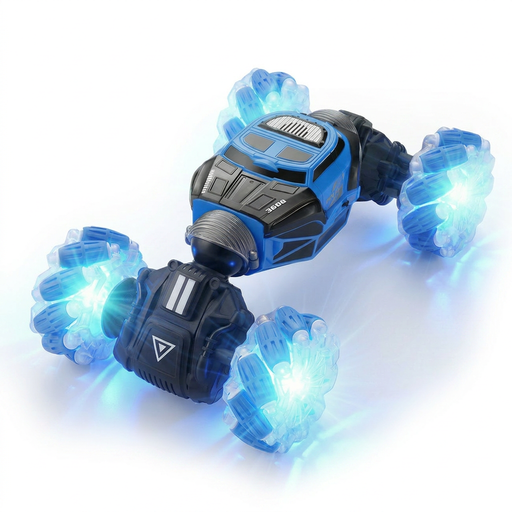
Why This Fits Their Persona: This model combines all the in-demand features: 4WD off-road capability, dual control (gesture and traditional), and 360-degree stunts with light and music effects. It's a comprehensive solution for anyone who wants to experience the full spectrum of RC action.
The high-quality ABS plastic construction ensures impact resistance. According to the manufacturer, the 1200 mAh battery allows for over 30 minutes of operation, addressing the common problems of a short lifespan and brief playtime.
The dual control modes offer flexibility for beginners and advanced users. The combination of 4WD and stunt functions makes it a versatile vehicle for both indoor and outdoor use.
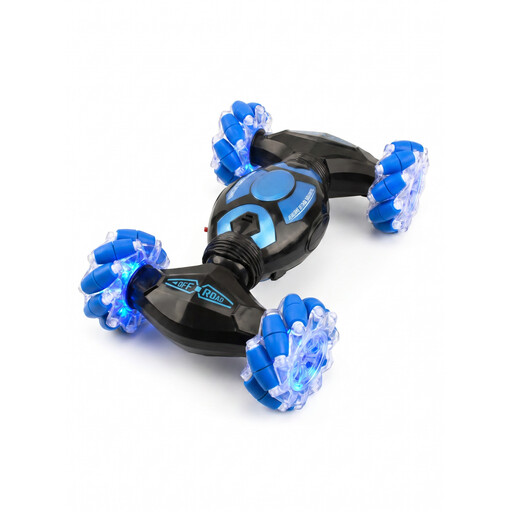
Why This Fits Their Persona: This vehicle offers the core features like gesture control, 4WD, and 360° flips in an accessible package. It's ideal for users who want to get their first experience with RC stunt cars without being overwhelmed by too many extra features.
The dual control system allows beginners to start with the traditional remote if gesture control seems too complex at first. This prevents the potential frustration of an unreliable or hard-to-master control scheme.
The "twist" function, which allows the chassis to transform to switch between off-road and on-road modes, offers added play value that goes beyond simple driving and drifting.
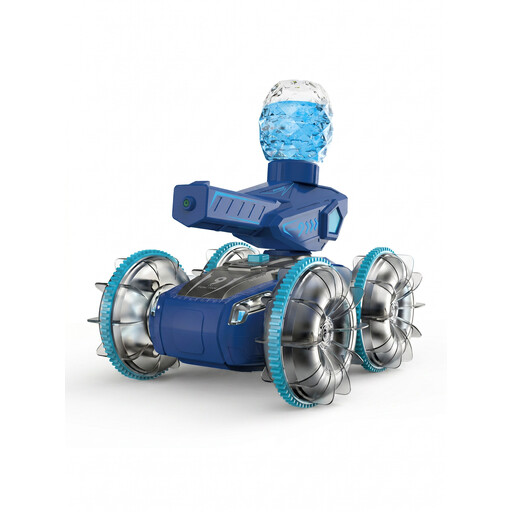
Why This Fits Their Persona: This model is designed for a very specific use case: action in and around water. It's waterproof, can drive on land and in a pool or at the beach, and also features a water blaster function for interactive "battles."
Its special, rugged design for amphibious use means it's built for conditions that would destroy a standard RC car. This counters the problem of poor durability in a unique and demanding environment.
The amphibious capability combined with the water blaster function offers a unique play experience not found in most other remote control cars.
We've compiled a complete, real-time list of products that fully meet these strict selection criteria and relevant safety regulations.
Typically, the car and the watch must be turned on at the same time to initiate the pairing process. Some models have a dedicated button on the watch or the vehicle. It's always advisable to consult the included user manual for the exact steps, as the process can vary by manufacturer.
Battery life heavily depends on the intensity of use. Continuous stunts, 360-degree spins, and the use of light and sound effects consume significantly more power than simple driving. Manufacturer claims like "over 30 minutes" often refer to ideal conditions. A realistic expectation with active use is often around 20 to 25 minutes.
Yes, many of these models are recommended for children aged 6 and up. However, adult supervision is important, especially when charging the battery and during the first few driving attempts outdoors. The dual-control feature is an advantage here: younger children often find it easier to start with the classic remote before mastering the more intuitive, yet more complex, gesture controls.