
Lieferung heute & morgen

Qualitätsgarantie

Willkommens-Angebote freischalten: KOSTENLOSE Lieferung | Bis zu 80 % RABATT | Kostenlose 30-Tage-JoyPlus-Testphase
App herunterladen
The search for the right gifts for children can be a challenge. Whether for a birthday, Christmas, or as a small token of appreciation, the selection is vast and manufacturers' promises are often grand. As a Joybuy Product Recommendation Officer, I see daily how difficult it is for parents, grandparents, and friends to make an informed decision. The goal of this guide is to provide you with objective criteria so you can make a choice that both brings joy to the child and meets your standards for safety and durability.
Before we delve into the selection criteria, it's helpful to know the three most common problems that lead to disappointed children and unnecessary expenses.
To avoid the pitfalls mentioned above, focus on three objective core parameters. These will help you realistically assess the quality and long-term play value of a product.
Safety is the most important criterion for toys for children aged 3 and up. Look for the CE marking. It signals that the manufacturer declares compliance with the EU's basic safety and health requirements. However, it's important to understand that this is a self-declaration by the manufacturer and not an independent test seal. Additional information, such as conformity with the toy standard EN 71, provides further assurance, especially regarding mechanical properties and the chemical composition of the materials. Robust, BPA-free plastics and clean workmanship with no sharp edges are indicators of a durable product.
A good toy offers open-ended play opportunities. Instead of dictating a fixed sequence to the child, it allows them to invent their own stories and scenarios.
The age recommendation on the packaging is a guideline. Consider the child's individual developmental stage and interests. A birthday gift for a boy who is fascinated by construction sites could be a crane or excavator set. A Christmas gift for a girl who loves to draw could be a writing tablet or a creative kit. Toys that offer a slight challenge without being overwhelming remain interesting the longest. For example, a set of dinosaur toys can be used for simple play as well as for building complex prehistoric worlds.
Here are some product suggestions tailored to the different needs and interests of children.
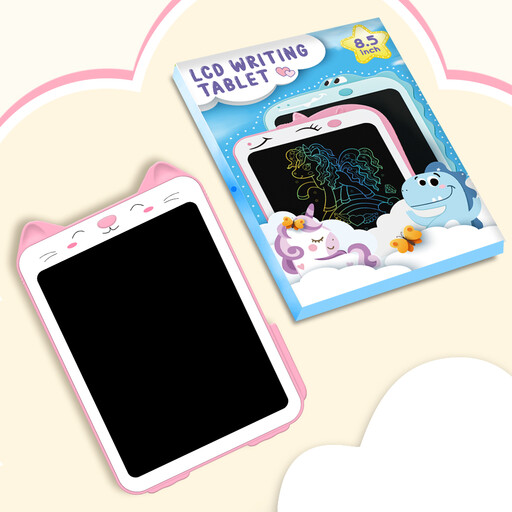
Why This Fits Their Persona: Ideal for children who love to paint and draw. Its lightweight and sturdy design makes it a practical companion for on-the-go, whether in the car, at a restaurant, or in a waiting room. It offers a clean and reusable alternative to paper and pens.
This product bypasses the "short-lived fascination" trap. Instead of a fixed play pattern, it offers a blank canvas for endless creativity, making it a durable educational and travel toy.
Promotes creativity and fine motor skills without the mess. The screen can be cleared with the push of a button, and a lock function prevents accidental erasing.
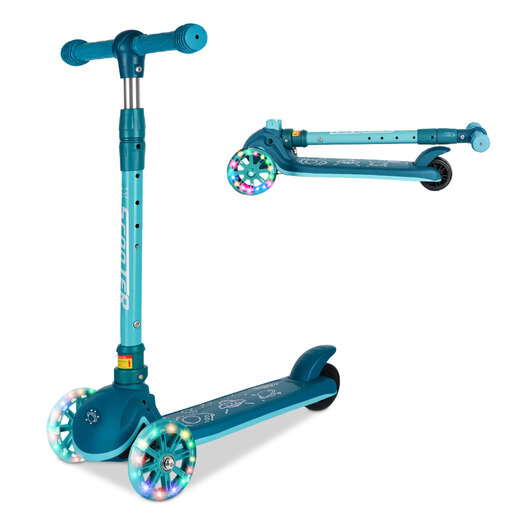
Why This Fits Their Persona: Perfect for kids with a high need for physical activity. This scooter promotes motor development and balance. The three wheels provide stability for younger riders, while the height-adjustable handlebar allows for use over several years.
With its height-adjustable handlebar and robust construction featuring a non-slip deck, this product avoids the problem of a short lifespan. It's not a disposable item but a companion through multiple growth spurts.
The lean-to-steer mechanism is intuitive and enhances coordination. The light-up wheels operate without batteries, increasing both visibility and the fun factor.
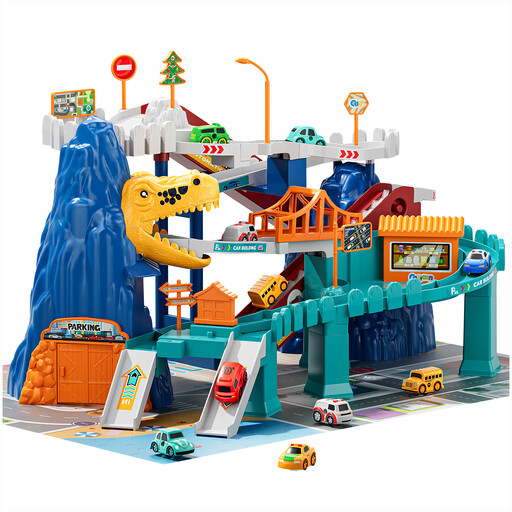
Why This Fits Their Persona: This set combines two popular themes—dinosaurs and vehicles—into a comprehensive play world. It's ideal for children who enjoy building, constructing, and acting out imaginative stories with cars and figures.
Unlike a single toy car, this set provides a complete play environment. The combination of a race track, parking garage, and 10 different vehicles allows for countless play variations and prevents boredom from setting in quickly.
Promotes an understanding of cause and effect, as well as fine motor skills during assembly. The variety of vehicles (police car, school bus, etc.) encourages role-playing and learning about traffic rules.
We've compiled a complete, up-to-date list of products that fully meet these strict selection criteria and safety standards.
1. What should I look for with the CE marking on toys? The CE marking must be visibly, legibly, and permanently affixed to the product, its packaging, or accompanying documents. Check if the marking looks plausible. For very cheap products from unknown suppliers, a critical examination of the overall build quality is advisable, as the CE marking is a self-declaration by the manufacturer.
2. How do I find a gift that stays interesting for more than a week? Choose toys that offer open-ended play opportunities. Building blocks, sets with multiple figures or vehicles, creative materials, or active toys that train a skill generally have a much higher long-term play value than toys with only a single, predefined function.
3. Are toys with lights and sounds educationally valuable? Light and sound effects can capture attention briefly but do not necessarily contribute to educational value. They are useful when they mimic a realistic function (e.g., a vehicle siren on a toy car) and support imaginative play rather than dominating it. If the effects are the toy's only appeal, it is highly likely to lose its charm quickly.