
Lieferung heute & morgen

Qualitätsgarantie

Willkommens-Angebote freischalten: KOSTENLOSE Lieferung | Bis zu 80 % RABATT | Kostenlose 30-Tage-JoyPlus-Testphase
App herunterladen
A gift of toys for children should suit their age, interests and how they’re likely to play with it. But educational toys, construction toys, soft toys and remote-controlled toys differ in more than just design and price. Small parts, batteries, magnets, material information and the space needed to store a toy can all influence your choice.
The “from 3 years” label is more than a marketing claim. It can indicate potential small parts and the level of motor skills needed to use a toy. Even a toy for children aged 3 and over may need an adult to help them get started. Take particular care with magnetic construction sets: swallowing magnets can cause serious injuries. Remove any damaged parts or exposed magnets from play immediately.
Lights, sounds, remote controls and extra accessories can all be appealing. What matters, though, is whether your child can use the features independently and whether the toy needs batteries or a charger. A fire engine toy with several vehicles can offer plenty of variety, but you’ll need enough storage space. A craft kit for children, on the other hand, is more compact and easier to take on trips.
Product images don’t always make it clear how many pieces are included. Before you buy, check the piece count, dimensions, materials, accessories and power supply. Care instructions are also important for a soft toy, while for a remote-controlled car you should check which rechargeable batteries and standard batteries are included.
Check the manufacturer’s specific age recommendation. Warnings about swallowing small parts are particularly relevant for magnetic building blocks, small vehicles and craft materials. Supervision can also be a good idea with toys that don’t need batteries, especially for younger children or when assembling them for the first time.
Products with small parts are generally unsuitable for children under 3. Look for a CE marking, and check the warnings, manufacturer’s details and the responsible person in the EU. If you’re ordering a gift from abroad, check that the product information is available in German and review the returns policy.
Educational toys should suit the way your child actually likes to play. For example, connecting and building with magnetic blocks can encourage spatial awareness and hand-eye coordination. These are potential benefits of play, not medical or therapeutic claims.
A craft kit for children or an open-ended construction toy could be a good choice for creative children. Those who are interested in vehicles might prefer a construction vehicle toy, a fire engine toy or an RC car. Dinosaur toys, meanwhile, may appeal to children with an interest in animals and prehistoric themes.
For electronic toys, check:
A manually operated toy won’t need replacement batteries. With RC toys, charging times, battery capacity and spare batteries are all worth considering before you buy.
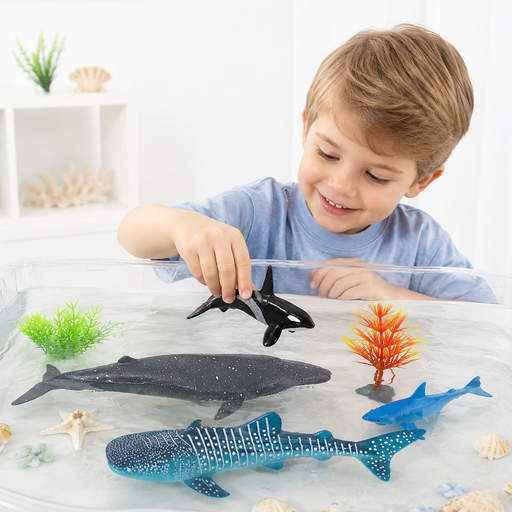
Why it suits this profile: This six-piece set includes four sea creature figures and two decorative plants. It’s ideal for role-play, storytelling and introducing children to sea life.
The six-piece contents are clearly listed. No batteries or complicated assembly are required.
Four animal figures and two plants; the product information says it’s suitable for children aged 3 and over. Small accessories require supervision.

Why it suits this profile: The set uses 7.5-cm pieces, includes 58 parts and comes with a storage bag. It’s designed for open-ended building and easy transport.
The product details specify the materials, piece count, size and warnings. Don’t continue using the set if any magnets come loose or any panels are damaged.
58 building pieces, a storage bag and no batteries required. Recommended for ages 3 and over, subject to the magnet warning.
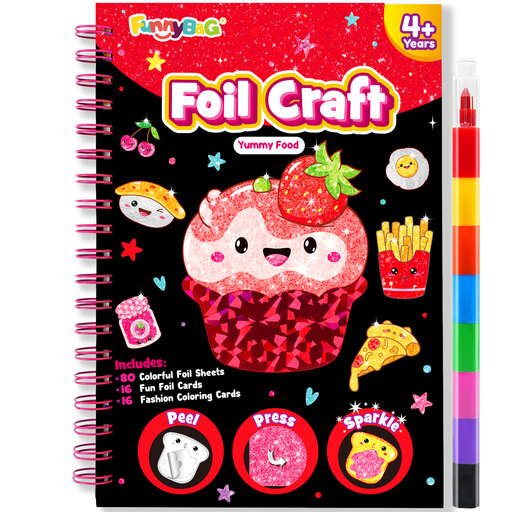
Why it suits this profile: Designed for creative activities at home or on the go, this set contains 112 pieces, including foil, design cards and a stylus.
According to the description, you won’t need glue or scissors. Check the recommended age, piece count and format against where you plan to use the set before buying.
A compact craft kit for children aged around 4 to 10; the product information says it needs no batteries and is suitable for taking on the go.
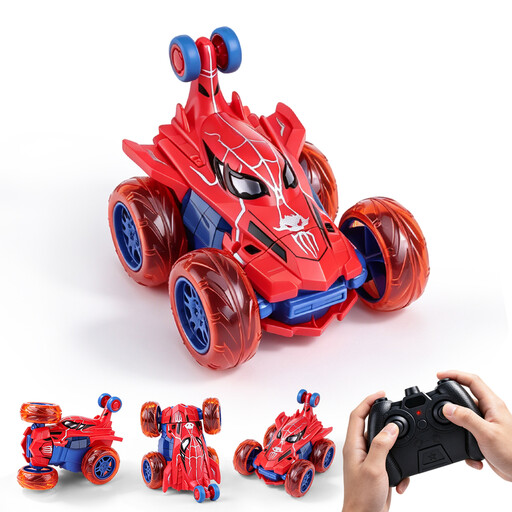
Why it suits this profile: This RC toy has 2.4-GHz remote control, LED wheels and a range of driving moves. According to the product information, it’s aimed at children aged 4 to 12.
The power supply is clearly specified: an integrated 3.7-volt rechargeable battery and two AA batteries for the remote control, which aren’t included.
Rechargeable battery, 360-degree stunts and use on a range of surfaces. The warning recommends direct supervision.
We’ve put together a complete, regularly updated list of products that meet these strict selection criteria and the safety regulations in force in the EU.
It depends mainly on their age and interests. For children aged 3 and over, simple animal figures, a fire engine toy or larger construction sets could be suitable. From around age 4, you could consider a craft kit for children, a soft toy or an RC toy. Always check the recommended age and what’s included.
Many sets are recommended by the manufacturer for children aged 3 and over, but they contain small, powerful magnets. Adults should check the pieces regularly for cracks and loose magnets. If a magnet is swallowed or inhaled, seek medical help immediately. Don’t continue using damaged pieces.
A remote-controlled car may require batteries or replacement rechargeable batteries. Check whether the rechargeable battery, charging cable and batteries for the remote control are included. A rechargeable battery is handy if the car will be used often; for occasional play, a simple model without lots of accessories may be enough.