
Lieferung heute & morgen

Qualitätsgarantie
App herunterladen
Kategorien
Creating video content requires steady camerawork to achieve professional results. Unwanted movements and vibrations from handheld shots can significantly compromise image quality. A gimbal or camera stabiliser is a mechatronic system that actively compensates for these movements using motors and sensors. The result is smooth, shake-free video footage that would otherwise only be possible with complex equipment. This article analyses the technical specifications relevant to selecting a suitable stabiliser for smartphones and action cams.
Choosing the right stabiliser depends on specific technical criteria. An informed decision is based on compatibility with your recording device, the number of stabilisation axes, and functional features like battery life.
A gimbal's effectiveness is determined by its number of stabilisation axes.
A gimbal must be physically and technically compatible with the recording device you use.
For extended shoots, power supply and software integration are crucial.
Material, design, and integrated extras define its practical utility.
The following products have been selected based on their specific technical features and use cases.
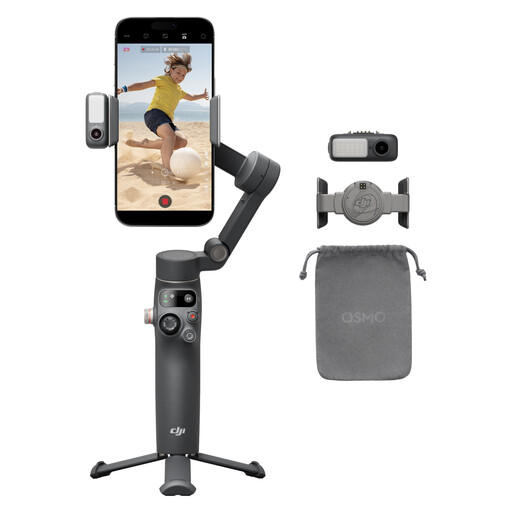
Why we recommend this product: The DJI Osmo Mobile 7P is a multifunctional smartphone stabiliser that combines lossless 3-axis stabilisation with intelligent software features. The integrated module for tracking, microphone reception, and lighting makes it a comprehensive solution for content creators.
Pros:
Who it's for: This model is aimed at vloggers and content creators looking for an all-in-one solution for their smartphone who value high stabilisation performance and intelligent shooting modes. It is a core component of a mobile vlogging kit.
Important notice from the manufacturer, DJI: Due to a compatibility issue, the DJI Mimo app has been removed from the Google Play Store. The latest version can be downloaded from the official DJI website. Always observe the manufacturer's safety instructions, especially regarding battery handling and operation near people.
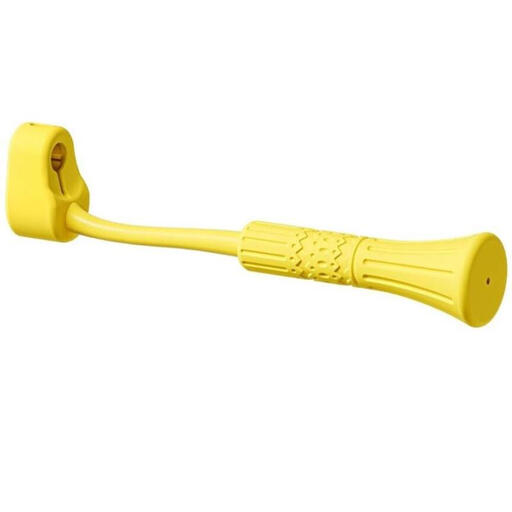
Why we recommend this product: The Insta360 GO3 Fetch Stick is not a traditional gimbal but a specialised camera mount that enables a unique recording perspective. It uses the Insta360 GO 3's internal FlowState Stabilisation and 360° Horizon Lock technology to capture stable video from a dog's point of view.
Pros:
Who it's for: This Insta360 accessory is ideal for pet owners, especially dog owners, who want to capture creative and dynamic videos of their animals at play. It is an add-on for users of the Insta360 GO 3 camera.
Safety Notice: This product is a camera accessory, not a standalone toy. Its use should always be supervised. Regularly check the mount for wear and tear to ensure the safety of both the animal and the camera.
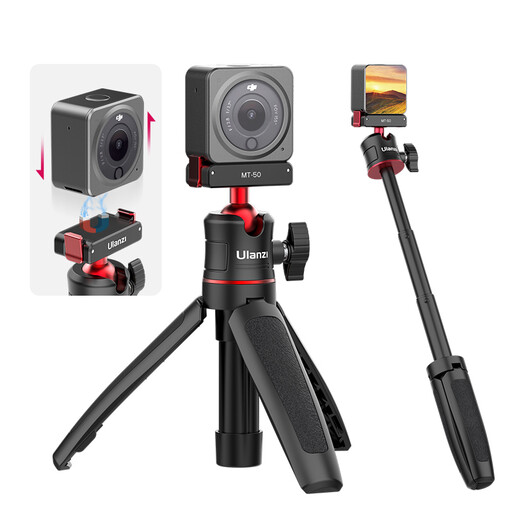
Why we recommend this product: The Ulanzi MT-50 is a compact tripod for smartphones and action cameras, distinguished by its magnetic quick-release system. It is specifically designed as a DJI Osmo accessory for the Action 2/3/4 series and allows for extremely fast switching between different mounts.
Pros:
Who it's for: This action cam accessory is designed for users of DJI Osmo Action cameras who need a fast, flexible, and portable mounting solution for spontaneous shots or as part of a minimalist setup.
Safety Notice: Do not use this product near pacemakers. Ensure the magnetic base is fully engaged before releasing the camera. Keep small magnets away from children.
If the products featured here don't exactly meet your requirements, you can find a wider selection of mounts, tripods, and stabilisation solutions for various camera systems and applications in our Accessory Poles category.
1. What is the difference between a gimbal and a simple tripod? A tripod is a static mount that fixes a camera in a set position to prevent shake during long-exposure shots or stationary video recording. A gimbal, on the other hand, is an active system. It uses sensors for motion detection and brushless motors to compensate for unwanted movements in real time on up to three axes as the camera operator moves.
2. Do you need a specific gimbal for every camera? Yes, the choice of gimbal must be matched to the camera's weight (payload) and dimensions. A smartphone gimbal is optimised for the light weight and compact dimensions of a smartphone. For heavier action cams, mirrorless cameras, or DSLRs, more powerful gimbals with stronger motors and larger mounts are required.
3. How does a 3-axis stabiliser work technically? A 3-axis stabiliser has an Inertial Measurement Unit (IMU), which consists of gyroscopes and accelerometers. These sensors continuously detect the camera's orientation and movement in space. A microprocessor processes this data and sends control signals to three brushless motors. Each motor is responsible for one axis (tilt, roll, pan) and generates a precise counter-movement to keep the camera in a stable position.