
Lieferung heute & morgen

Qualitätsgarantie

Willkommens-Angebote freischalten: KOSTENLOSE Lieferung | Bis zu 80 % RABATT | Kostenlose 30-Tage-JoyPlus-Testphase
App herunterladen
Modern smartphones have powerful cameras, but even the most advanced in-device image stabilisation reaches its limits during movement. This often results in shaky or unsteady video footage, which diminishes the quality, especially for vlogs, travel videos, or social media content. A smartphone gimbal is an external stabilisation system that mechanically compensates for these unwanted movements, ensuring smooth, professional-looking shots.
This article provides a guide to help you select a suitable model. It explains the most important technical features and presents a selection of devices with different specialities to make your purchasing decision easier.
Choosing the right gimbal depends on your individual needs. The following criteria will help you evaluate the features of different models.
The number of axes is a crucial feature for a gimbal's performance.
For users who are frequently on the go, weight and packed size play a key role. A foldable gimbal can be reduced to a compact size, fitting comfortably into a bag or backpack. Models weighing under 300 grams are particularly advantageous for longer shoots or travel.
Another practical feature is an integrated smartphone stabiliser with a tripod. The fold-out legs in the handle allow the gimbal to be placed on a flat surface. This is useful for stationary shots, time-lapses, or filming yourself without assistance.
Modern gimbals often offer more than just stabilisation. AI-powered tracking allows the camera to automatically follow a person or object without manual adjustments. This is especially relevant for content creators who film themselves.
Before buying, check the compatibility with your smartphone. Manufacturers typically specify the maximum dimensions and weight of the phone the gimbal can support. Whether you're looking for a gimbal for an iPhone or an Android device, most models are compatible with both operating systems, though the full range of features is often unlocked via a proprietary app.
Here is a selection of models that cover different use cases—from ultra-lightweight all-rounders to devices with advanced stabilisation technology.
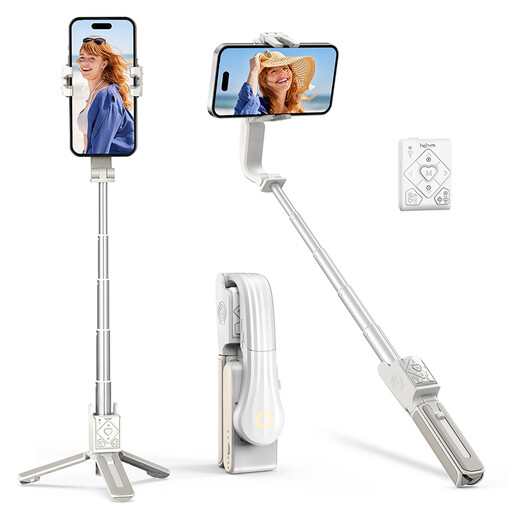
Why it stands out: This model from hohem combines four functions in an extremely lightweight and compact body. It serves as a gimbal, selfie stick, tripod, and allows for 360° rotations, making it a versatile companion on the go.
Pros:
Who it's for: Users looking for a straightforward and extremely portable solution for everyday shots, vlogs, and live streaming who also value versatility.
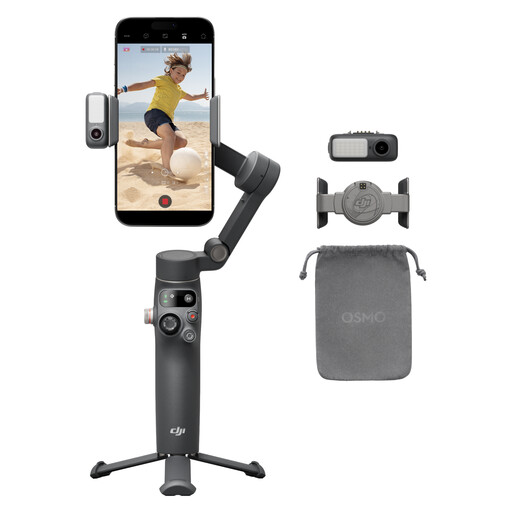
Why it stands out: As a DJI gimbal, the Osmo Mobile 7P represents highly advanced stabilisation technology. Its robust 3-axis stabilisation and seamless integration with the DJI Mimo app offer extensive creative possibilities and professional-grade recording quality.
Pros:
Who it's for: Content creators and tech enthusiasts who demand the highest standards of image stabilisation and want to leverage the creative tools of a mature software platform.
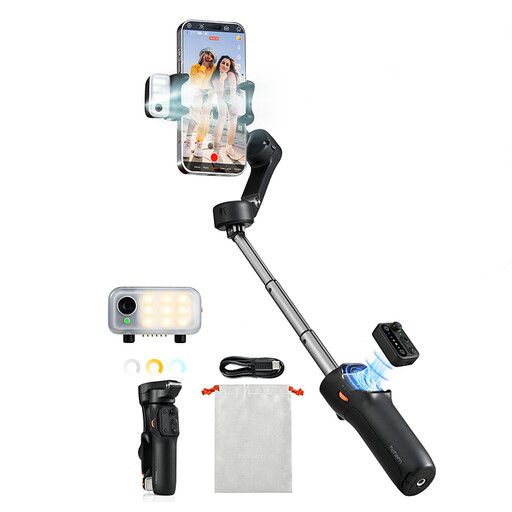
Why it stands out: This hohem gimbal offers a powerful combination of 3-axis stabilisation, an AI tracking module that works without an app, and an integrated fill light. This makes it a flexible tool for various lighting conditions.
Pros:
Who it's for: Vloggers and social media creators who need reliable 3-axis stabilisation and appreciate the flexibility of app-independent AI tracking and an integrated fill light.
Choosing the right gimbal is a personal decision that depends on your intended use cases and budget. The models presented here already cover a broad spectrum, but the market offers many more alternatives.
Discover our entire range of mobile tripods and find the right accessory for your video recordings.
A selfie stick primarily serves to extend your reach for self-portraits or as a simple holder. A smartphone gimbal stabiliser, on the other hand, is an active system: it uses motors and sensors to compensate for unwanted movements like shaking or swaying in real time. The result is significantly smoother and more professional-looking videos, especially when recording in motion.
Yes, the majority of modern gimbals, including models from DJI and hohem, are designed to be compatible with a wide variety of smartphones. The key factors are the manufacturer's specifications regarding the maximum dimensions (width, thickness) and weight of the phone. It is advisable to check these before purchasing. The associated app features may differ slightly between iOS and Android.
Weight is a key factor for user comfort, especially during long shoots or while travelling. A lightweight, foldable gimbal is easier to transport and causes less arm fatigue. In return, heavier models can often offer more robust motors or a larger battery. The decision is ultimately a trade-off between portability and features.