Who should take care when choosing?

Anyone with questions about tolerance

If you associate “digestive” with an effect on digestion, don’t take it as a guaranteed property of gingerbread. If you have allergies or specific dietary requirements, the information for the particular product is what matters. If you have symptoms, it’s sensible to seek professional advice.

Anyone using gingerbread in baking

Different recipes call for different shapes, whether for decoration or in the dough. A Wicklein recipe uses gingerbread as decoration after baking; a Gugelhupf recipe from Weltgenusserbe Bayern calls for it to be crumbled after the wafer has been removed.

Anyone with sugar or dietary preferences

If you’re comparing reduced-sugar, vegan or organic options, assess each claim separately from the ingredients list, allergen information and nutritional values. A label of this kind doesn’t automatically answer every dietary question.

What should you look for when buying?

First, decide whether you need gingerbread for baking or as a ready-to-eat treat. Then use the information on the specific pack to check whether the ingredients and nutritional values meet your requirements.

What matters to you What to check when buying Who it matters to
Expectations around “digestive” Don’t read the product description as a promise of an effect on digestion; if you have symptoms, seek professional advice about whether it’s suitable for you. If I choose gingerbread because it says “digestive”, I want to know whether this really means it has an effect on digestion; for around 31% of consumers, this is their main concern.
Allergens and dietary requirements Read the ingredients and precautionary allergen information on the specific pack; assess a vegan label separately from the allergen information. If I have an allergy or follow a vegan diet, the ingredients list needs to meet my requirements; around 25% of consumers make this their main concern when buying.
Shape for the recipe Check whether the recipe calls for whole pieces, decoration or crumbled gingerbread, and what it says about the wafer. If I’m adding gingerbread to a dough or using it to decorate a finished bake, I need the right form for the job; around 25% of consumers prioritise how they’ll use it in a recipe.
Sugar and nutritional values Compare the sugar per 100 g and the ingredients; don’t assume that a relative reduction in sugar means the product is “low in sugar”. If I choose between options based on their sugar content, I want to compare figures using the same measure; around 19% of consumers put this comparison first.

Common mistakes when choosing

  • Assuming “digestive” means it has a proven effect

    The name doesn’t mean gingerbread has a general effect on digestion. So it’s no substitute for checking the ingredients or considering your individual requirements.

    If you’re choosing it because of symptoms or a prescribed diet, seek professional advice about whether it’s suitable and read the labelling on the specific product.

  • Confusing vegan with allergen-free

    A vegan recipe can still contain nuts, wheat or soya. For example, Wicklein lists these ingredients for its organic Elisen gingerbread and also warns that traces of other allergens may be present.

    Check the ingredients and precautionary allergen information on the pack, even if the option is labelled vegan or organic.

  • Assuming “less sugar” means “low in sugar”

    A percentage reduction in sugar is a comparison. For solid foods, Verbraucherzentrale defines “low in sugar” as no more than 5 g of sugar per 100 g.

    Compare the nutritional information per 100 g and read the ingredients list for the option you want to buy.

  • Choosing a product shape without considering the recipe

    Whether you’re using gingerbread as decoration or crumbling it into a dough affects the shape you need. A Gugelhupf recipe from Weltgenusserbe Bayern removes the wafer before crumbling the gingerbread.

    Read the method before you buy, and check the shape, coating and quantity you need against the recipe.

Manufacturers and brands to consider

Lebkuchen-Schmidt

The manufacturer offers Nuremberg gingerbread and Elisen varieties. If you want to compare sugar content, its range includes “Elise Weniger Zucker”.

  • Lebkuchen-Schmidt describes “Elise Weniger Zucker” as containing 30% less sugar and 24% nuts and almonds.
  • For this option, the manufacturer lists nuts, wheat, egg, milk ingredients and sorbitol, among other ingredients. Always check the information on the specific pack.

Wicklein

Wicklein has several gingerbread ranges, including organic Elisen gingerbread and a 1,500-g assortment pack. The recipe and quantity you need will help you decide which option to choose.

  • Wicklein describes its organic Elisen gingerbread as vegan and says it contains 28% nuts and almonds.
  • For its organic Elisen gingerbread, the manufacturer lists nuts, wheat and soya, and says traces of egg, milk and sesame may be present. The ingredients may differ in other Wicklein varieties.

Düll

Düll offers Nuremberg Elisen gingerbread and other specialities. The manufacturer says its Elisen gingerbread is handmade to a family recipe.

  • Düll says that it doesn’t use flavour enhancers or preservatives in the specialities it describes.
  • The manufacturer’s own description is no substitute for checking the ingredients, allergens and nutritional information for the option you choose.

A suitable selection of baked treats at Joybuy

This festive selection of baked treats is worth considering for Advent. If you want to use any of these gingerbread treats in a particular baking recipe, check the pieces and their ingredients against the recipe requirements.
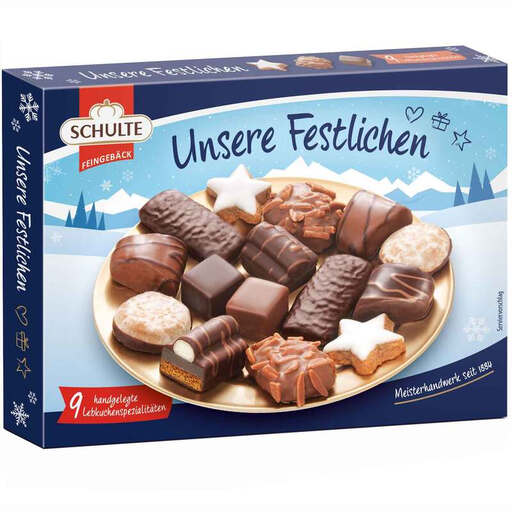
Schulte Our Festive, 250 g Bt

Schulte Our Festive, 250 g Bt

A festive selection of baked treats. If you’re using it in a baking recipe, make sure the shape and ingredients suit the way the recipe says to use it.

Pack size shown in the product name: 250 g.

View at Joybuy

Frequently asked questions

Can gingerbread generally be recommended as “digestive”?

No, not as a blanket recommendation for an effect on digestion. Instead, choose gingerbread based on the recipe, ingredients and your dietary requirements. If you have symptoms, it’s sensible to seek individual professional advice.

How do I check the allergens in packaged gingerbread?

Read the ingredients list, highlighted allergens and any precautionary allergen information on the exact pack you’re planning to buy. Verbraucherzentrale describes the ingredients list as important information on packaged foods.

Do “30% less sugar” and “low in sugar” mean the same thing?

No. “Less sugar” is a comparative claim; for solid foods, Verbraucherzentrale defines “low in sugar” as no more than 5 g of sugar per 100 g. You’ll find the sugar content of the option you choose in its nutritional information.

How can you use ready-made gingerbread in Christmas baking?

Follow the recipe method. Wicklein shows gingerbread used as decoration after baking; a Gugelhupf recipe from Weltgenusserbe Bayern uses crumbled Nuremberg gingerbread with the wafer removed first.

Is vegan gingerbread automatically suitable for people with allergies?

No. For its vegan organic Elisen gingerbread, Wicklein lists hazelnuts, almonds, wheat and soya, among other ingredients, and says traces of egg, milk and sesame may be present. So check the allergens for the specific option regardless of its vegan label.