Who are multipacks suitable for?

Runners who want easy-to-plan snacks

If you want to take gingerbread with you on long training days, you’ll need a clearly defined portion. For fuelling during longer efforts, your overall carbohydrate and hydration strategy, as well as your personal tolerance, are what matter. The German Nutrition Society and World Athletics consider carbohydrate intake during longer efforts as part of sports nutrition; neither recommends a particular baked product as a ready-made fuelling plan.

Households packing lunchboxes or sharing

If you’re packing several lunchboxes or sharing gingerbread at home, you can choose between individually wrapped pieces and a larger pack. For example, REWE sells a four-pack of individually wrapped 40-g gingerbread bars. Lebkuchen-Schmidt and Wicklein also list larger multipacks and assorted packs.

Shoppers who check ingredients

If you’re choosing gingerbread as an occasional snack, you can compare the sugar content, other nutritional values and ingredients of each variety. Even with varieties that Lebkuchen-Schmidt or Wicklein advertise as having “30% less sugar”, it’s important to check the nutritional information per portion, as well as the ingredients and allergen information.

What should you look for when buying?

First, decide whether you mainly want the pack for individual training portions, lunchboxes and sharing, or to compare ingredients. Pack size alone doesn’t tell you how many carbohydrates each piece contains or whether individual pieces are easy to take with you.

What to consider What to check Who it matters to
Easy-to-plan portions Check the weight and carbohydrate content per piece. If the information is given per 100 g, calculate it for your planned portion. If I want to include gingerbread on a long training run, the portion needs to fit in with the fuelling and hydration strategy I’ve already tested. Around 40% of consumers prioritise having a predictable training portion.
Sharing and taking with you Compare the number of pieces, individual wrapping and net weight. For mixed packs, check which varieties are included. If I’m packing several lunchboxes or sharing with others, I want to be able to take out individual pieces without carrying the whole pack with me. For around 30% of consumers, being able to split the pack is the main consideration.
Ingredients and nutritional information Compare sugar, carbohydrates and fat per 100 g and per planned portion; read the ingredients and allergen information for each variety. If I’m choosing between varieties or considering a reduced-sugar option, I want to assess the actual recipe, not just a claim on the front of the pack. Around 30% of consumers put comparing sugar and ingredients first.

What common mistakes can you avoid?

  • Assuming a multipack is a complete fuelling plan

    A pack won’t tell you how many carbohydrates to consume per hour or how much to drink. World Athletics considers carbohydrate intake during longer efforts in relation to the duration of exercise and individual planning.

    Calculate your planned portion using the nutritional information, and test the variety, amount and drink you intend to use on similar training runs rather than trying them for the first time on race day.

  • Comparing only the figures per 100 g

    You’ll usually eat a single piece, which may weigh less or more than the 100-g reference amount. If the pieces are different sizes, the sugar or carbohydrate figure per 100 g alone won’t tell you what a training portion contains.

    Check the weight of each piece and calculate the carbohydrate, sugar and fat content for the portion you actually plan to eat.

  • Assuming a mixed pack has the same ingredients throughout

    Ingredients and allergen information can vary between varieties. For example, REWE says its gingerbread hearts may contain traces of tree nuts, peanuts, egg, lupin and sesame.

    Read the information for each variety you buy. If you have a diagnosed allergy, don’t rely on the packaging of a similar variety or an older ingredients list.

  • Buying a large pack without a plan to use it

    Lebkuchen-Schmidt lists festive packs with net weights of 1,660 g and 2,820 g. Whether a pack this size is right for you depends on how many people will be sharing it and how you plan to store the individual products.

    Before buying, check the best-before date and storage instructions for the specific pack. Once opened, take out and store the products according to those instructions.

Brands and ranges to consider

Lebkuchen-Schmidt

The manufacturer offers Nuremberg gingerbread, as well as packs and sets in a range of sizes.

  • Lebkuchen-Schmidt lists a net weight of 2,820 g for one festive pack and five gingerbread and biscuit specialities in its discovery pack.
  • A large pack isn’t automatically divided into set training portions. The brand also advertises a variety with “30% less sugar”; your choice should be based on the information for the specific variety.

Wicklein

Wicklein lists both individually wrapped wafer gingerbread and a larger assorted pack.

  • Individually wrapped pieces can be selected in advance for a lunchbox; the listed assorted pack has a net weight of 1,500 g.
  • Check the ingredients and any may-contain information for each variety separately. Individual wrapping doesn’t mean a product will agree with you during a run.

REWE Beste Wahl / REWE Sortiment

The listed range includes smaller gingerbread packs and a four-pack of individually wrapped bars.

  • REWE lists four individually wrapped gingerbread bars, each weighing 40 g.
  • For its own-brand gingerbread hearts, REWE lists possible traces of several allergens. Check the information and range available when you shop.

EDEKA Herzstücke / EDEKA Sortiment

EDEKA lists various gingerbread hearts, while EDEKA24 also stocks a chocolate gingerbread mix.

  • EDEKA lists 64.5 g and 66.9 g of carbohydrates per 100 g for its unfilled and filled gingerbread hearts respectively. This lets you compare the listed varieties using the same reference amount.
  • To work out the amount in a portion, you’ll also need to know the weight of the piece you eat. Ingredients and nutritional information apply to each specific variety.

Gingerbread packs on Joybuy

These packs are worth considering if you’re comparing gingerbread for everyday snacking, sharing or choosing between varieties. If you’re planning to take individual pieces in a lunchbox or on a training run, check the number and weight of the pieces, and how they’re wrapped, before buying.
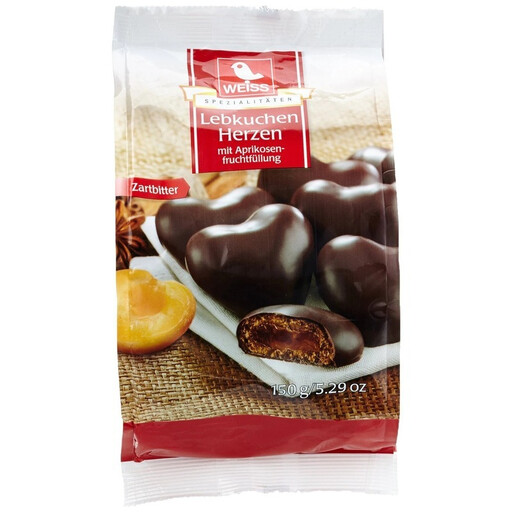
Weiss gingerbread hearts with dark chocolate, 150 g

Weiss gingerbread hearts with dark chocolate, 150 g

The 150-g pack is an option for sharing at home. If you’re planning individual portions, check the number and weight of the pieces, as well as the ingredients and nutritional information on the pack.

View on Joybuy
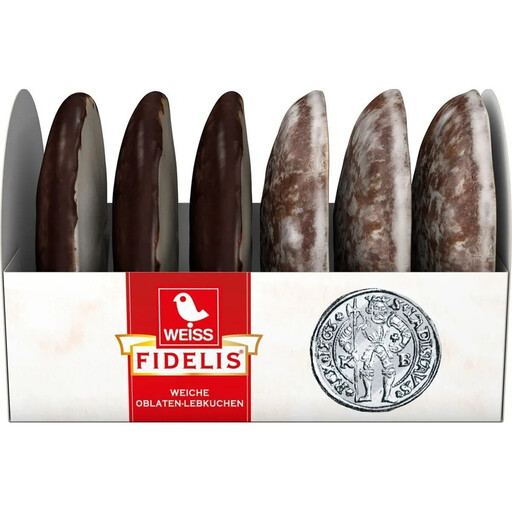
Weiss Fidelis assorted wafer gingerbread, 200 g

Weiss Fidelis assorted wafer gingerbread, 200 g

The 200-g assorted pack is an option if you want to compare varieties. If you’re planning to take some with you, check the portion sizes and read the ingredients and allergen information for the varieties included.

View on Joybuy
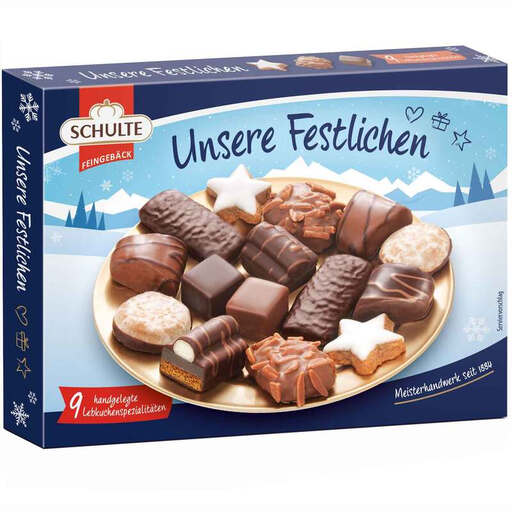
Schulte Our Festive gingerbread, 250 g

Schulte Our Festive gingerbread, 250 g

The 250-g pack is another everyday gingerbread option to compare. If you’re planning to pack pieces in lunchboxes or take them to training, check their weight, ingredients and nutritional information on the specific pack.

View on Joybuy

Frequently asked questions

Can I use gingerbread as marathon fuel?

Gingerbread can’t be recommended as race-day fuel across the board. For efforts lasting 1 to 2.5 hours, World Athletics gives 30–60 g of carbohydrate per hour as a guide for total intake, not as a recommendation for gingerbread. If you want to eat a particular variety while running, check the carbohydrate content per piece and try your planned amount alongside your hydration strategy during training first.

What information matters when choosing a gingerbread multipack?

Important details include the net weight, number and weight of the pieces, nutritional information, ingredients, allergen information and may-contain warnings. If the pack contains several varieties, check the information for each one. The best-before date and storage instructions can also help you decide whether a larger pack is right for you.

Is a variety with “30% less sugar” better for marathon training?

That claim alone doesn’t tell you whether it’s suitable for marathon training. Lebkuchen-Schmidt and Wicklein advertise varieties with less sugar, but you’ll still need to check the actual carbohydrate content, other nutritional values and ingredients for the specific variety and planned portion. You can only assess how well it suits you during exercise by trying it in training.

How should I store an opened large pack?

Follow the storage instructions on the specific pack and plan how many pieces you’ll actually need. The best-before date assumes the unopened product has been stored correctly; the consumer advice centre notes that instructions for storing food after opening can sometimes be unclear. For lunchboxes, you can take out the pieces you need separately each time.