Fans of quick no-bake desserts
If you want to turn shop-bought gingerbread into a base or a small dessert without using the oven, you can take inspiration from Lebkuchen-Schmidt and Wicklein recipes that use uniced or plain gingerbread.


Plain or uniced gingerbread is an obvious choice for a crumb base or no-bake dessert: recipes from Lebkuchen-Schmidt and Wicklein use it crushed and bound with milk or butter. If you also want to have some gingerbread left for guests, make sure the recipe quantity matches the pack size. For a larger cake or traybake, you can tailor homemade dough more precisely to the tin and ingredients, but it takes more preparation.
If you want to turn shop-bought gingerbread into a base or a small dessert without using the oven, you can take inspiration from Lebkuchen-Schmidt and Wicklein recipes that use uniced or plain gingerbread.
If you want to use one pack both for the tea table and in a recipe, check the net weight and number of pieces: you’ll need enough left for the recipe after setting some aside to serve.
If you want to use nut-rich Elisen gingerbread or wafer-based gingerbread, check the ingredients and allergen information on the pack you choose against the requirements of everyone who’ll be eating it.
Start with the recipe: for a base made from ready-made gingerbread, the texture and required weight matter. If you’re baking a cake from scratch, you can decide on the tin and ingredients when you mix the dough.
Best for: Making a crumb base or a small no-bake dessert without preparing your own cake dough, as in recipes from Lebkuchen-Schmidt and Wicklein.
The trade-off: The sweetness, spice level and ingredients are determined by the pack you choose.
Best for: Planning a cake or traybake with a shape and recipe of your choice, as in recipes from EDEKA and Lidl.
The trade-off: You’ll need to measure out the ingredients and bake the cake, and you won’t use up any ready-made gingerbread at the same time.
| What to consider | What to check when buying | Who it matters to |
|---|---|---|
| Making a base | For the no-bake recipes referenced here, choose plain or uniced gingerbread. Check that the net weight matches the quantity required by the recipe. | If I want to make a base quickly, I need gingerbread that I can crush and bind for my recipe. Around 45% of consumers put this use first. |
| Quantity to share | Compare the net weight and number of pieces with the recipe quantity and the pieces you plan to serve. | I want to set some pieces aside for guests without being short of gingerbread for the cake afterwards. For around 33% of consumers, getting this balance right is the main concern. |
| Ingredients and allergens | Read the ingredients list, highlighted allergens and any precautionary trace information on the specific pack. | If several people are sharing, the gingerbread ingredients need to suit their individual requirements. This check comes first for around 22% of consumers. |
The no-bake recipes from Lebkuchen-Schmidt and Wicklein use gingerbread without icing or plain gingerbread. Icing changes what ends up in the crumb mixture when you crush it.
For a base, look for the type specified in the recipe and compare the required quantity with the pack weight.
Lebkuchen-Schmidt specifies that its Elisen gingerbread contains at least 25% oilseeds in the gingerbread mixture. Other ingredients and allergens depend on the specific product.
Before buying and serving, check the ingredients list and allergen information on the pack in question.
The no-bake recipes referenced from Lebkuchen-Schmidt and Wicklein each use 200 g of gingerbread. If you also want to serve some pieces plain, you’ll need enough for that as well as the recipe.
First set aside the amount required for the recipe, then plan how many pieces and how much of the remainder you’ll need for your guests.
The baking recipes from REWE, EDEKA and Lidl describe ways to prepare gingerbread; they don’t specify the ingredients or net weight of any particular seasonal pack.
If you’re using shop-bought gingerbread in a recipe, check the details of the product you’ve actually chosen.
A Nuremberg gingerbread supplier whose no-bake recipe shows how to use 200 g of gingerbread without icing.
A Nuremberg gingerbread supplier with a cheesecake recipe that uses plain gingerbread for the base.
A food retailer with a collection of gingerbread recipes for Christmas baking.
A food retailer with recipes for homemade gingerbread and a gingerbread cake.
A food retailer with recipes for gingerbread traybake and gingerbread Bundt cake.
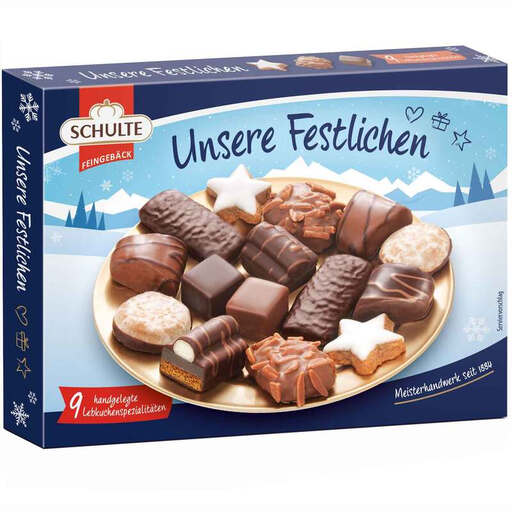
This gingerbread selection is worth considering for sharing. If you want to use some for baking, check the quantity required by your recipe and the varieties included first.
 No image available
If you’re sharing the gingerbread and using some in a recipe, compare the 250 g pack size with the quantity you’ll need.
The selection also includes iced and chocolate-coated pieces. If your recipe calls for plain gingerbread for the base, check which pieces and what quantity you can use.
If you have allergies, check the ingredients and allergen information on the specific pack.
Plain or uniced gingerbread works for the recipes described here. Lebkuchen-Schmidt uses 200 g of gingerbread without icing to make a mixture that holds its shape, while Wicklein combines 200 g of plain gingerbread with butter for a cheesecake base. Make sure the binding ingredients and quantities suit your chosen recipe.
Yes, provided the flavour and ingredients of the specific variety suit the dessert and everyone who’ll be eating it. According to Lebkuchen-Schmidt, Elisen gingerbread contains at least 25% oilseeds in the gingerbread mixture. If you have allergies, always follow the labelling on the pack you choose.
Making your own dough is a good option when you want to decide on the shape and ingredients of a cake or traybake before you start baking. The EDEKA and Lidl recipes use dough prepared from scratch. Compared with making a base from ready-made gingerbread, this involves mixing and baking the dough.
First compare the weight required by the recipe with the pack’s net weight and number of pieces, then allow extra for the pieces you plan to share. If you’re baking with it later, also check the best-before date and storage instructions on the specific pack.