Gingerbread can be a sweet snack after a workout. If protein is your main priority, don’t choose it based on its name alone: the Weiss Lebkuchen-Allerlei listed by REWE contains 5.2 g of protein and 43.2 g of sugar per 100 g. If you’re working to a budget, also consider the portion you actually want and what’s available where you shop. If you follow a vegan diet or are keeping to a particular amount of sugar, check the information on the specific pack.
Who should consider these options?
People who train on a budget
You’d like something sweet after your workout and want to make sure the pack size and portion you have in mind fit your shopping plans. Gingerbread shouldn’t automatically replace the protein source you’ve planned to have.
People who prioritise protein
After exercise, you check the nutritional information per portion and consider whether you’d like to have a separate protein-rich food alongside your gingerbread. The German Nutrition Society describes protein as an important building block for, among other things, muscles.
Vegan and sugar-conscious shoppers
You’re either looking for a product explicitly labelled vegan or comparing the stated sugar content. Ingredients, allergens and may-contain warnings vary by product.
What should you look for when buying?
First, decide whether portion planning, protein content or a particular recipe matters most to you. Then check the pack and what’s available where you shop.
| Criterion |
What to check |
Who it matters to |
| Portion and pack size |
Compare the pack weight with the amount you actually want to have as a snack. |
If I’m planning to have a small portion, I want to know how many snacks I can get from the pack. Around 36% of consumers put this kind of portion planning first. |
| Protein and carbohydrates |
Check the nutritional information per 100 g and work out what it means for your portion. If protein is your main goal, consider a separate source. |
After a workout, I don’t want to confuse gingerbread with the protein-rich snack I’ve planned. Around 29% of consumers say protein is their priority. |
| Sugar, ingredients and dietary requirements |
Check the sugar content, vegan labelling, ingredients and allergen information on the specific pack. |
The recipe I choose needs to meet my requirements for sugar or ingredients. Around 21% of consumers consider this their most important buying criterion. |
| Availability |
Check whether the option you want is stocked at your chosen shop and what pack sizes are available. |
I want to find a suitable pack where I shop, rather than base my choice on an item listed somewhere else. This is the main consideration for around 14% of consumers. |
Common misconceptions
-
Counting gingerbread as a protein snack
Nutritional values vary by recipe. The Weiss Lebkuchen-Allerlei listed by REWE contains 5.2 g of protein per 100 g. The German Nutrition Society describes protein as an important building block for, among other things, muscles.
If protein is your main priority, check the amount in the portion you’ll actually eat and decide whether a separate protein-rich food would fit your plans better.
-
Reading too much into “vegan” or “less sugar” claims
The GUT&GÜNSTIG gingerbread hearts labelled vegan by EDEKA contain wheat and soya. Likewise, a reduced-sugar claim doesn’t mean that a gingerbread product contains no sugar.
Check the current ingredients list, nutritional information, allergen details and may-contain warnings for the option you’re planning to buy.
Brands and product ranges to consider
Lebkuchen-Schmidt
The “Elise Weniger Zucker” option is aimed at people who want to compare an Elisen gingerbread product with stated nutritional values.
- According to Lebkuchen-Schmidt, this option contains 24.6 g of sugar and 10 g of protein per 100 g.
- Ingredients include nuts, wheat, egg and milk, among others. Always check the information on the current pack.
EDEKA GUT&GÜNSTIG
According to EDEKA, the gingerbread hearts filled with dark chocolate are labelled vegan.
- For the 300 g pack, EDEKA states that the product contains 37.4 g of sugar and 4.2 g of protein per 100 g.
- The product contains wheat and soya; other allergens may be present as traces. EDEKA notes that it may not be available in every store.
Weiss
The Lebkuchen-Allerlei listed by REWE comes in a 400 g pack, making it useful for comparing pack sizes and nutritional information.
- For Lebkuchen-Allerlei, REWE states that the product contains 74.8 g of carbohydrates, 43.2 g of sugar and 5.2 g of protein per 100 g.
- Ingredients include wheat, soya and pork gelatine; the product also carries warnings about trace allergens.
Gingerbread on Joybuy
These two packs are worth considering if you’re planning to have gingerbread as a sweet snack after a workout. Compare portion sizes and check the nutritional and ingredient information for each option before choosing.
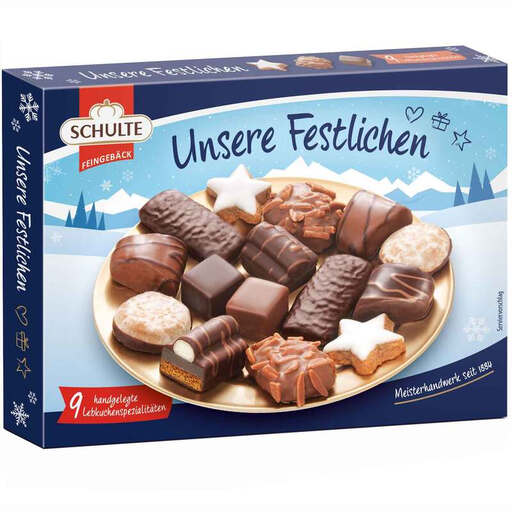 Image unavailable
Schulte Our Festive, 250 g pack
A pack of gingerbread for anyone who wants to choose their own snack portion after a workout.
Pack size: 250 g. Check the nutritional information and ingredients for the portion you plan to eat.
View on Joybuy
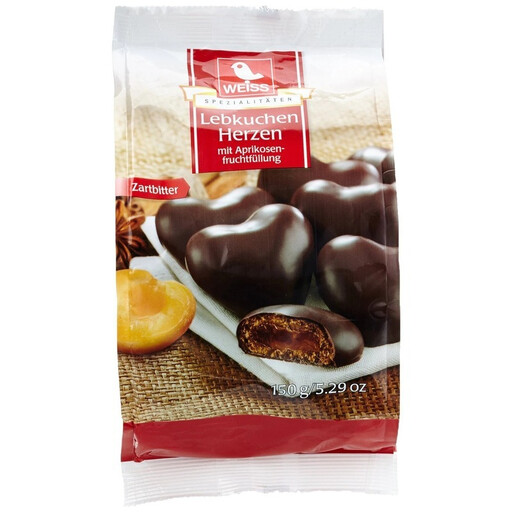 Image unavailable
Weiss gingerbread hearts with dark chocolate, 150 g pack
An option if you’d like filled gingerbread hearts as a sweet snack after a workout.
Pack size: 150 g. Check the ingredients and allergen information for this option before buying.
View on Joybuy
Frequently asked questions
Is gingerbread enough as a snack after a workout?
It depends on what you want from your snack. Gingerbread can work if you fancy something sweet. If protein is your main goal, check the amount per portion and consider choosing a separate protein-rich food. The German Nutrition Society describes protein as an important building block for muscles, and carbohydrates as relevant to providing energy for sport.
How can I tell if gingerbread is vegan?
Look for a vegan label on the specific pack and check the ingredients and allergen information too. For example, the GUT&GÜNSTIG gingerbread hearts described as vegan by EDEKA contain wheat and soya, and carry warnings about possible traces of other allergens.
If I have allergies, is it enough to check the front of the pack?
No. Check the ingredients list, allergen information and may-contain warnings on the current pack. The Verbraucherzentrale explains that ingredients and allergens are among the important details to look for on packaged foods.


