Hosts holding a baking or coffee get-together
You’d like to serve ready-made gingerbread alongside homemade biscuits. The quantity, shape of the pieces and how easy the biscuits are to arrange all matter.


Ready-to-eat gingerbread is a good choice for a biscuit-baking get-together when you want to serve it alongside your homemade biscuits. Choose a net weight that suits the group and pieces that are easy to share. If anyone has specific dietary requirements, check the ingredients and any warnings about possible traces for the particular variety.
You’d like to serve ready-made gingerbread alongside homemade biscuits. The quantity, shape of the pieces and how easy the biscuits are to arrange all matter.
You’re choosing treats for guests who are vegan or have allergies or intolerances. Even if a variety is labelled vegan, check its specific ingredients and any warnings about possible traces.
You’d like to compare varieties using their nutritional information. The key figure is the sugar content per 100 g on the pack, not just a claim on the front.
First, decide whether you want ready-made biscuits to serve or ingredients for baking. If you’re buying ready-to-eat gingerbread, next consider the quantity, shape of the pieces and ingredients.
| What to consider | What to check when buying | Who it matters most to |
|---|---|---|
| How you plan to use it | Is the product ready-to-eat gingerbread or specifically an ingredient for baking? | If I want something ready to serve alongside homemade biscuits, I need finished biscuits rather than an ingredient for the dough. This is the main consideration for around 33% of shoppers. |
| Quantity and shape of the pieces | Check the net weight in g and, if stated, the number of pieces against the size of your gathering. | When I have several guests, I want pieces that are easy to share without choosing an unnecessarily large pack. Around 27% of shoppers prioritise quantity and how easy the biscuits are to share. |
| Ingredients and allergens | Read the ingredients list, highlighted allergens and any warnings about possible traces for the specific variety. | If guests avoid certain ingredients, I need to know exactly what’s in this gingerbread before sharing it. This check takes priority for around 20% of shoppers. |
| Sugar content | Compare the stated sugar content per 100 g; don’t take a comparative claim to mean sugar-free. | If sugar content matters more to me than pack size, I want to compare the nutritional information for different varieties using the same measure. Around 20% of shoppers put sugar content first. |
An assorted selection of ready-to-eat gingerbread can be served alongside biscuits, but it won’t replace biscuit dough or a baking mix.
Before you shop, decide whether you need biscuits to serve or ingredients for baking your own.
According to the manufacturer, Wicklein’s vegan organic wafer gingerbread contains, among other ingredients, hazelnuts, almonds, wheat and soya lecithin. Possible traces of other ingredients are also listed.
Before sharing, read the ingredients list and trace warnings on the pack you’ve bought.
A higher net weight doesn’t tell you how many pieces are inside or whether the quantity is right for your gathering. For example, Lebkuchen-Schmidt states that its 200-g assorted selection contains around 25 pieces; this doesn’t apply to other varieties.
Compare the net weight and, if stated, the number of pieces with the number of people who’ll be sharing.
The European Commission lists ‘Nürnberger Lebkuchen’ for Germany as a registered protected geographical indication. The name doesn’t tell you which allergens or nutritional values apply to a particular variety.
Also check the information for the specific product and recipe.
The brand’s glazed assorted selection makes a smaller addition to a baking or coffee get-together.
Wicklein offers several gingerbread varieties, including a large assorted selection and vegan organic wafer gingerbread.
EDEKA24 stocked a 500-g chocolate gingerbread mix from its EDEKA Herzstücke own-label range.
Lidl places Belbake in its baking ingredients range. That’s a different choice from ready-to-eat gingerbread to share.
These gingerbread products are ready to serve at a biscuit get-together. The two 500-g varieties come in tins rather than bags, so as well as checking the net weight, make sure the packaging suits your plans.
 No image available
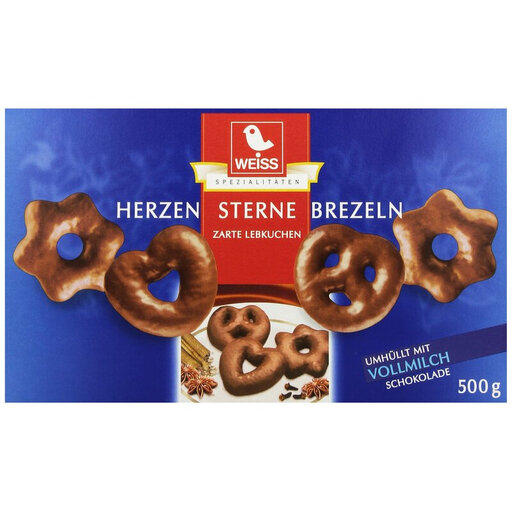
Ready-to-eat gingerbread, ideal for serving alongside biscuits. The tin contains 500 g of gingerbread in assorted shapes, coated in milk chocolate. Check the number of pieces on the pack to plan how many to serve per guest.
 No image available
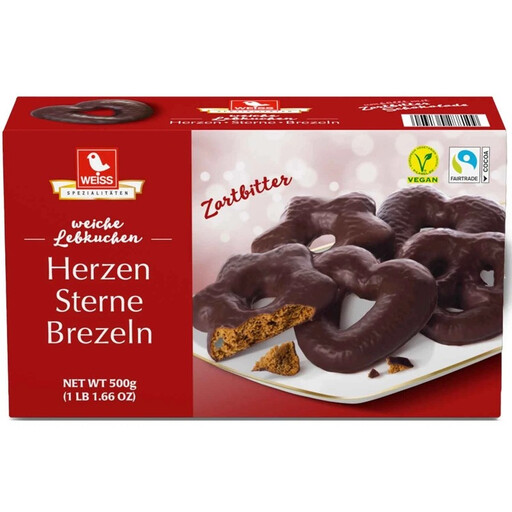
Another ready-to-eat gingerbread option to serve at a coffee or biscuit get-together. The tin contains 500 g in assorted shapes, coated in dark chocolate. Check the number of pieces on the pack when planning portions.
 No image available
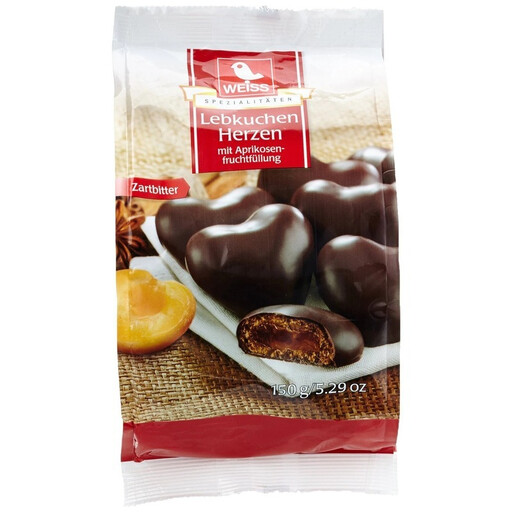
The 150-g pack is a good option for a smaller addition to your biscuit get-together. Before buying, check the packaging format and number of pieces. If anyone has specific dietary requirements, the ingredients and allergen information on the pack are essential.
The assorted selections described here are already baked gingerbread, not an ingredient for biscuit dough. They’re ready to serve as they are. If you want to bake your own, choose ingredients or a baking mix specifically intended for that purpose.
No. A vegan label doesn’t mean a product is allergen-free. Wicklein lists hazelnuts, almonds, wheat and soya lecithin among the ingredients in its vegan organic wafer gingerbread, as well as possible traces of other ingredients. Check the information on the specific pack.
No. A comparative claim like this doesn’t mean a product is sugar-free. Wicklein states that one variety carrying this claim contains 23.3 g of sugar per 100 g. Compare the nutritional information for your chosen varieties using the same measure.
The European Commission lists ‘Nürnberger Lebkuchen’ for Germany as a registered protected geographical indication. This doesn’t tell you whether a particular variety meets the dietary requirements of your group; check its ingredients and nutritional information.
In particular, check the ingredients and highlighted allergens on the pack you’ve bought, along with any warnings about possible traces. The Verbraucherzentrale explains that labelling requirements depend, among other things, on the type of product and whether food is sold packaged or unpackaged. Keep the packaging information handy in case anyone in your group has questions.