Families planning holiday portions
If you’re sharing gingerbread or biscuits on an outing, the weight per piece, pack size and nutritional information can help you work out the portion you plan to serve.


Gingerbread is a good option for a seasonal snack to share; if you specifically want digestive biscuits, choose a product labelled as such. With both types of sweet baked goods, the portion you plan to serve and the ingredients, nutritional information and allergens listed on the specific pack are what matter. The name ‘digestive’ is not evidence that a biscuit aids digestion.
If you’re sharing gingerbread or biscuits on an outing, the weight per piece, pack size and nutritional information can help you work out the portion you plan to serve.
Regular gingerbread may contain ingredients such as wheat, egg, milk or tree nuts. Check the ingredients list and any may-contain warnings on each pack. If gluten needs to be avoided, look for a clear gluten-free label.
First, check whether you mean digestive biscuits as a type of biscuit. The name alone doesn’t tell you whether the biscuit has any effect on digestion.
A good choice if: You’re looking for a seasonal treat to share during the holidays.
Things to consider: Toppings, fillings and recipes vary between products, so check that the ingredients and allergen information suit your needs.
A good choice if: This is the type of biscuit you specifically want. If you need to avoid gluten, choose only a variety clearly labelled gluten-free.
Things to consider: ‘Digestive’ is neither a gluten-free label nor evidence that the biscuit aids digestion.
| What matters | What to check when buying | Who this matters most to |
|---|---|---|
| Portions and nutritional information | Compare sugar and energy per 100 g. To work out the nutritional values for your planned portion, you’ll also need the weight per piece or the weight of the portion. | When I pack biscuits for an outing, I want to know how much is actually being handed out. Around 31% of consumers put portions and their nutritional values first. |
| Allergens and gluten | Read the ingredients list, highlighted allergens and may-contain warnings. Check for a gluten-free label if needed. | If you’re choosing biscuits for people with food allergies, you need to know exactly what that variety contains. This check is the top priority for around 31% of consumers. |
| Type of product | Check whether the product is labelled gingerbread or digestive biscuits; don’t assume the name indicates a health benefit. | I want either seasonal gingerbread or digestive biscuits specifically, rather than accidentally buying the other type of baked treat. The type of product comes first for around 23% of consumers. |
| Sharing with a group | Look for a suitable size per piece and clear labelling that remains available when the biscuits are handed out. | When several people are sharing out snacks, it should be easy to identify the portions and pack information. This is the most important buying requirement for around 15% of consumers. |
The name of a biscuit is not evidence that it affects digestion. The Federal Office of Consumer Protection and Food Safety explains that health claims made about food in the EU are subject to specific requirements.
Choose a biscuit based on its type and labelling, not as a remedy for symptoms.
Ingredients and allergens can vary from one variety to another. For example, the white gingerbread described by Lebkuchen-Schmidt contains wheat, egg, almonds and milk protein; the manufacturer also warns that it may contain traces of other allergens.
Check the label on the specific pack before buying or sharing it, even if you’ve had a similar variety before.
For a shared holiday snack, the size of the pieces you’re handing out matters too. Lebkuchen-Schmidt lists its white gingerbread as around 50 g per piece, with 19.5 g of sugar per piece; these figures don’t apply to other varieties.
Use the per-piece information where available, or weigh the portion you plan to serve before comparing nutritional values.
The German Nutrition Society describes sweet snacks as often high in calories and low in essential nutrients.
If you’re going on a longer outing, plan to take other food and drinks as well as the biscuits.
The manufacturer offers Nuremberg gingerbread. Its product information can help you compare individual classic varieties by ingredients, weight per piece and nutritional values.
One product in this own-label range is gingerbread hearts with a dark chocolate coating.
According to its own product overview, Lambertz offers gingerbread minis, gingerbread bars and Printen, among other products.
This selection is for classic gingerbread as a seasonal snack to share. If you’re looking for digestive biscuits instead, make sure the product is specifically labelled as such.
 No image available
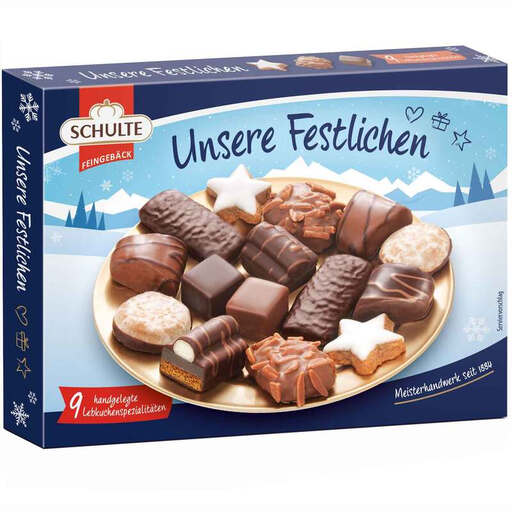
This 250 g pack is worth considering if you’re looking for classic gingerbread to share during the holidays.
For your planned portion, check the weight of each piece and the nutritional and allergen information on the specific pack.
No, the name alone isn’t evidence that they aid digestion. Choose digestive biscuits as a type of biscuit and check the ingredients and labelling as you would for any other sweet treat. If you have symptoms, they’re no substitute for medical advice.
Check the ingredients list, highlighted allergens and any may-contain warnings on the specific pack you plan to share. According to the Verbraucherzentrale consumer advice centre, allergens in pre-packed foods are highlighted in the ingredients list. Don’t rely on the recipe of a variety you bought previously.
Check the rules of the club and ask about allergies in the group first. Keeping the biscuits in their original, unopened pack means the staff can read the ingredients and allergen information.
Follow the storage instructions on the specific pack. The EDEKA Herzstücke gingerbread hearts described here should be stored in a dry place away from heat. Once opened, you can keep the pieces in an airtight container.