
Lieferung heute & morgen

Qualitätsgarantie

Willkommens-Angebote freischalten: KOSTENLOSE Lieferung | Bis zu 80 % RABATT | Kostenlose 30-Tage-JoyPlus-Testphase
App herunterladen
A glass baking dish can take on several jobs in the kitchen: baking, gratinating, reheating, freezing and storing. But when you're buying one, looks aren't everything. What really counts are the details on temperature range, capacity, lid and cleaning. Overlook these, and you might end up with a dish that doesn't fit your oven, or a lid that can only be used in a limited way.
With many products, the dish is made of glass while the lid is made from polypropylene or another plastic. The glass dish can go in the oven, but often the lid cannot. The microwave also has its own rules: the lid must be removed, left open or used with a steam vent.
A glass baking dish with a volume of 3.8 litres might be suitable for several portions, but it needs enough space in your cupboard and oven. What's more, the rim height, rounded corners and actual fill level all reduce the usable volume. Before you buy, compare the internal and external measurements, as well as the height.
"Dishwasher-safe" doesn't always apply to the whole set. With some models, only the glass container can go in the dishwasher, while the lid and seal need to be washed by hand. A dishwasher-safe glass dish with a removable silicone ring can be easier to keep hygienically clean in everyday use, as long as you follow the manufacturer's instructions.
A borosilicate glass baking dish is often chosen for its temperature resistance. The product details should clearly state whether borosilicate glass is used and up to what temperature the dish is suitable. The figures vary: some models are rated up to 300 °C, others up to 400 °C.
Even heat-resistant glass must not be subjected to a severe temperature shock. A hot dish should never be placed in cold water, nor taken straight from the freezer and put into a very hot oven. Before each use, check for cracks, chips and damaged edges.
Bear in mind the dimensions of your oven, especially with large dishes measuring 32 to 35 cm in length. For smaller households or individual meal-prep portions, a glass food storage container with 500 to 900 ml may be more sensible than a large baking dish.
A glass dish with a lid is handy when you want to store food straight after baking. For the oven, the lid usually has to be removed. When using the microwave, an open steam vent may be necessary.
Look out for:
This way, a suitable container can serve as a meal-prep glass container, provided the volume and closure are right for the intended transport.

Why this product suits the profile: According to the product details, this square glass baking dish offers a volume of 4.2 litres and is suitable for the oven, microwave, freezer and dishwasher. It's designed for a range of kitchen tasks.
The temperature rating of up to 300 °C and the dimensions are clearly stated. No lid is included, so there's no confusion about lid use.
Square shape, 29 × 29 × 6 cm, 4.2 l capacity, and stated suitability for oven, microwave and dishwasher.
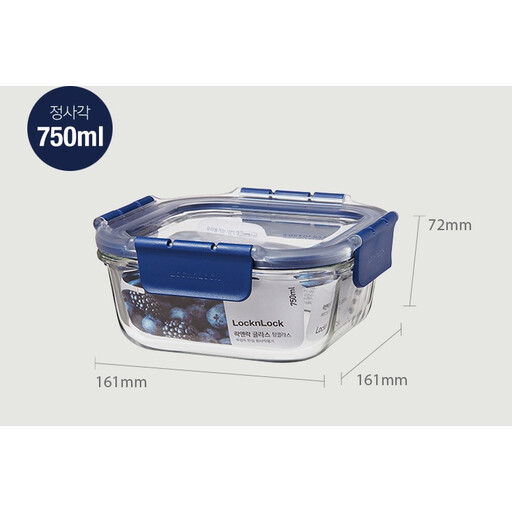
Why this product suits the profile: According to the product description, this square container made from heat-resistant glass is suitable up to 400 °C without the lid, for the microwave, freezer down to -20 °C and air fryer.
The usage restrictions are clearly described: remove the lid before heating, note the steam vent for the microwave and avoid extreme temperature changes.
750 ml capacity, four-sided closure, silicone seal, stackability and stated suitability for the freezer down to -20 °C.
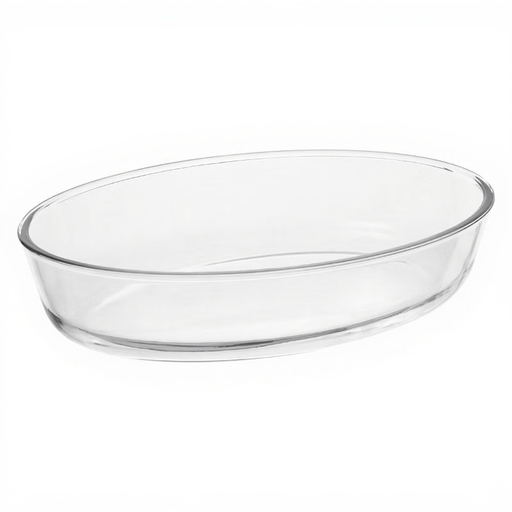
Why this product suits the profile: The oval dish with 3.8 litres of usable volume is designed for larger casseroles and subsequent storage. The lid supports the transition from oven to fridge, but must not be heated.
The material, dimensions and usage are clearly stated: borosilicate glass, 30.5 × 21.5 × 6.7 cm, and suitability for oven, microwave and dishwasher.
3.8 l usable volume, borosilicate glass, plastic lid, and stated suitability for oven, microwave and dishwasher.
We've put together a full, regularly updated list of products that fully meet these strict selection criteria and the safety regulations in force in the EU.
Yes, as long as the specific model is marked as oven-safe. The maximum permitted temperature can vary depending on the type of glass and the product. Plastic lids should not normally go in the oven.
Many models are labelled as a microwave-safe glass dish. Even so, lids must be removed or left open. For containers with a steam vent, you should open it before heating and follow the manufacturer's instructions.
The lifespan depends on the material, care and how it's handled. Borosilicate glass is designed for high temperatures, but can be damaged by knocks, scratches or extreme temperature changes. If you see visible cracks, chips or sharp edges, the dish should no longer be used.