
Lieferung heute & morgen

Qualitätsgarantie

Willkommens-Angebote freischalten: KOSTENLOSE Lieferung | Bis zu 80 % RABATT | Kostenlose 30-Tage-JoyPlus-Testphase
App herunterladen
Choosing a new hob can be complex. The market is flooded with models, and promotional claims don't make the decision any easier. As a Joybuy Product Recommendation Officer, my job is to provide you with objective information so you can make an informed choice and avoid common pitfalls.
Many buyers face unexpected problems after their purchase. Here are three common mistakes that can lead to frustration and additional costs:
To avoid these problems, you should carefully check a few technical parameters before buying. These determine not only the performance but also the everyday usability and safety of your new appliance.
The number of cooking zones is a fundamental decision that depends on your household and cooking habits.
A hob's performance is measured in watts (W) and directly affects how quickly your pots and pans heat up. However, don't just look at the maximum power; also consider essential safety features:
Although they look similar on the outside, these two technologies are based on different principles.
Based on objective product features, we have selected a few models for different user profiles.

Why it's a good fit: With its compact 29 cm width, this hob is ideal for kitchens with limited space. The two zones, at 1200W and 1800W, provide enough power for the daily cooking needs of one or two people.
Addresses the installation requirements pitfall with clear, compact cutout dimensions (26 × 49 cm) and a simple plug-in installation that doesn't require a high-voltage line.
Efficient use of space and essential safety features like a child lock and residual heat indicator are built-in.
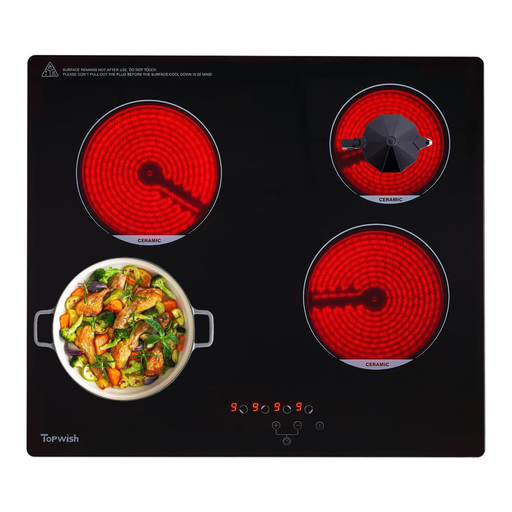
Why it's a good fit: With four cooking zones, including two flexible dual-ring zones, this 60 cm hob offers the capacity and flexibility needed for preparing complex meals and using different-sized pots and roasters.
The flexible dual-ring zones counter the "universal compatibility" problem by adapting to the cookware's diameter, ensuring efficient heat transfer.
High total power of 6600W for rapid heating and 9 power levels for precise temperature control.
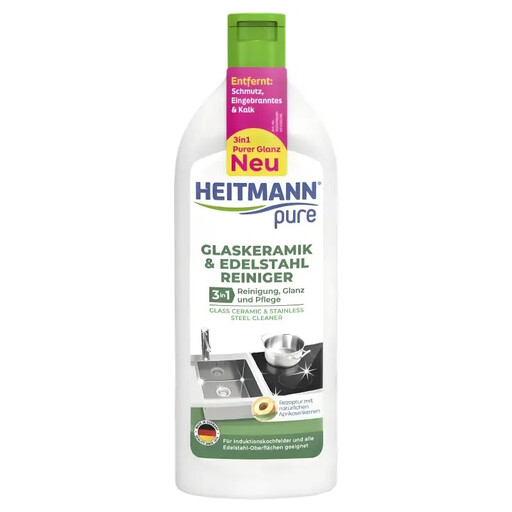
Why this product fits: The longevity of a glass-ceramic hob depends heavily on proper care. This profile prioritises maintaining the appliance's flawless appearance long-term. For stubborn, burnt-on residue, a glass-ceramic scraper is the perfect companion.
Directly addresses the pitfall of improper cleaning methods. The special formula cleans powerfully without attacking the surface or leaving scratches.
Removes burnt-on food and grease, conditions the surface, and leaves a dirt-repellent protective film that makes future cleaning easier.
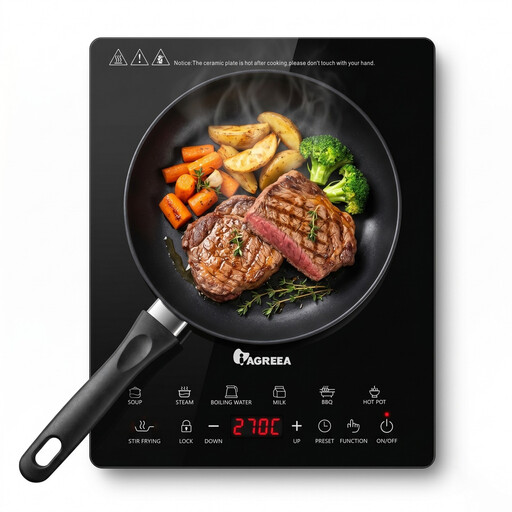
Why it's a good fit: This mobile induction hob is an excellent alternative for renters who aren't allowed to do a permanent installation, or as an extra cooking option for parties and camping. It offers the benefits of induction technology without any structural modifications.
Completely bypasses the pitfalls of power connections and installation dimensions, as it is a portable appliance that plugs into a standard electrical outlet.
Maximum flexibility combined with fast, energy-efficient induction technology and precise temperature control.
We have compiled a complete, up-to-date list of products that fully meet these strict selection criteria and UK safety regulations.
Let the hob cool down completely. Carefully remove coarse, burnt-on grime with a special glass-ceramic scraper. Then, apply a small amount of a suitable cleaner, like the Heitmann Glass-Ceramic Hob Cleaner, to a soft cloth and polish the surface. Wipe with a clean, damp cloth and finally dry the surface to avoid streaks. Never use scratching sponges or abrasive cleaners.
In principle, any pan for a ceramic hob with a completely flat and even base is suitable. This is crucial for efficient heat transfer. Materials like stainless steel, enamelled cast iron, and specially coated aluminium work well. A good example is the LocknLock Décor IH Induction Frying Pan, which, according to the manufacturer's specifications, is suitable for all hob types, including glass-ceramic. The diameter of the pot or pan base should match the cooking zone's diameter as closely as possible.
The "H" symbol stands for "Hot." It lights up as long as a cooking zone remains at a temperature that is unsafe to touch after being switched off. This indicator is an essential safety feature that protects against burns. The symbol only goes out when the surface has cooled down sufficiently.