
Lieferung heute & morgen

Qualitätsgarantie

Willkommens-Angebote freischalten: KOSTENLOSE Lieferung | Bis zu 80 % RABATT | Kostenlose 30-Tage-JoyPlus-Testphase
App herunterladen
A high-quality table is often the centrepiece of a home – whether it's the dining table for shared meals, the desk in the home office, or the coffee table in the living room. Protecting it from scratches, stains, and everyday wear and tear without hiding its beauty is a common challenge. A transparent table protector seems like the ideal solution. However, there are several pitfalls during the selection process that can lead to an unsatisfactory result.
As your Joybuy Product Recommendation Officer, I'll help you identify the important features and make an informed decision that preserves the value of your furniture for the long term.
Many buyers focus solely on price or how the product looks while rolled up. This often leads to disappointment. Pay attention to these three common problems to avoid a bad purchase:
To make the right choice, you should focus on objective criteria. These three factors are crucial for the functionality and durability of your table protector.
The thickness of the protector is the most important criterion for its protective capability.
A good heat-resistant table cover protects against damage from warm plates or cups. Pay attention to the manufacturer's specifications regarding the maximum temperature load. Values between 60°C and 80°C are common. Important: This does not protect against hot pots or pans taken directly from the stove. A separate trivet is still necessary for this.
For high-gloss or glass tables, a standard PVC protector is often unsuitable. As mentioned in the product note for the WOLTU 1mm protector, air bubbles can form. A thicker, heavier protector can sometimes reduce the problem, but a protector with a slightly matted underside is often the better, albeit not completely transparent, alternative in such cases.
Many protectors come in standard sizes but can be easily customised. A high-quality washable PVC tablecloth can be precisely cut with a sharp utility knife and a straight edge (e.g., a steel ruler).
Some manufacturers deliver the protector with a slight surplus of 0.5 to 1 cm in length. This is a sign of quality, as it compensates for any potential minimal shrinkage of the material in the first few weeks and ensures that your protector for the dining table remains a perfect fit over time.
Here are three products from our range, tailored to different needs and taking into account the quality criteria mentioned.
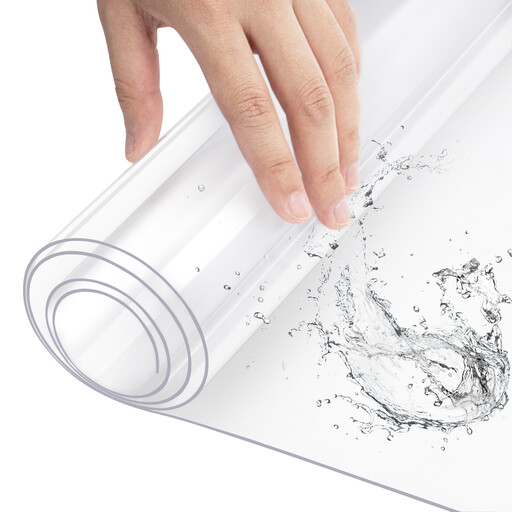
Why This Fits Their Persona: Ideal for users seeking basic protection for less-used surfaces like a home office desk or a side table. It effectively guards against pens, light scratches, and spilled drinks.
The manufacturer explicitly states that this protector is not suitable for high-gloss surfaces. This prevents the common purchasing error and the associated disappointment from air bubbles.
Cost-effective and flexible protection; easy to clean with a damp cloth and simple to cut to custom dimensions.

Why This Fits Their Persona: The perfect choice for a heavily used dining table in a family household. The robust protector reliably guards against crayons, spilled juice, impacts from dishes, and everyday scratches.
With a thickness of 2 mm, this product avoids the pitfall of insufficient protection. It offers high impact resistance and lies flat, which prevents creasing. The delivery with a length tolerance counteracts the shrinkage problem.
Very durable and long-lasting; completely waterproof and oil-proof, making cleaning extremely easy.
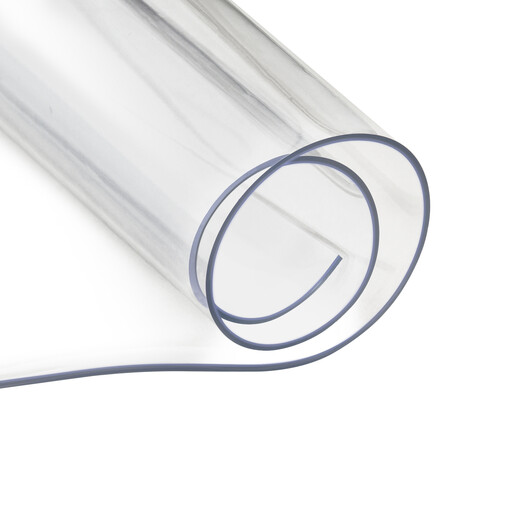
Why This Fits Their Persona: An excellent choice for dining or kitchen tables where warm dishes are regularly served. The enhanced heat resistance offers an extra layer of security for sensitive wood surfaces.
This product directly addresses concerns about heat damage. According to the manufacturer, the protector is heat-resistant up to 80°C, offering more protection than many standard films.
In addition to its 2 mm protective layer, it also features a non-slip surface that prevents the protector from sliding on the table.
We have compiled a complete, real-time list of products that fully satisfy these strict selection criteria and UK safety regulations.
Since the protectors are rolled for shipping, they need some time to flatten completely. Unroll the protector on the table and let it sit for 24 to 48 hours. Weighing down the corners with books can speed up the process. Alternatively, you can gently warm the protector with a hairdryer on a low setting to make it more pliable.
This phenomenon occurs when two very smooth, non-porous surfaces (the protector and the table) meet. Air trapped between them cannot escape and forms visible bubbles. This is a physical effect, not a product defect. It primarily happens with glass, acrylic, and high-gloss lacquered tables.
Yes, this is easily done. For a clean result, use a sharp utility knife or a box cutter and a long steel ruler as a guide. Measure carefully and lightly mark the cutting line with a pencil before you cut. Work on a cut-resistant surface to avoid damaging your table.