
Lieferung heute & morgen

Qualitätsgarantie

Willkommens-Angebote freischalten: KOSTENLOSE Lieferung | Bis zu 80 % RABATT | Kostenlose 30-Tage-JoyPlus-Testphase
App herunterladen
Glass cups are among the most versatile drinking vessels in the home. They are suitable for water, juice, lemonade, iced coffee, smoothies and – depending on the design – desserts or hot drinks too. However, it is worth taking a close look at the product details before buying. Attractive looks alone reveal little about everyday practicality, cleaning and safety.
Ribbed glass cups, coloured drinking glasses and models with wooden lids look decorative. However, a textured surface can make cleaning more difficult, while wood is not always suitable for the dishwasher. Glass straws also require thorough cleaning and should be handled with care.
A small glass of around 250 to 300 ml is suitable for water, juice or smaller portions. For iced coffee, smoothies and large cold drinks, capacities of 400 to 750 ml are more practical. If you are looking for a glass set for guests, you should also check how many individual glasses are actually included. Sets with a carafe and drinking glasses can have misleading product names.
Glass is sensitive to sudden changes in temperature. A cold glass should not be filled directly with boiling water unless the manufacturer expressly permits this. With double-walled coffee glasses, you should also check whether they are approved for use in the microwave and dishwasher. The information on the product page and in the instructions for use is decisive.
For glass drinking glasses, material details such as borosilicate glass or soda-lime glass are relevant. Borosilicate glass is often used for heat-resistant drinking vessels. Soda-lime glass is common in classic water and lemonade glasses. Regardless of the material, glass cups remain fragile and should not be used if they have visible cracks or chips.
Look out for:
With decorated or ribbed glass cups, fine indentations can improve grip. At the same time, there should be no sharp edges or transitions.
The right size depends on the drink:
For iced coffee glasses, a sufficiently wide diameter and a sturdy handle are practical. Smoothie glasses should offer enough capacity for thick drinks. Dessert glasses with a handle or wide opening make it easier to add yoghurt, ice cream and fruit.
A glass cup with lid and straw is suitable for cold drinks and transporting them around the home. Key considerations include the lid’s seal, the fit of the rubber ring and the straw material. A wooden lid usually requires hand washing and should not be left to soak for long periods.
If you are looking for dishwasher-safe glass cups, check the product information for each individual accessory. The glass itself may be dishwasher-safe, while wooden lids, seals or printed surfaces may need to be cleaned separately. With delicate decorations, hand washing can extend the product’s useful life.
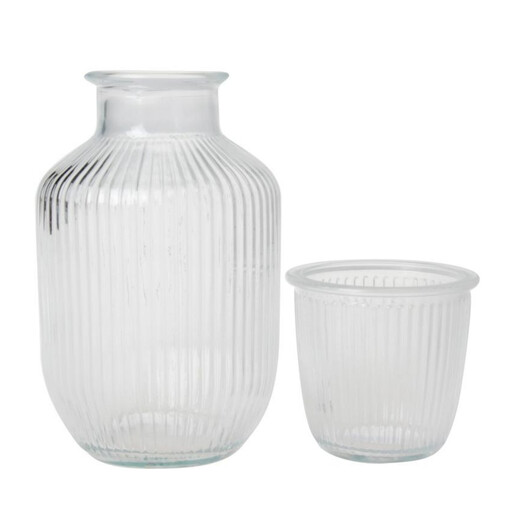
Why this product suits this profile: The combination of a 1,000-ml carafe and 270-ml glasses covers everyday use as well as serving cold drinks.
The details specify the sizes, glass material and suitability for cold drinks. This makes it easier to assess how the set will be used before buying.
Lead-free transparent glass, a ribbed surface and, according to the product information, dishwasher-suitable parts.
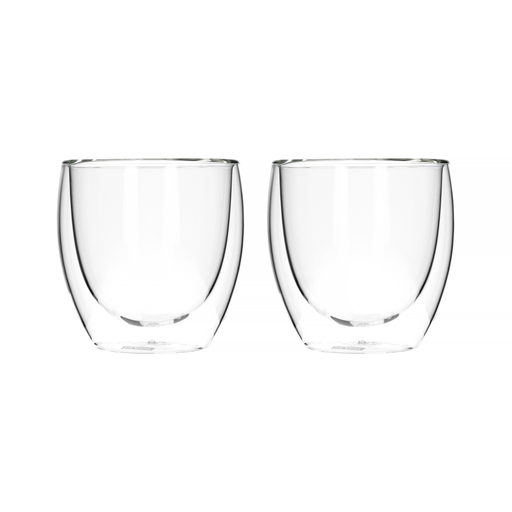
Why this product suits this profile: The double-walled borosilicate glass design is intended for coffee, tea, milk, juice and desserts.
The product information specifies the material, capacity and intended use for hot and cold drinks. This makes it easier to choose according to specific criteria.
250 ml per glass, double-walled borosilicate glass and, according to the product information, microwave and dishwasher suitability.
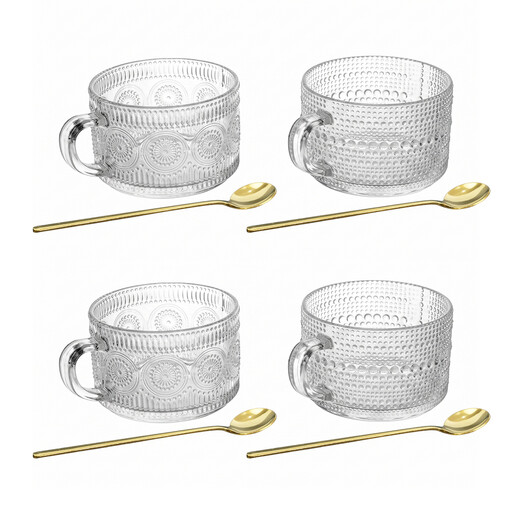
Why this product suits this profile: Four glasses, each with a 450 ml capacity, are suitable for families, breakfast, desserts and larger smoothies.
The stated quantity and capacity prevent a supposedly complete set from turning out to be too small for your household.
Four identical 450-ml glasses, an integrated handle and, according to the product information, a dishwasher-suitable design.
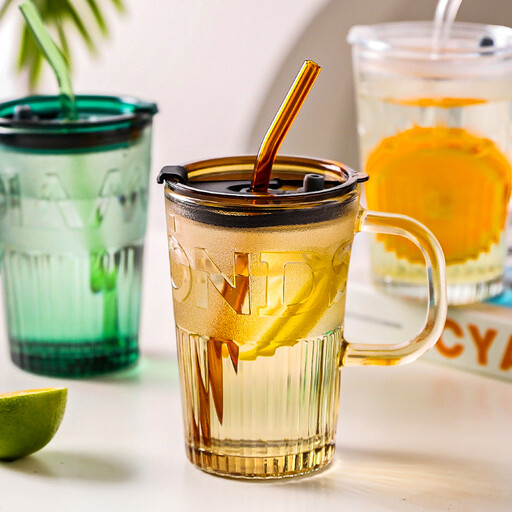
Why this product suits this profile: With a 400 ml capacity, this ribbed glass cup combines decorative style with accessories for iced coffee, juice and smoothies.
The product description specifies that it is intended for cold drinks. This makes it clear that it should not be treated as a universal glass for hot drinks.
400 ml capacity and a ribbed surface; the lid and straw are intended for cold drinks.
We have put together a complete, regularly updated list of products that fully meet these strict selection criteria and the safety regulations applicable in the EU.
Wash new glass cups with warm water and a suitable cleaning product before using them for the first time. Avoid harsh scouring pads if the surface is printed, ribbed or decorated. Glass straws should be cleaned individually and checked for damage.
For carafes, glasses and dessert vessels:
For iced coffee, models of around 400 ml or more with a wide opening and sturdy handle are practical. A lid and straw can make them even more convenient to use. Check whether the model is intended exclusively for cold drinks.
No. Suitability depends on the individual product and its accessories. Some glasses are described as dishwasher-safe, while wooden lids, seals or decorations may require hand washing. The manufacturer’s instructions should be followed separately for each part.
There is no standard lifespan that applies in every case. It depends on the glass thickness, how the cup is used and cleaned, and the risk of dropping it. If there are cracks, chips or damaged rims, the glass cup should be replaced for safety reasons.