
Lieferung heute & morgen

Qualitätsgarantie

Willkommens-Angebote freischalten: KOSTENLOSE Lieferung | Bis zu 80 % RABATT | Kostenlose 30-Tage-JoyPlus-Testphase
App herunterladen
Finding the right food storage solution can be a challenge. Plastic containers can stain over time, absorb odours, or may not be suitable for high temperatures. A glass food storage container offers a durable and versatile alternative. It's not just for storing food in the fridge; it's often also safe for the freezer, microwave, and oven.
As a Joybuy Product Recommendation Officer, my role is to provide you with objective information to help you make an informed decision. This article serves as a guide to understanding the features of various glass containers, helping you choose the best option for your daily needs.
Three key criteria help in evaluating the functionality and durability of a glass container: the material, the lid, and the shape.
Not all glass is created equal. For use in the kitchen, where temperature fluctuations are common, a borosilicate glass food container is an option worth considering. Unlike standard soda-lime glass, borosilicate glass is significantly more resistant to thermal shock. This means it can withstand greater temperature differences.
An oven-safe glass food container is typically made from this material. This allows it to be used not only for storage but also as a glass casserole dish with a lid or as glass microwave cookware. This reduces the number of kitchen utensils you need and simplifies food preparation and storage.
A good glass container with a lid is defined by its reliable seal. The locking system is especially crucial if you need a leak-proof glass lunch box for transporting soups or sauces. Common systems include:
The gasket, often made of silicone, should be easily removable for hygienic cleaning.
The shape of the container affects how efficiently you can use space in your fridge, freezer, or bag.
Based on objective product features like material, volume, and functionality, we have compiled a selection of glass containers that cover a range of different uses.
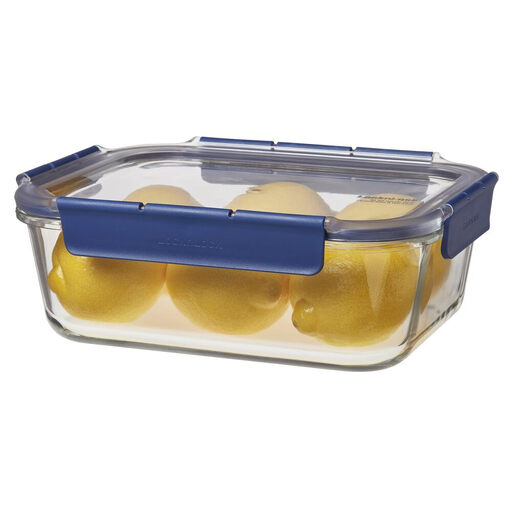
What Makes It Stand Out With a two-litre volume, this container is designed for storing larger quantities. The latch closure ensures the lid is secure, making it a practical solution for transport and storage.
Benefits
Who It's For Households that regularly cook large portions, store leftovers from family meals, or prepare salads for parties.
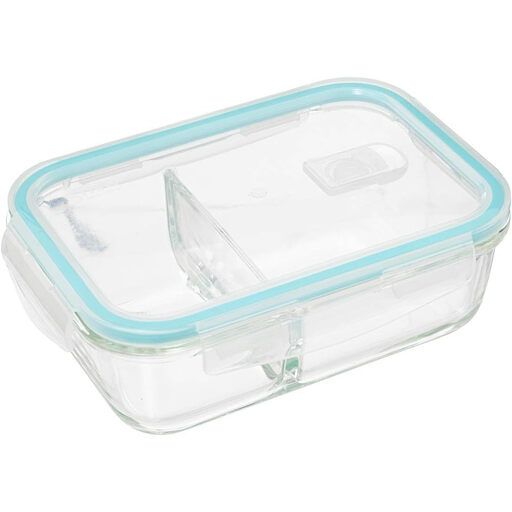
What Makes It Stand Out This borosilicate glass container features two compartments. This allows you to transport a main course and a side dish, or different snacks, separately in a single container without them mixing.
Benefits
Who It's For Ideal for meal prep and as a lunch box when components like curry and rice or a salad and its dressing need to be kept separate.
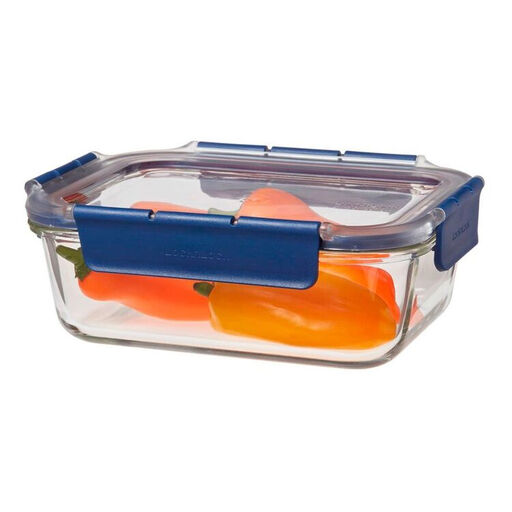
What Makes It Stand Out Made from high-strength borosilicate glass, this container is heat-resistant up to 400°C (without lid), according to the manufacturer. A special feature is its Tritan plastic lid, which is known to be highly shatter-resistant, and the raised lid edge that allows for stable stacking of multiple containers.
Benefits
Who It's For Users who value organised, space-saving storage in the fridge or pantry and are looking for a durable casserole dish with a lid.
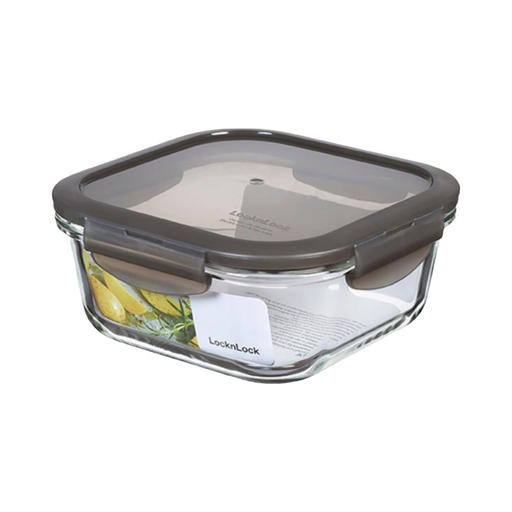
What Makes It Stand Out The compact, square shape and the patented four-way locking system make this container an especially leak-proof option for on-the-go use. The borosilicate glass is also suitable for high temperatures in the oven.
Benefits
Who It's For Individuals for their lunch break, for transporting soups or dressings, and for storing smaller portions.
Glass containers are a hygienic and durable choice not just for the kitchen. Their non-porous and easy-to-clean properties also make them useful in other areas of the home, such as for storing pet food. If you are looking for containers specifically for this purpose, you may find suitable options here.
Discover More Glass Storage Solutions
Both materials have specific advantages and disadvantages. Glass is non-porous, so it doesn't stain or absorb odours and doesn't leach chemicals into food. It is often more heat-resistant and durable in use. Plastic containers are lighter and won't shatter if dropped. The choice depends on personal priorities, such as weight, breakability, and material purity.
Although borosilicate glass is very resistant to temperature changes, most manufacturers recommend avoiding extreme temperature jumps to minimise the risk of the glass breaking (thermal shock). It is advisable to let the frozen container thaw briefly at room temperature before placing it in a preheated oven. The lid must always be removed before heating in the oven or microwave.
For a thorough cleaning, it is important that the silicone gasket can be removed from the lid. This prevents residue from building up underneath. Most lids and gaskets are dishwasher-safe, but to be safe, they should be placed in the top rack to avoid warping from excessive heat. Regularly cleaning the lid and gasket separately contributes to longevity and hygiene.