
Lieferung heute & morgen

Qualitätsgarantie

Willkommens-Angebote freischalten: KOSTENLOSE Lieferung | Bis zu 80 % RABATT | Kostenlose 30-Tage-JoyPlus-Testphase
App herunterladen
By: Joybuy Product Recommendation Officer
The search for durable, food-safe storage solutions often leads back to a time-tested material: glass. Unlike plastic alternatives, glass food storage containers do not absorb odours or stains and offer a clear view of their contents. However, the market is diverse, and the differences are in the details.
This article serves as an objective guide. We will highlight the crucial features to look for when buying and present a selection of models that are well-suited for various kitchen applications due to their specific properties.
To identify the perfect food storage container for your needs, three criteria are particularly important: the glass material, the quality of the lid, and the functional design.
Not all glass is created equal. For kitchen use, especially when containers will be exposed to both heat and cold, borosilicate glass is the preferred choice. Compared to standard soda-lime glass, it is significantly more resistant to thermal shock. This means it can withstand high temperatures in the oven, classifying it as oven-safe and microwave-safe. This property transforms a container into a versatile casserole dish with a lid. Always check the manufacturer's specifications for maximum heat resistance.
A good glass container is only as practical as its lid. A reliable locking mechanism that creates an airtight seal is crucial for functionality. Models with clip-on lids and a firmly integrated or removable silicone gasket are considered particularly leak-proof. This is an essential feature for glass meal prep containers, which are often transported, or for storing soups and sauces. Check if the lid is BPA-free and if the gasket can be removed for easy cleaning.
In most kitchens, storage space is a valuable commodity. Stackable food containers make optimal use of space in the fridge, freezer, and kitchen cabinets. Some manufacturers incorporate special grooves or reinforced rims into the design to allow for secure, non-slip stacking of same-sized containers. Whether round, square, or rectangular—the shape should suit the foods you store most often. Rectangular shapes are often the most space-saving.
Based on the criteria mentioned, we have compiled a selection of products that are suited for different needs due to their specific features.
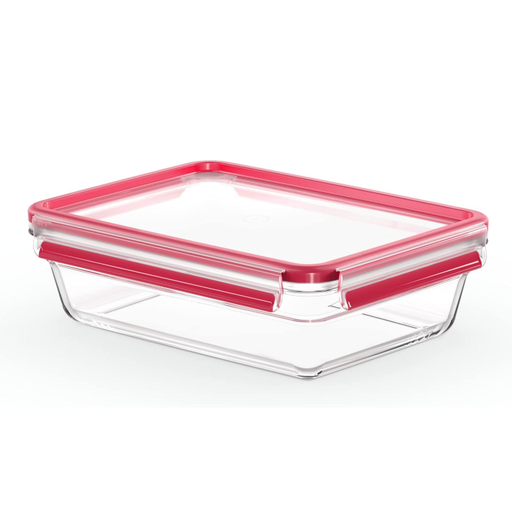
Why it stands out: This container is notable for its large 2-litre capacity and a robust clip-lock system. The silicone seal, which is firmly integrated into the lid, ensures a reliable seal.
Pros:
Who it's for: This glass container is a great choice for families or individuals who regularly store large amounts of leftovers or prepare dishes like gratins and lasagnas that go directly from the oven to the table and then into the fridge.
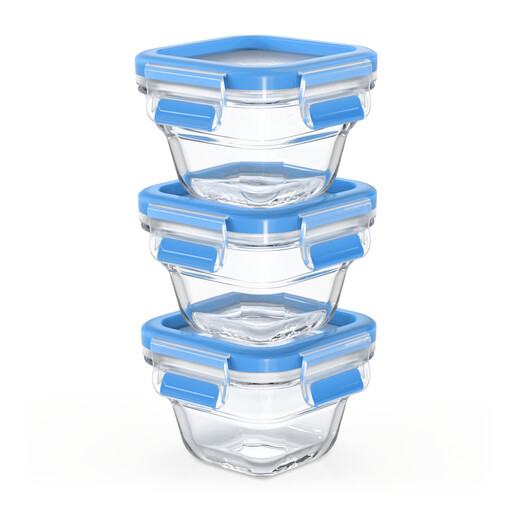
Why it stands out: This set consists of three small containers (0.18 litres each) and uses a proven locking technology. According to the manufacturer, it is the first food storage container certified for baby food. The improved design with a stacking rim ensures a secure fit in the cabinet.
Pros:
Who it's for: Perfect for preparing and storing small portions. These small containers are very practical as glass meal prep containers for snacks, dips, sauces, or for the safe storage of baby food.
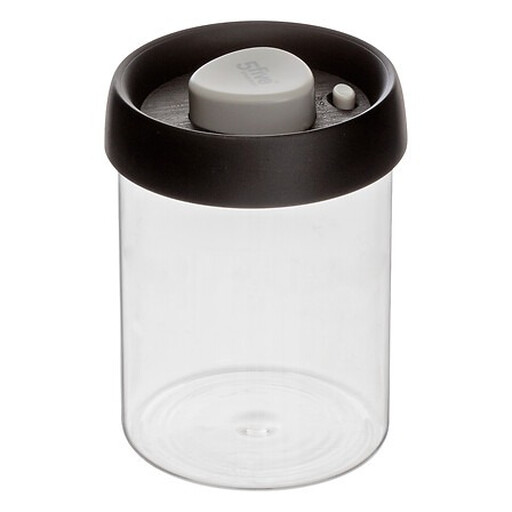
Why it stands out: This glass storage jar is distinguished by a special feature: a pump system integrated into the lid. It allows you to manually create a vacuum to slow down the oxidation of food.
Pros:
Who it's for: This jar is the right choice for anyone who wants to store delicate dry foods like nuts, seeds, or coffee and preserve their aroma and texture for as long as possible. It is less suited for liquid or moist foods.
The products featured cover specific use cases. If you are looking for a different size, shape, or type of storage container, there are numerous other possibilities.
Explore our full range of weatherproof clear storage boxes to find the perfect solution for your kitchen.
Glass is a non-porous material, which means it does not absorb odours, flavours, or stains from food. It can be cleaned at high temperatures and is very scratch-resistant. Over time, plastic containers can develop scratches where bacteria can accumulate, and they tend to stain when in contact with strongly coloured foods like tomato sauce.
Oven-safety is a specific product feature that must be indicated by the manufacturer. Look for a corresponding symbol (often a stylised oven) on the product itself, the packaging, or in the product description. The use of borosilicate glass is a strong indicator of heat resistance, but the exact temperature limits should always be checked against the manufacturer's specifications. The lid is almost never oven-safe.
Whether a direct transition from cold to heat is possible depends on the quality of the glass. High-quality borosilicate glass is designed to withstand significant temperature differences. Nevertheless, it is recommended to follow the manufacturer's instructions to avoid thermal shock—and thus potential shattering of the glass. Moving a container from the freezer into an already preheated oven should generally be avoided.