
Lieferung heute & morgen

Qualitätsgarantie

Willkommens-Angebote freischalten: KOSTENLOSE Lieferung | Bis zu 80 % RABATT | Kostenlose 30-Tage-JoyPlus-Testphase
App herunterladen
Glass food storage containers are suitable for storing, freezing, heating and transporting food. However, not every container is equally practical for families, working people and meal-prep users. Capacity and price are not the only deciding factors: the closure, type of glass, temperature specifications and ease of cleaning matter too.
A container may have a lid yet still leak when transporting soup, sauce or dressing. Look for a silicone sealing ring running all the way around and a closure that presses the lid evenly against the glass container. Glass containers with lids and side locking clips can offer a practical advantage here. Also check whether the seal can be removed and cleaned separately.
“Suitable for the oven and microwave” often only means that the glass container may be heated without its lid. Plastic lids, clips and silicone seals generally do not belong in the oven. It is equally important not to place a cold container straight from the freezer into a preheated oven. The sudden temperature change can cause thermal shock and glass breakage.
A capacity of several litres is practical for family-sized portions, but it requires sufficient space in the fridge. Without a stable stacking rim, larger containers can also sit precariously on top of one another. For an organised kitchen, stackable glass containers with matching footprints are often more useful than individual containers in different shapes.
Borosilicate glass is used in many heat-resistant storage containers. However, the specific limits vary from model to model. Product specifications may, for example, state values of up to 400 °C or 420 °C for using the glass container without its lid. These figures do not automatically apply to direct heat sources such as hobs, grills or naked flames.
Specific figures are also relevant for freezer use. According to the manufacturer’s information, some models are suitable down to −20 °C, while others can withstand temperatures as low as −40 °C. Allow frozen food to thaw slightly before heating wherever possible, and avoid sudden changes between very cold and very hot temperatures.
With airtight glass containers, several components need to work together:
For carrying in a rucksack or work bag, leak-proof storage containers with securely closing lids are a sensible choice. Nevertheless, containers holding liquids should be transported upright.
For individual side dishes, snacks or small meal-prep portions, 180 to 500 ml is often sufficient. Sizes of around 630 to 750 ml suit many lunches, salads and leftover portions. For family meals or larger quantities, 1.0 to 3.0 litres are more suitable.
Rectangular and square shapes generally make efficient use of fridge space. A raised stacking rim can help prevent containers from slipping. When using a dishwasher, check the manufacturer’s instructions: some lids may only be cleaned in the top rack, while others should be washed by hand. Wooden lids, such as those used with certain glass containers featuring acacia wood, are not always dishwasher-safe.
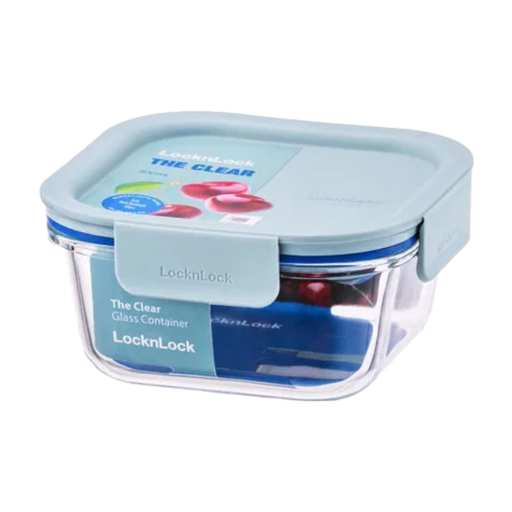
Why this product suits this profile: The square 500 ml format is suitable for individual portions, side dishes and leftovers at home.
The product specifications state that it has an airtight silicone closure and can be used in the fridge, freezer, oven and microwave without the lid.
Square shape, 500 ml capacity and dishwasher-safe glass container.
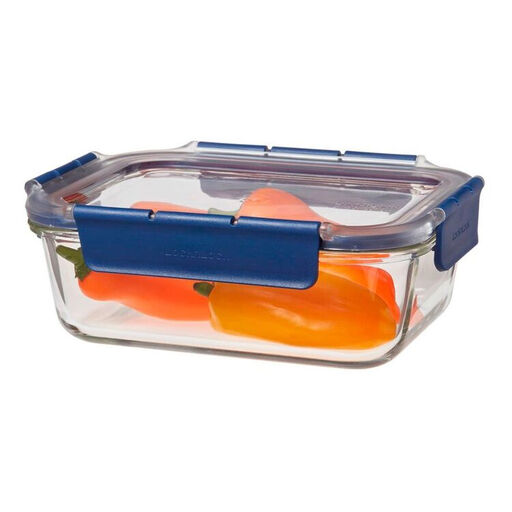
Why this product suits this profile: Borosilicate glass, a four-sided closure and a transparent Tritan lid will appeal to households that value material specifications and versatile use.
The manufacturer’s information clearly distinguishes between the heat-resistant glass and the lid: the oven and microwave are intended to be used without the lid.
1.0-litre capacity, borosilicate glass, stackable lid rim and freezer suitability down to −20 °C according to the product specifications.
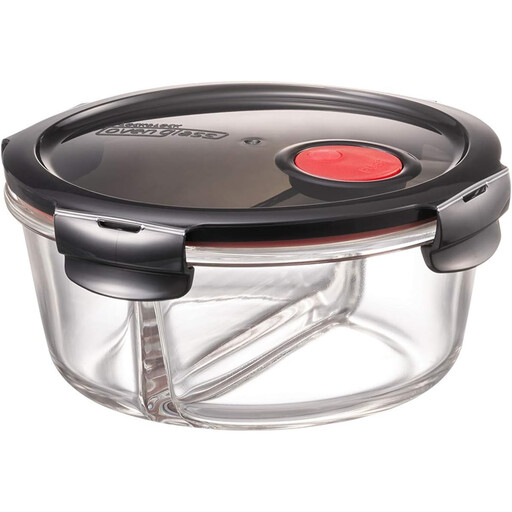
Why this product suits this profile: The integrated divider is ideal for users who want to transport two foods separately, such as a main course and a side dish.
The lid has a steam vent for microwave use. For oven use, remove the lid completely.
900 ml capacity, round shape, divider, and suitability for the freezer and dishwasher according to the product description.
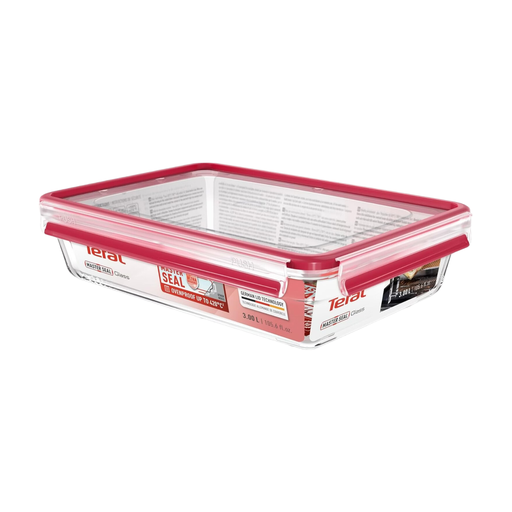
Why this product suits this profile: The large capacity is suitable for family meals, prepared dishes and storing larger quantities in the fridge.
The reinforced rim and designated stacking edge address the common space and stability issues associated with large containers.
3.0-litre capacity, stackable design and, according to the product specifications, a temperature range of −40 °C to 420 °C for the container.
We have put together a complete, regularly updated list of products that fully meet these strict selection criteria and the safety regulations applicable in the EU.
Many heat-resistant glass containers are suitable for oven use according to the manufacturer’s information. As a rule, the temperature specification applies exclusively to the glass and only when the lid has been removed. Always check the instructions for the specific model before use.
For individual lunches, around 600 to 900 ml is often suitable. Small side dishes and snacks can be stored in 180 to 500 ml containers. For family portions or baked dishes, containers from 1.0 litre up to 3.0 litres are more practical. The ideal size depends on the portion quantity, available fridge space and intended method of transport.
There is no standard service life that applies in every case. Glass can be damaged by impacts, scratches or thermal shock. Seals and closure clips are wear parts and should be replaced as soon as they show cracks, no longer close properly or begin to leak.