
Lieferung heute & morgen

Qualitätsgarantie

Willkommens-Angebote freischalten: KOSTENLOSE Lieferung | Bis zu 80 % RABATT | Kostenlose 30-Tage-JoyPlus-Testphase
App herunterladen
Finding the perfect food storage solution can be a challenge. For those who prioritise freshness, organisation, and health-conscious materials, the benefits of glass quickly become apparent. Unlike plastic, glass containers are resistant to staining, do not absorb odours, and are BPA-free. They offer a durable and hygienic way to store leftovers, prepare meals in advance (meal prep), or safely transport your lunch.
This guide is here to help. We will highlight the key criteria you should consider when choosing a glass food storage container set and present a selection of different models to make your decision easier.
To find the right set for your kitchen, a few technical features are crucial. A well-considered choice ensures that the containers will meet your everyday needs.
Not all glass is created equal. For kitchen use, borosilicate glass is a popular choice. This material is distinguished by its high resistance to thermal shock. This means you can use these oven-safe food containers and move them directly from the freezer to the microwave or oven (without the lid) without fear of cracking. For the lids, look for a "BPA-free" label to ensure no unwanted chemicals come into contact with your food.
The lid is a critical feature for functionality. A food container should be airtight to extend the freshness of food and preserve flavours. For transporting soups, sauces, or marinated dishes, it is also essential that the containers are leak-proof. Systems with four-sided locking lids and an integrated silicone seal generally offer high reliability. Such freezer containers are also ideal for preventing freezer burn.
Consider what you will primarily use the containers for. A good glass food storage container set should include various sizes to flexibly handle different quantities—from small snacks and single portions for a glass lunch box to large containers for family meals or as glass pantry containers for dry goods. Rectangular or square shapes are often more space-efficient and stack better in cupboards and the fridge, simplifying the organisation of your kitchen storage containers.
Based on the criteria mentioned, we have compiled a selection of sets that cover different materials and applications.
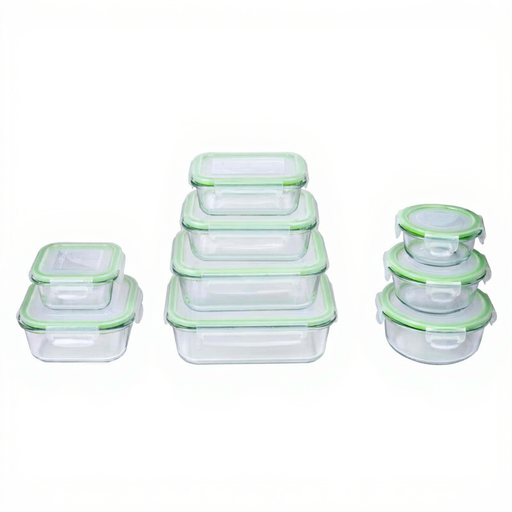
Why It Stands Out: This comprehensive set consists of nine borosilicate glass containers with matching airtight lids. The wide temperature tolerance from -40°C to 300°C (glass container without lid) makes it a true all-rounder for the kitchen and everyday life.
Pros:
Who is it for? Ideal for families and anyone who regularly uses glass meal prep containers. The variety of sizes covers almost every need, from storing small leftovers to preparing entire meals.
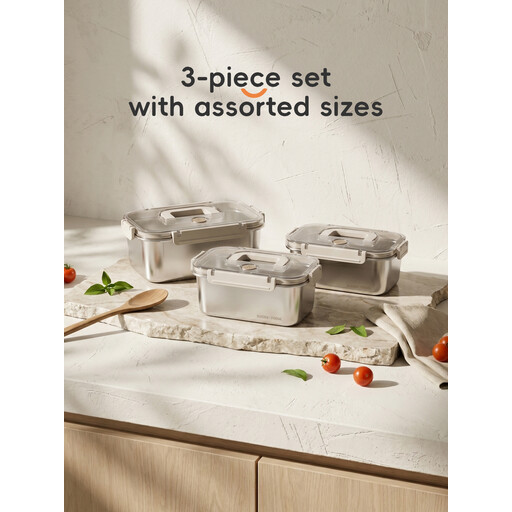
Why It Stands Out: As an alternative to glass, this set offers containers made from food-grade 304 stainless steel. This material is extremely durable, lightweight, and does not absorb any odours or stains.
Pros:
Who is it for? For users seeking an unbreakable and lightweight alternative to glass. Perfect for transporting meals to work, school, or for outdoor activities.
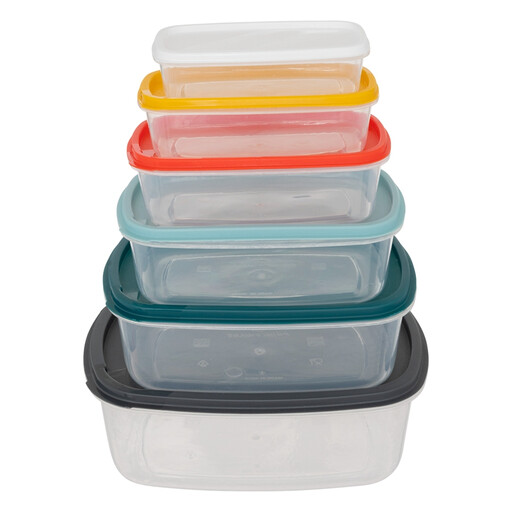
Why It Stands Out: This set made of polypropylene (PP) is a lightweight and colourful option for organisation. The different coloured lids help to quickly identify the contents.
Pros:
Who is it for? For anyone looking for a budget-friendly and lightweight solution for general kitchen storage, especially for dry ingredients, craft supplies, or organising small items.
Proper storage is a key topic not just in the kitchen. Modern households are increasingly turning to smart solutions to create order and use resources efficiently. This ranges from food organisation to energy management.
If you are also interested in innovative energy storage solutions, you can find more information in our category for battery storage containers.
1. Are glass food storage containers really oven-safe? Oven safety depends on the type of glass. Models made from borosilicate glass are specifically designed to withstand high temperatures and thermal shock. They can typically be used safely in the oven. However, it is crucial to always check the manufacturer's instructions and remove the lid before heating in the oven.
2. What is the best way to clean glass food storage containers? Most glass containers are dishwasher-safe, which makes cleaning very easy. Many lids can also be cleaned in the dishwasher, with the top rack being recommended. For stubborn residues, soaking in warm, soapy water helps. The glass container itself is non-porous, making it particularly hygienic and easy to clean. On some models, the silicone sealing ring can be removed for separate, thorough cleaning.
3. Are the lids of glass food storage containers always airtight and leak-proof? Not necessarily. To ensure a container is both airtight and leak-proof, you should look for lids with specific features. Four-sided locking lids combined with a wrap-around silicone gasket offer a very high level of sealing. This feature is especially important if you want to transport liquid foods like soups or protect food in the freezer from freezer burn.