
Lieferung heute & morgen

Qualitätsgarantie

Willkommens-Angebote freischalten: KOSTENLOSE Lieferung | Bis zu 80 % RABATT | Kostenlose 30-Tage-JoyPlus-Testphase
App herunterladen
A glass kettle is more than just a kitchen appliance—it's often a design statement. The clear view of the boiling water, frequently enhanced by blue LED lighting, adds a modern touch to any kitchen. But behind the appealing aesthetics lie pitfalls that can quickly turn a purchase into a disappointment. Before you make a decision, it's crucial to distinguish between typical marketing promises and the product features that truly matter.
As your Joybuy Product Recommendation Officer, I'm here to help you separate the wheat from the chaff. We'll shed light on three common problems that arise when choosing a glass kettle and show you what to look for to find a durable and functional appliance for your home.
Many models look identical at first glance, but the differences are in the details. These three points often lead to dissatisfaction after the purchase:
To avoid these pitfalls, focus on the following objectively measurable criteria. These define the quality and everyday usability of a glass kettle.
A high-quality glass and stainless steel kettle is the foundation for durability and safety. Look for these specifications:
The size and power should suit your household:
Modern devices offer more than just boiling water:
Based on these criteria, we have compiled a selection of products suitable for different user profiles.
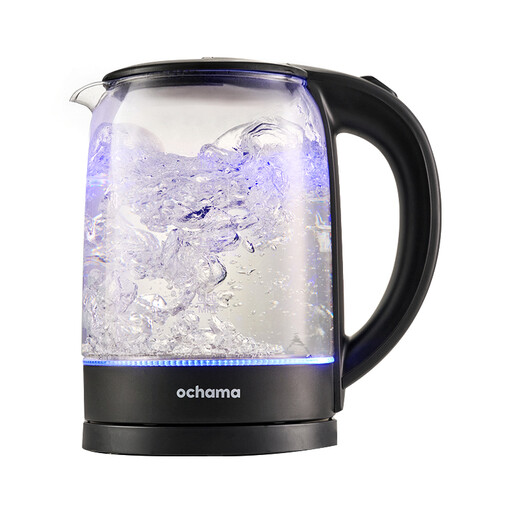
Why This Fits Their Persona: Ideal for families and users looking for solid core features without complex extras. It focuses on the essentials: fast, safe boiling in an attractive design.
The borosilicate glass body and clear construction make limescale buildup instantly visible, encouraging timely cleaning. It forgoes complex electronics, focusing instead on reliable safety features.
1.7-litre capacity and 2200W power for rapid boiling. The blue LED lighting serves as a clear operational indicator.
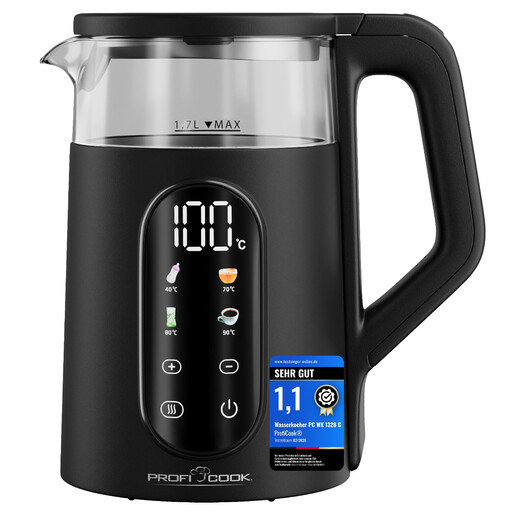
Why This Fits Their Persona: Perfect for users who need more than just boiling water. Precise temperature control allows for the optimal preparation of delicate teas, pour-over coffee, or baby formula.
Temperature control is a functional necessity for connoisseurs, not a gimmick. The device is explicitly designated as BPA-free and combines a heat-insulated glass container with a stainless steel base.
Precise temperature control (40°C - 100°C) via sensor-touch operation, a real-time temperature display, and a practical "Keep Warm" function.
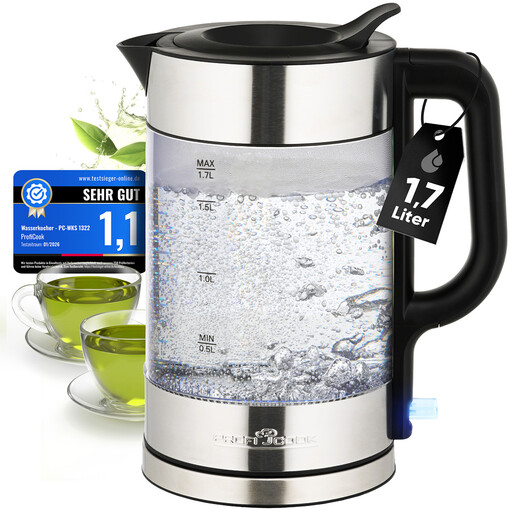
Why This Fits Their Persona: This all-rounder combines a high-end appearance with practical details for a hectic family life. Safety and ease of use are front and centre.
It directly addresses concerns about harmful substances with its clear BPA-free label. The one-handed operation with a self-closing filling opening is a practical detail that prioritises convenience over pure aesthetics.
The combination of a glass/stainless steel body, ease of use thanks to its cordless design, and convenient one-handed operation make it a reliable partner in the kitchen.
We have compiled a complete, up-to-date list of products that fully meet these strict selection criteria and German safety regulations.
The frequency depends on the water hardness in your area. In regions with hard water, it is recommended to descale the kettle every four to eight weeks. A simple indicator is a visible white layer on the bottom or walls of the glass body. Regular cleaning with vinegar essence or a commercial descaler maintains the efficiency and longevity of the appliance.
Glass is an inert material, meaning it does not react with its contents and does not release any chemicals or flavours into the water. Many plastic kettles, especially older models, can release Bisphenol A (BPA) or other plasticisers when heated. A BPA-freeglass kettle with stainless steel components minimises the water's contact with potentially harmful materials and is therefore considered by many to be a healthier choice.
A device with a high wattage like 2200W heats water very quickly, which shortens the duration of electricity consumption. The total energy consumed to boil a specific amount of water is therefore often comparable to that of a lower-power model that takes longer. To save energy, the most effective method is to only heat the amount of water you actually need.