
Lieferung heute & morgen

Qualitätsgarantie

Willkommens-Angebote freischalten: KOSTENLOSE Lieferung | Bis zu 80 % RABATT | Kostenlose 30-Tage-JoyPlus-Testphase
App herunterladen
A 1.7-litre glass kettle is a good fit for many German households. Its capacity is enough for several cups of tea or coffee, or hot water for cooking. Models can vary considerably in their materials, controls and safety features, though. Attractive lighting alone tells you little about how practical a kettle will be day to day.
Before buying, check that the kettle really suits your habits. Three common pitfalls are:
An electric 1.7-litre kettle offers plenty of capacity for several people. You don’t need to fill it completely to make a single cup, though. Look for clear minimum and maximum markings so you only heat the amount of water you need.
A 2,200-watt kettle has a relatively high power rating for a typical household appliance. This can shorten the heating time for larger amounts of water, but it also increases the amount of electricity used at any one time. Running costs mainly depend on how much water you actually heat.
In a glass and stainless steel model, the water container is made from glass, while parts such as the body, lid or base may be made from stainless steel or plastic. Heat-resistant safety glass lets you check the water level at a glance and makes visible limescale easier to spot.
A stainless steel kettle, by contrast, often has a robust outer casing. But the description alone doesn’t tell you whether the heating element is exposed or concealed. A concealed stainless steel heating element can make the inside easier to clean, as no heating coil projects directly into the water.
For plastic parts that come into contact with water or steam, the manufacturer’s BPA-free claim is relevant. It should be clearly stated in the product details. The models featured here are listed as BPA-free in their product information. This is a material specification, not a claim about medical benefits.
A 360° swivel base makes the kettle easy to use for both right- and left-handed people. With a cordless kettle, you can lift the jug off the base to fill and pour, while the electrical connection stays with the base. A cord storage compartment helps keep excess cable off your worktop.
The following features are also useful for everyday use:
Safety features should be clearly listed in the technical specifications. A general marketing claim such as ‘safe design’ is less informative than specific details about automatic shut-off or overheat protection.
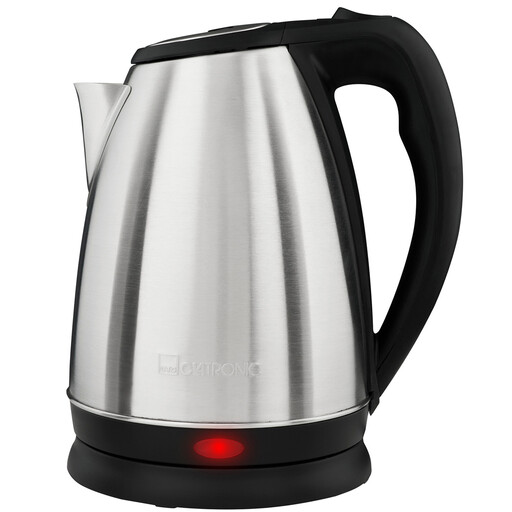
Why it suits this type of buyer: This model combines a 1.7-litre capacity with a stainless steel body, cordless operation and cord storage. It’s a good choice if you’re looking for a straightforward kettle without extra design features.
The product details specify that it’s BPA-free and has a concealed stainless steel heating element, automatic and manual shut-off, and boil-dry and overheat protection.
1.7 litres, 1,850–2,200 watts, 360° swivel connection and a base with cord storage.
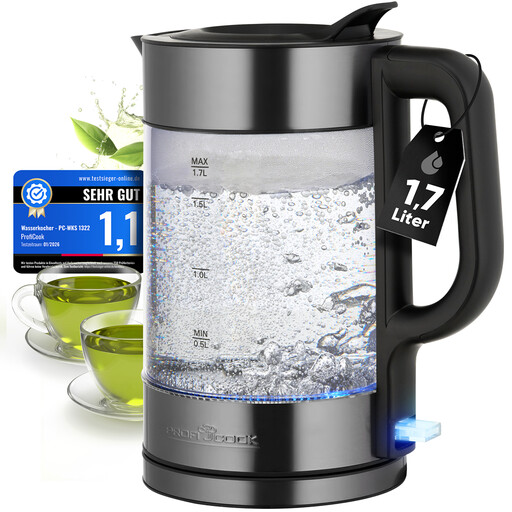
Why it suits this type of buyer: The glass and stainless steel design lets you see the water level clearly. The illuminated indicator makes it easy to check the kettle’s status, while one-handed operation makes topping it up more convenient in a busy kitchen.
Rather than relying on lighting as its main selling point, the product details also list a self-closing filling opening, water-level indicator, automatic and manual shut-off, and overheat protection.
Heat-resistant glass jug, stainless steel base, BPA-free construction, 220–240 volts and 1,850–2,200 watts.
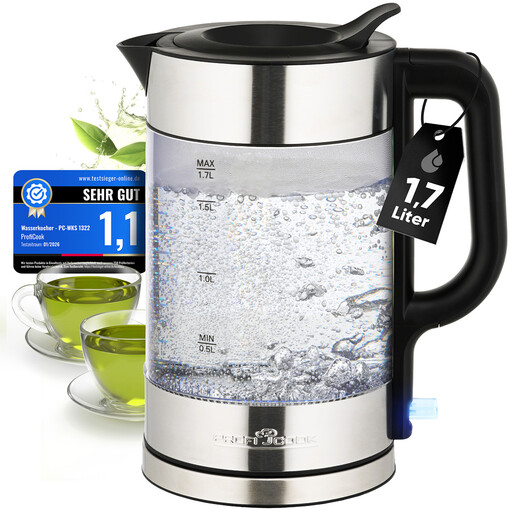
Why it suits this type of buyer: A 1.7-litre capacity, 360° swivel connection and cordless design are handy for households that regularly need hot water. Its stainless steel finish also goes well with many kitchen appliances.
Features include a concealed stainless steel heating element, BPA-free construction, automatic and manual shut-off, and boil-dry and overheat protection.
Glass and stainless steel body, illuminated on/off switch, cord storage and 360° swivel base.
We’ve put together a complete, regularly updated list of products that meet these strict selection criteria and the safety regulations in force across the EU.
Limescale can build up inside the kettle, depending on water hardness and how often you use it. Clean your kettle according to the instructions and use only suitable descaling products. Don’t exceed the maximum fill level. With a glass jug, you can usually spot any residue early.
Place the base on a dry, stable surface and keep water away from the electrical contacts. Even a kettle with one-handed operation should be held carefully when pouring. Automatic shut-off is a safety feature, but it doesn’t replace proper use.
Use the maximum fill mark inside the kettle as your guide. If your model holds up to 1.7 litres, don’t fill it above this mark. For a single cup, a smaller amount will be enough.
A 2,200-watt kettle uses 2.2 kilowatts while it’s running. For example, running it for ten minutes uses around 0.37 kilowatt-hours. The actual cost depends on your electricity tariff and how long the kettle is in use. Shorter boiling times and filling it with only the water you need can help reduce consumption.
There’s no reliable way to give a set lifespan. It depends on how often you use the kettle, water hardness, cleaning and the condition of the lid, switch, heating element and base. Regular descaling and following the instructions can help keep it working well for everyday use.