
Lieferung heute & morgen

Qualitätsgarantie

Willkommens-Angebote freischalten: KOSTENLOSE Lieferung | Bis zu 80 % RABATT | Kostenlose 30-Tage-JoyPlus-Testphase
App herunterladen
A glass kettle with temperature control is more than just a kitchen appliance. For new parents, it's an indispensable tool for preparing baby formula. For tea and coffee lovers, it's the key to a perfect brew. But the market is flooded with models whose promises often fall short in practice. This guide will help you identify the important features and avoid common purchasing mistakes.
Many devices look high-quality at first glance but reveal their weaknesses only in daily use. Pay close attention to these three points to avoid a bad investment.
To avoid these pitfalls, you should check three crucial technical parameters before buying. These determine the safety, durability, and practical utility of your device.
A high-quality glass kettle should be made of borosilicate glass. This material is not only taste-neutral and easy to clean but also extremely resistant to sudden temperature changes. This reduces the risk of cracks or fractures when cold water is poured into a still-hot vessel. Also, ensure that all parts that come into contact with water—especially the inside of the lid and the limescale filter—are made of stainless steel or verifiably heat-resistant, BPA-free plastic.
The core function of such a device is the precise selection of water temperature. The following levels are relevant for different user groups:
A good tea kettle with temperature control offers these presets directly. Another useful feature is a kettle with a dechlorination function. This function boils the water for a few minutes to reduce chlorine and other volatile compounds, which is particularly beneficial when using a kettle for baby formula or for a purer tea taste. A capacity of around 1.3L has proven to be a good compromise between a small footprint and sufficient volume for families.
Instead of presenting a confusing list, we have identified a suitable model for a clear user profile.
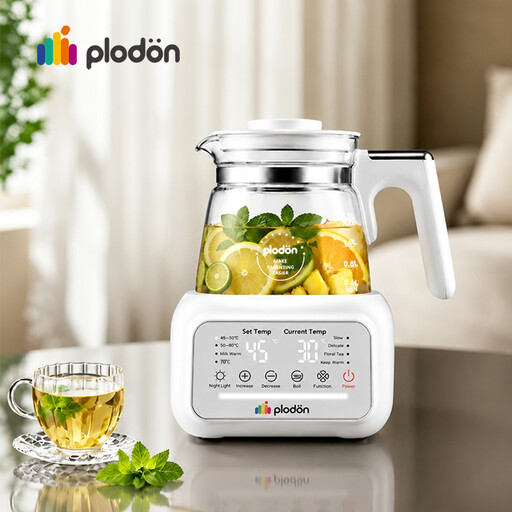
Why This Fits Their Persona: This model is designed for the demanding daily life of a family. It combines the precision required for baby formula with functions that also cover tea and wellness applications. The 1.3-litre volume is ideal for a family's daily needs.
The body, made of thick borosilicate glass, and the preset modes (including milk warming and dechlorination) address the pitfalls of material and precision issues. According to the manufacturer, the keep-warm function is designed for up to 72 hours, thus bypassing the typical short-lived nature of this feature.
The combination of a long keep-warm time, special programs like dechlorination and milk warming, and an integrated night light makes it a multifunctional wellness water boiler for 24-hour use.
Once you've achieved the ideal water temperature for your coffee with a precision kettle, the next logical step for many is creating perfect milk froth. A dedicated milk frother offers a level of control and quality that combination devices rarely achieve.
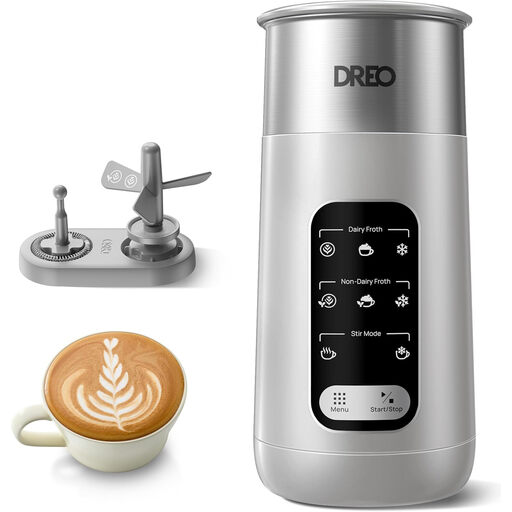
Why This Fits Their Persona: For anyone looking to take their coffee or matcha latte to the next level. This device specialises in creating hot or cold foam in various textures, including the fine microfoam required for latte art.
Instead of integrating a mediocre frothing function into a kettle, this specialised device offers precise control over foam type and temperature. It avoids the compromise that all-in-one devices often have to make.
The adjustable foam and temperature settings allow for the high consistency and quality of milk froth required for latte art. The stainless steel body is also durable and easy to clean.
For the perfect coffee or tea, choosing the right milk or milk alternative is also crucial. We have curated a selection of products that are ideal for hot beverages.
1. How often should you descale a glass kettle? The frequency depends on the water hardness in your area. In regions with hard water, it is recommended to descale the device every four to eight weeks. With soft water, cleaning every few months is sufficient. A visible limescale deposit at the bottom of the glass body is a clear sign that descaling is necessary.
2. Is borosilicate glass truly shatterproof? Borosilicate glass is not unbreakable, but it is significantly more resistant to thermal shock than regular glass. This means it can withstand rapid temperature changes without cracking. However, strong mechanical impacts, such as a hard knock against the sink, can still damage it.
3. Does a kettle with a keep-warm function use a lot of electricity? Power consumption depends heavily on the device's insulation and the duration of use. Modern, well-insulated models only require brief, periodic heating pulses to maintain the temperature, so consumption is moderate. However, poorly insulated models that have to reheat constantly can consume noticeably more energy.