
Lieferung heute & morgen

Qualitätsgarantie

Willkommens-Angebote freischalten: KOSTENLOSE Lieferung | Bis zu 80 % RABATT | Kostenlose 30-Tage-JoyPlus-Testphase
App herunterladen
Preparing tea, coffee, or baby formula requires more than just boiling water. The right temperature is crucial for flavour and quality. A glass kettle with temperature control promises this exact precision. However, not all models live up to their claims. Before you make a decision, it's important to understand the common pitfalls that can lead to a disappointing purchase.
To avoid these problems, you should check a few technical parameters before buying. These features determine the safety, longevity, and functionality of your appliance.
The centrepiece of a quality glass kettle is its body. Look for borosilicate glass. This material is extremely heat-resistant and impervious to sudden temperature fluctuations. It's also taste-neutral, ensuring your water retains its pure flavour. All components that come into direct contact with water—such as the base, the inner lid, and any tea infuser—should be made of high-grade stainless steel (e.g., SUS304). This prevents rust and the leaching of foreign substances. A device declared as BPA-free ensures that no harmful chemicals from plastic parts get into the water.
The core feature is degree-specific heating. A good glass kettle with temperature control offers multiple levels, typically between 40°C and 100°C.
An additional kettle with a keep-warm function is practical for maintaining the water at the selected temperature over a longer period. For tea lovers, an integrated, removable filter is a major advantage, turning the appliance into a fully-fledged electric tea maker with an infuser.
The size should match your needs. A 1-litre glass kettle is a great choice for one- to two-person households or the office. It's compact and heats water quickly. For families or if you often have guests, a model with a 1.7-litre capacity is more practical. The power, specified in watts, determines the boiling speed. Appliances with around 2200 watts bring water to a boil swiftly without excessively impacting your electricity bill. A glass kettle with LED lighting also provides a visual indicator of its operating status.
Here are some models that, based on objective features, are suitable for different user profiles.
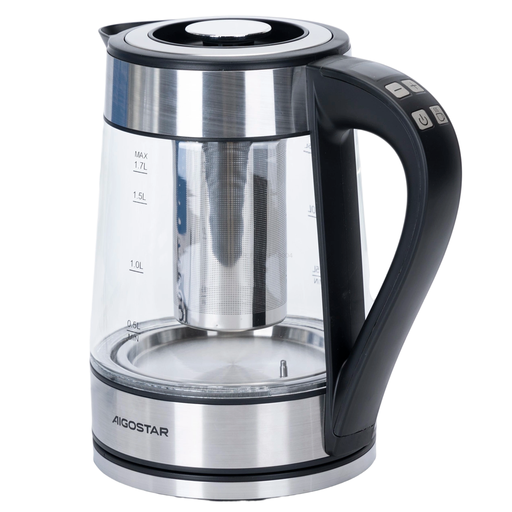
Why This Fits Their Persona: This model is aimed at users who refuse to compromise on the preparation of their hot beverages. The precise temperature selection and large volume are ideal for brewing various types of tea or the perfect cup of pour-over coffee.
The 13-step temperature control with a digital display directly addresses the problem of inaccurate settings. Its glass and stainless steel construction mitigates material risks.
Precise, multi-level temperature selection; integrated keep-warm function and a removable stainless steel tea filter.
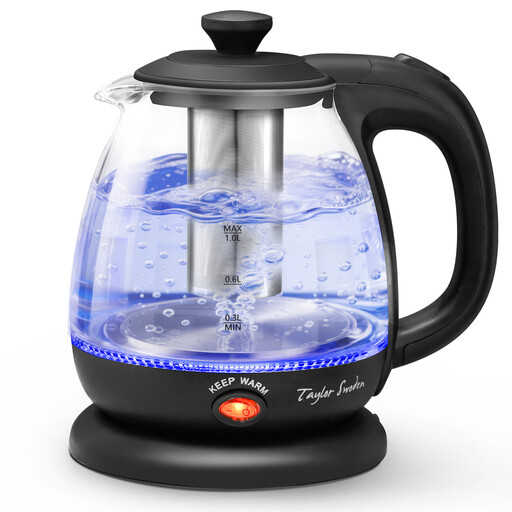
Why This Fits Their Persona: Ideal for small kitchens, the office, or individuals. This model combines a compact size with useful features for daily tea enjoyment, without unnecessary frills.
The borosilicate glass and BPA-free material construction ensures safety and taste neutrality. The dedicated keep-warm function provides a fixed, reliable temperature.
Compact 1-litre design, integrated stainless steel tea filter, and a keep-warm function (80–85°C).
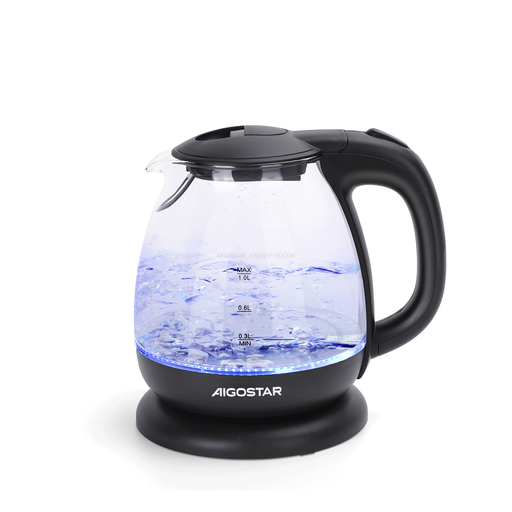
Why This Fits Their Persona: For users who value a clean aesthetic and high-quality, safe materials but don't need complex temperature settings. The focus is on fast, safe boiling in an attractive design.
This model focuses on avoiding material risks by using borosilicate glass and stainless steel. It deliberately forgoes complex electronics, offering reliable basic functions instead.
High-quality, LFGB-certified materials; blue LED illumination during the boiling process; automatic shut-off and boil-dry protection.
We have compiled a complete, up-to-date list of products that fully meet these strict selection criteria and German safety regulations.
To descale, fill the kettle with a mixture of water and white vinegar (in a 3:1 ratio) or a commercial descaling solution. Let the mixture sit for about an hour without boiling it. Afterwards, pour out the liquid and rinse the kettle several times with clean water. Finally, boil a full kettle of pure water and discard it to remove any remaining residue.
Borosilicate glass is not unbreakable, but it is significantly more resistant to thermal shock than regular glass. This means it can withstand high temperatures and rapid temperature changes (e.g., pouring cold water into a still-hot kettle) better without cracking. However, strong mechanical impacts, such as a hard knock or a fall, can still damage it.
The accuracy can vary depending on the model and manufacturer. High-quality devices with digital controls and precise sensors typically achieve an accuracy of +/- 2 to 5 degrees Celsius. Models with preset buttons for specific temperatures (e.g., 80°C) are often more reliable than those with stepless rotary dials. The displayed temperature usually refers to the measurement taken by the sensor, which is most often located at the base of the unit.