
Lieferung heute & morgen

Qualitätsgarantie

Willkommens-Angebote freischalten: KOSTENLOSE Lieferung | Bis zu 80 % RABATT | Kostenlose 30-Tage-JoyPlus-Testphase
App herunterladen
Choosing a reliable glass marker seems simple, but in practice, it quickly becomes clear which products stand out. Whether in the workshop, the lab, or for a creative project, an unsuitable pen leads to frustration: the marking smudges, is barely legible, or cannot be removed without damaging the surface. As your Joybuy Product Recommendation Officer, I'll help you avoid the common pitfalls and make an informed decision.
Many users invest in products that don't live up to their promises. Three problems are particularly common:
To avoid these problems, it's crucial to understand the fundamental properties of a marker and match them to your specific application.
Before you buy a glass painting pen or industrial marker, you should check three core factors. These determine reliability, legibility, and functionality.
The most important distinction lies in the durability of the marking. The choice depends entirely on your intended use.
The composition of the lead or ink has a direct impact on adhesion and application.
For a marking to be legible, opacity is crucial. A good glass pen must have a high pigment concentration to create a clear contrast on transparent or dark backgrounds. White, yellow, or other light colours are particularly demanding in this regard. Check product descriptions for terms like "high opacity" or "opaque," especially if you plan to write on dark metal, tinted glass, or black plastic.
Based on these criteria, we have identified products that are particularly well-suited for specific user profiles.
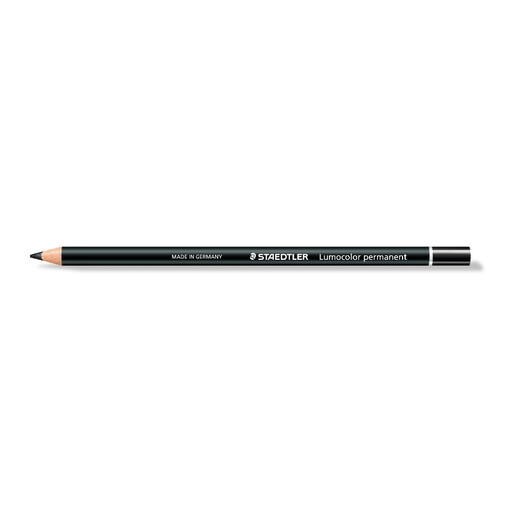
Why This Fits Their Persona: Users in industry and trade require an absolutely reliable, permanent marking that holds up even under harsh conditions. This pencil is designed for precisely this purpose.
The wax-based, water-resistant lead prevents smudging from moisture and adheres securely without beading. It doesn't dry out, ensuring it's always ready for use.
Adheres to almost any surface, including metal, glass, plastic, wood, and stone. The marking is lightfast and won't bleed through paper.
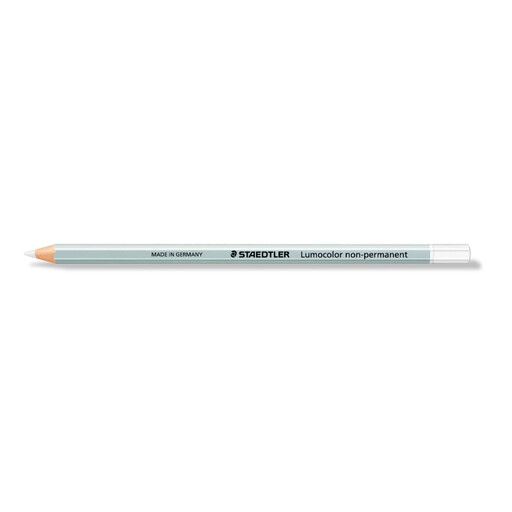
Why This Fits Their Persona: For users who need a highly visible but non-permanent marking. Perfect for labelling lab glassware that will be reused or for temporary marks in manufacturing.
It solves the problem of markings being 'too permanent.' The writing can be removed residue-free with a damp cloth, without scratching the surface. Its high opacity ensures excellent readability on dark surfaces.
Water-soluble lead for easy corrections. Offers high opacity and visibility on glass, plastic, and metal.
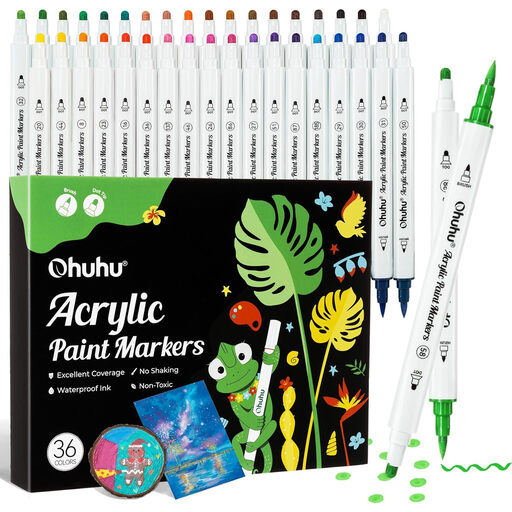
Why This Fits Their Persona: Creative users need a variety of colours, versatility, and high opacity for projects on different materials like glass, ceramic, wood, or canvas.
This set solves the problem of poor opacity and limited colour selection. The highly pigmented, water-based acrylic ink delivers vibrant, opaque results on both light and dark surfaces.
Each marker has a dual tip (brush and fine point) for maximum flexibility. The ink is low-odour and suitable for a wide range of surfaces.
We have compiled a complete, up-to-date list of products that fully meet these strict selection criteria.
1. How do you remove a water-resistant glass marker? For smooth, non-porous surfaces like glass, solvents such as isopropyl alcohol (rubbing alcohol) or denatured alcohol can be effective. For wax-based pencils (grease pencils), the marking can often be carefully removed with a ceramic hob scraper. It is recommended to test any cleaning method on an inconspicuous area first to ensure the surface is not damaged.
2. What is the difference between a glass marker and a regular permanent marker? The main difference lies in the formulation. Glass markers, especially wax-based glass pens, are specifically designed to adhere to extremely smooth, non-porous surfaces without beading up or rubbing off easily. The ink in standard permanent markers is often optimised for more porous surfaces like paper or cardboard and may not offer sufficient adhesion or durability on glass.
3. Do these pens also work on metal and plastic? Yes, most products sold as glass markers or multi-surface pencils are designed for a variety of smooth surfaces. These typically include metal, plastic, ceramic, porcelain, leather, and stone. Adhesion and durability can vary depending on the surface texture and material, so a quick test is always good practice.