
Lieferung heute & morgen

Qualitätsgarantie

Willkommens-Angebote freischalten: KOSTENLOSE Lieferung | Bis zu 80 % RABATT | Kostenlose 30-Tage-JoyPlus-Testphase
App herunterladen
As a Joybuy Product Recommendation Officer, I see every day how challenging it can be to select the right tool. Especially for smooth surfaces like glass, metal, or plastic, choosing the right marker is crucial. An unsuitable choice often leads to smudged results, poor adhesion, or markings that either can't be removed or fade too quickly.
This guide is designed to offer you clear direction. We will analyse the essential properties of glass markers and present a selection of products for various applications—from creative DIY projects to industrial labelling tasks. Our goal is to provide you with an informed basis for your decision, helping you find the perfect marker for your needs.
The search for the right marker for glass can be complex. To simplify your choice, consider three key criteria that make the difference between a frustrating and a successful outcome.
The durability of the mark is the most important distinguishing feature.
The marker's composition determines its opacity, colour vibrancy, and adhesion properties.
Define the primary purpose. Do you need a wide range of colours and various tips for an art project? Or do you need a single, extremely durable marker for labelling tools? For creative work, sets with brush tips and many colours are ideal. For functional labelling at home or in the workshop, single, purpose-built markers are often the more practical and economical solution.
Based on the criteria above, we have compiled a selection of products that cover a range of different needs.
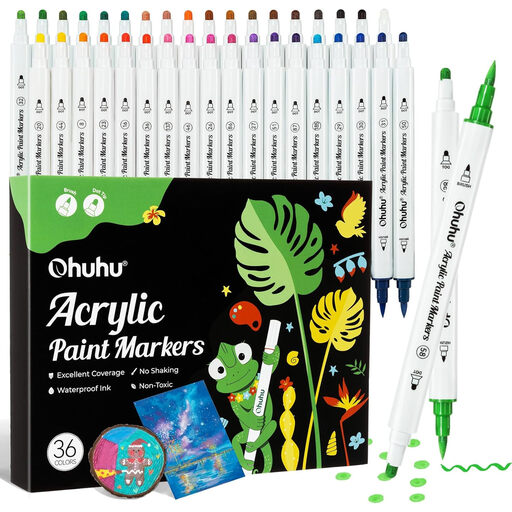
Why This Product Stands Out This set stands out for its versatility. With 36 colours and two different tips per marker, it offers a broad spectrum of creative possibilities. The water-based ink is low-odour and provides excellent coverage.
Pros
Who Is This Product For? This set is an excellent choice for artists, crafters, and DIY enthusiasts who want to create colourful and detailed projects on a variety of materials, including glass.
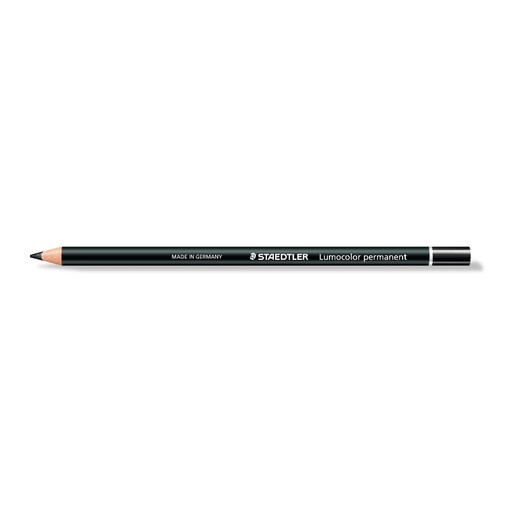
Why This Product Stands Out The Glasochrom is a special-purpose pencil with a wax-based lead, developed for professional use. Its strength lies in its ability to adhere to surfaces where conventional markers fail.
Pros
Who Is This Product For? Ideal for professionals in industry, trades, and labs who need durable and reliable marking on glass, metal, or plastic. It is also an interesting option for artists working on dark paper or films.
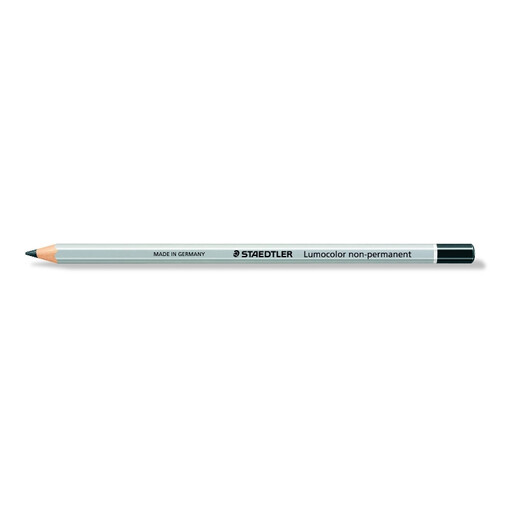
Why This Product Stands Out This pencil is the erasable version of STAEDTLER's special-purpose marker. It offers the same excellent adhesion on smooth surfaces but can be removed effortlessly.
Pros
Who Is This Product For? Perfect for anyone looking for a temporary yet highly visible labelling solution. Whether for marking lab samples, organising plastic boxes, or taking notes on a glass wall, this pencil is a practical tool.
The selection presented here already covers many common use cases. However, if you are looking for other colours, specific line widths, or other specialty markers, it's worth exploring our broader range.
Discover a wider variety in our Glass Pencils category.
1. How can you remove permanent glass markers? Removal depends on the marker type. Ink-based permanent markers can often be removed with solvents like isopropyl alcohol or acetone. For wax-based, permanent leads like the Glasochrom, mechanical removal (e.g., with a glass scraper) or a special solvent may be necessary. It is recommended to test the method on an inconspicuous area first.
2. Are glass markers food-safe? As a rule, glass markers are not certified as food-safe unless explicitly stated by the manufacturer. Therefore, markings should only be applied to the outside of drinking glasses or food containers and should not come into contact with food or the mouth.
3. Do regular permanent markers work on glass? Yes, conventional permanent markers do write on glass, but their adhesion and durability are often lower than that of specialised glass markers. They can smudge more easily and may fade upon contact with moisture or through abrasion. For a reliable and long-lasting result, a dedicated marker for glass is the better choice.