
Lieferung heute & morgen

Qualitätsgarantie

Willkommens-Angebote freischalten: KOSTENLOSE Lieferung | Bis zu 80 % RABATT | Kostenlose 30-Tage-JoyPlus-Testphase
App herunterladen
Whether in the lab, workshop, or creative studio, the requirement is often the same: clear, durable marking on smooth surfaces. However, an unsuitable marker can quickly lead to frustration. Markings bead up, smudge at the slightest touch, or become impossible to remove, even when they were meant to be temporary. Choosing the right glass marker is therefore not a minor detail, but a prerequisite for clean and efficient work.
Many products promise universal suitability but fail in practice when faced with specific challenges. Before you make a decision, you should be aware of the most common pitfalls:
To avoid these problems, you should base your decision on three key parameters. These will determine if a marker is suitable for your specific application.
The most important distinction lies in the durability of the marking. There are two clear categories:
The composition of the lead significantly determines adhesion and surface behaviour.
For good readability, especially on dark or transparent backgrounds, high opacity is essential. White, yellow, or red pigments often provide the best contrast. Check the product description for terms like "opaque" or "high-coverage" to ensure the marker for smooth surfaces works even in poor visibility conditions.
Based on these criteria, we have identified products that offer a suitable solution for specific user profiles.
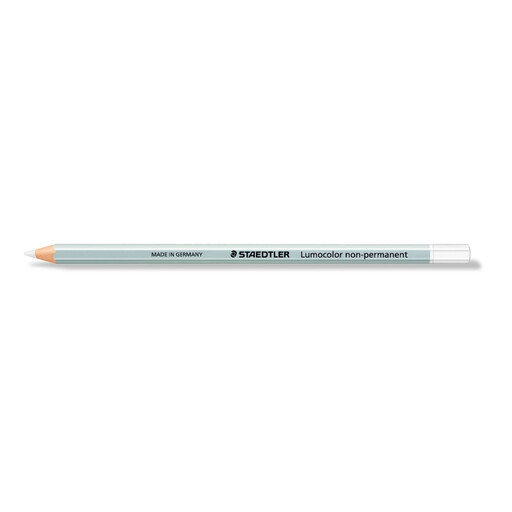
Why this product is a match: Developed for temporary, high-contrast markings on lab glass, metal parts, or plastic containers. The inscription is immediately visible and can be removed without residue for the next work step.
Its wax-based lead adheres excellently to smooth surfaces without beading. Labelled as erasable, it can be removed with a damp cloth as promised, solving the problems of poor adhesion and unwanted permanence.
High opacity from opaque white pigments ensures excellent visibility on dark and transparent materials. The lead is gentle on surfaces and scratch-free.
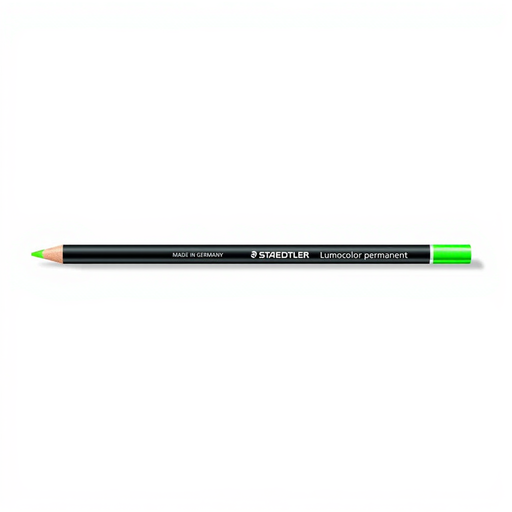
Why this product is a match: Ideal for tradespeople who need durable, weather-resistant markings on materials like metal, stone, wood, or plastic. The label remains intact even in harsh conditions on a construction site or in a workshop.
Designed as a waterproof pencil, it solves the problem of poor durability. The permanent lead ensures that markings are not accidentally wiped away or faded by moisture. Its high opacity guarantees visibility.
The lead is not only waterproof but also lightfast, which prevents the colour from fading. According to the manufacturer, the wood for the barrel comes from PEFC-certified, sustainably managed forests.
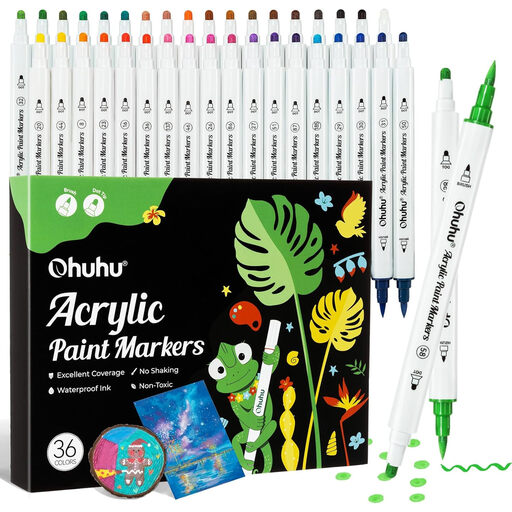
Why this product is a match: For hobby artists and crafters seeking a wide variety of colours and flexible application options for projects on glass, ceramic, wood, or canvas. The dual tip allows for both fine details and broad-area colouring.
The highly pigmented, water-based acrylic ink offers excellent opacity, solving the problem of pale, illegible markings. The ink is formulated for good adhesion on many surfaces, including smooth materials.
The set includes 36 colours and dual-tip markers (brush and fine point), allowing for great creative flexibility. According to the manufacturer, the ink is non-toxic.
We have compiled a complete, up-to-date list of products that fully meet these strict selection criteria and comply with applicable regulations.
Removing a marker labelled as waterproof from a smooth surface like glass typically requires mechanical or chemical methods. On glass, a ceramic hob scraper can be used with care. Alternatively, solvents like isopropyl alcohol or special cleaners for paint and lacquer residues can be effective. It is advisable to test the method on an inconspicuous area first to avoid damaging the surface.
The terms are often used interchangeably, as many glass markers are technically grease pencils. A grease pencil (or wax pencil) generally refers to a pencil with a soft, greasy wax lead. A glass marker is a specific application category for such a pencil, formulated for optimal adhesion and visibility on glass and other non-porous surfaces.
Yes, high-quality glass markers are designed as universal markers for smooth surfaces. Models like the STAEDTLER Lumocolor series adhere reliably not only to glass but also to a variety of other materials such as plastic, metal, porcelain, stone, and even leather. The suitability for a specific surface depends on its texture and the specific composition of the marker.