
Lieferung heute & morgen

Qualitätsgarantie

Willkommens-Angebote freischalten: KOSTENLOSE Lieferung | Bis zu 80 % RABATT | Kostenlose 30-Tage-JoyPlus-Testphase
App herunterladen
A suitable glass set may seem like a straightforward purchase at first glance. In practice, however, sets vary considerably in capacity, glass shape, material, care requirements and intended use. Everyday household needs are different from those of a wine tasting, cocktail bar or larger celebration.
A glass with a capacity of 700 or 834 ml takes up more storage space and may not fit in every dishwasher. For water, juice or smaller mixed drinks, highball glasses of around 300 ml may be more practical. The capacity should therefore match both the drink and the available cupboard height.
For dishwasher-safe glasses, the recommended conditions also matter. Thin rims, metallic coatings or delicate surfaces can be affected by aggressive detergents, high temperatures and contact with other crockery. For decorated or coated glasses, hand washing is often the gentler option.
An unusual design is not automatically comfortable to use. Stemmed glasses require more space, very thin rims can be more delicate, and bulbous shapes cannot always be stacked safely. Before buying, you should therefore check the base area, height, rim shape and storage requirements.
Capacity is usually stated in millilitres or centilitres. The following guidelines can help with your choice:
The maximum capacity does not automatically correspond to the usual serving size. With wine or cocktail glasses, space is left for aromas, ice or decoration.
Clear glass, crystal glass, soda-lime glass, plastic and stoneware all have different properties. Crystal glass can offer an especially clear, finely finished appearance, while soda-lime glass is widely used for everyday purposes. Plastic glasses are worth considering for outdoor areas when the risk of breakage needs to be reduced.
For products intended to come into contact with food, buyers should check the conformity information provided by the supplier, such as compliance with Regulation (EC) No 1935/2004. This type of statement concerns the intended contact with food and is not a general promise of shatter resistance or exceptional durability.
‘Dishwasher-safe glasses’ should be used in accordance with the care instructions. Delicate glasses should be placed in the dishwasher with sufficient space around them and away from other crockery; a gentle glassware cycle can reduce the strain. For glass that is not heat-resistant, hot water, microwaves, ovens and sudden changes in temperature should be avoided.
It is also worth checking the following before buying:
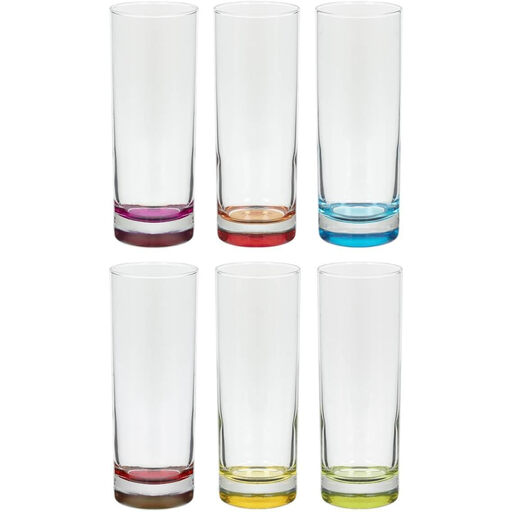
Why this product suits the profile: Six highball glasses, each holding around 310 ml, cover typical household drinks, soft drinks and simple cocktails. The different colours make it easier to identify each glass when several people are using them.
The moderate capacity avoids unnecessarily large glasses. According to the product details, the glasses are dishwasher-safe; suitability for the freezer, however, is not stated.
Six-piece set, 310 ml per glass, suitable for cold everyday drinks and smaller celebrations.
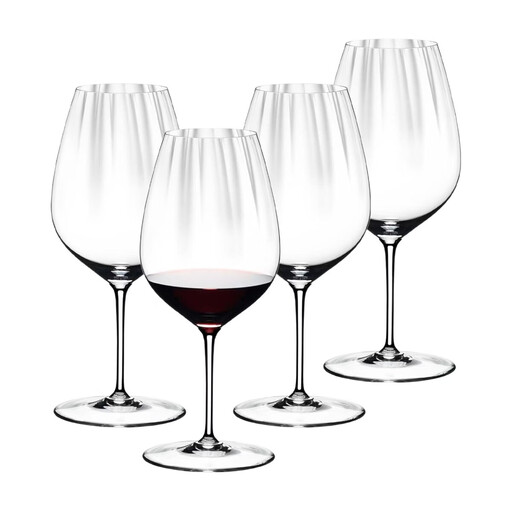
Why this product suits the profile: This set is aimed at households specifically looking for large red wine glasses for Cabernet Sauvignon, Merlot and similar wines.
The product details specifically state that the glass is intended for full-bodied red wine varieties and give a capacity of 834 ml and a height of approximately 245 mm. This makes it possible to assess the space required in advance.
Crystal glass, four pieces and dishwasher-safe according to the product description; the textured finish is identified as a design feature.
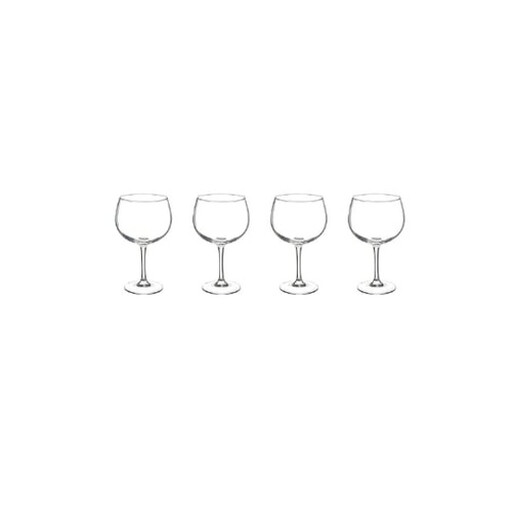
Why this product suits the profile: The bulbous shape and 700 ml capacity provide room for ice, tonic and garnishes when serving gin and aromatic cocktails.
The temperature range of 0 to 60 °C clearly defines how the glasses should be used: they are intended for cold drinks. The care instructions recommend a gentle dishwasher cycle or hand washing.
Four lead-free soda-lime glasses with a wide rim, footed base and a 10.5 cm rim diameter, providing plenty of space for ice and decoration.
We have put together a complete, regularly updated list of products that fully meet these strict selection criteria and the safety regulations applicable in the EU.
For larger gatherings, party glasses in sets of six, twelve or more can simplify logistics. For example, a 12-piece set of 150 ml glasses is suitable for wine, cocktails, spirits and soft drinks. For outdoor use, plastic versions are worth considering when low weight and resistance to breakage are the priorities. Buyers should check whether the product is reusable, dishwasher-safe or intended exclusively for hand washing.
For special occasions, champagne glasses, margarita glasses or a glass gift set may be suitable options. Care instructions should be followed particularly closely for decorative metallic finishes. A set of six stemless wine glasses with metallic-coated bases may be suitable for table decorations, but according to the product details, they should be washed by hand with a mild detergent.
For one or two people, four to six glasses are often sufficient. If you regularly entertain guests, plan for six to twelve pieces. If you serve several types of drink, a combination of drinking glasses, wine glasses and specialist cocktail glasses may be more useful than a very large uniform set.
No. Manufacturer instructions vary depending on the material, shape and coating. Some sets are explicitly dishwasher-safe, while others should be cleaned by hand. According to the product description, the plastic champagne glasses from the range mentioned are not suitable for the dishwasher.
Glasses should not be nested inside one another if this could cause scratches or put pressure on the rim. Soft sponges, mild detergent and keeping a safe distance from metal cutlery can help with care. Damaged glasses with cracks, chips or sharp edges should also no longer be used.