
Lieferung heute & morgen

Qualitätsgarantie

Willkommens-Angebote freischalten: KOSTENLOSE Lieferung | Bis zu 80 % RABATT | Kostenlose 30-Tage-JoyPlus-Testphase
App herunterladen
A well-organised kitchen not only simplifies daily life but also helps keep food fresh for longer and reduces waste. For those looking to avoid plastic, glass storage containers offer a durable and hygienic alternative. But the selection is vast, ranging from stackable food containers to decorative storage jars with wooden lids.
This article serves as a guide. We will introduce different types of glass containers and explain which features are relevant for various uses. Our goal is to provide you with a solid basis for making an informed decision when choosing the right storage jars for your kitchen.
Before you decide on a model, a few criteria can help with your selection. Functionality largely depends on the material, lid type, and shape.
Most high-quality glass food containers are made of borosilicate glass. This material is particularly resistant to thermal shock, which means many containers are oven-safe (without the lid). It is also odour- and taste-neutral and does not absorb stains.
The lid is crucial for functionality. A glass container with a lid should have a secure locking mechanism to protect its contents. Common variants include:
To make the most of space in cupboards, drawers, or the refrigerator, stackable containers are a practical solution. Rectangular or square containers can usually be arranged more efficiently than round ones. Some models feature a specially designed lid rim that allows for the secure stacking of multiple containers, ensuring stability and order.
Here is a selection of different glass containers, each suited for different needs due to their specific features.
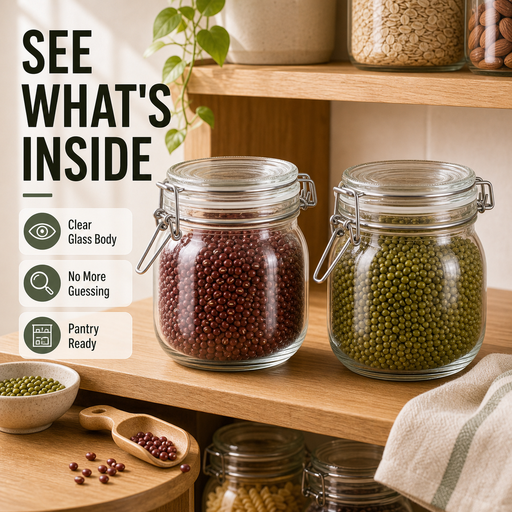
What makes it stand out: This storage jar set combines borosilicate glass with a classic stainless steel clip-top closure. In conjunction with the food-grade silicone sealing ring, the closure provides reliable airtight protection from moisture and pests. The transparent glass allows for a quick view of the contents at all times.
Advantages:
Who it's for: For those seeking a proven and highly secure storage solution for their dry goods in the pantry and who value a robust closure.
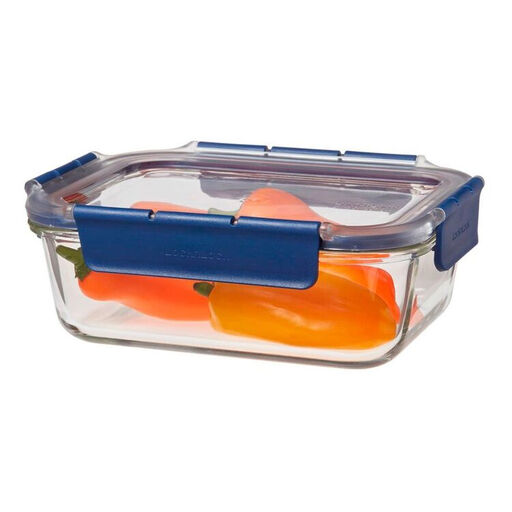
What makes it stand out: This food container from Lock&Lock is an all-rounder for the modern kitchen. The borosilicate glass container is oven-safe up to 400°C (without the lid). The Tritan plastic lid is shatter-resistant and features a 4.8 mm raised edge that allows for exceptionally stable stacking. The patented 4-sided locking system ensures a completely airtight and watertight seal.
Advantages:
Who it's for: Ideal for users who practice meal prep, store leftovers, or want to take dishes straight from the oven to the table. A versatile container for the fridge, freezer, microwave, and oven.
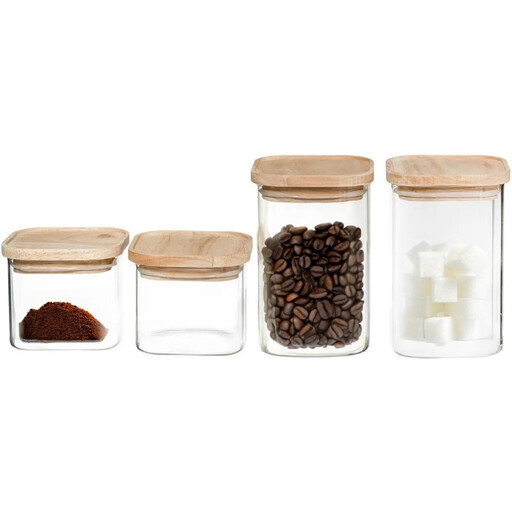
What makes it stand out: This storage jar set, with four 1-litre containers, focuses on an appealing aesthetic. The combination of transparent borosilicate glass and Hevea wood lids creates a natural and warm look in the kitchen. The lids are fitted with a seal to keep dry foods like pasta, rice, or sweets fresh.
Advantages:
Who it's for: For anyone looking for a uniform and decorative solution for storing dry foods and who values a natural kitchen aesthetic.
The products featured cover common use cases. Are you looking for more specialised solutions, for instance, for your spice collection? Discover a wider selection of glass spice jars and find the perfect addition to your kitchen.
1. Are glass storage containers dishwasher-safe? Most glass bodies, especially those made of borosilicate glass, are dishwasher-safe. However, caution is advised with the lids. Plastic lids are often suitable for the top rack of the dishwasher, while lids made of wood or bamboo should be cleaned by hand to prevent material damage. It is always wise to follow the manufacturer's care instructions.
2. What is the advantage of borosilicate glass in food containers? Borosilicate glass is resistant to rapid temperature changes (thermal shock). This makes it possible to take a container from the refrigerator and heat it in the oven or microwave (without the lid). Additionally, the material is non-porous, meaning it does not absorb odours, flavours, or stains from foods like tomato sauce.
3. How can I tell if a glass container with a lid is truly airtight? An airtight seal is typically achieved through a combination of a flexible gasket (usually made of silicone) and a firm locking mechanism. Snap-lock lids that click into place on all four sides or clip-top lids create the necessary pressure on the gasket to effectively prevent air and moisture from getting in.