
Lieferung heute & morgen

Qualitätsgarantie

Willkommens-Angebote freischalten: KOSTENLOSE Lieferung | Bis zu 80 % RABATT | Kostenlose 30-Tage-JoyPlus-Testphase
App herunterladen
A glass storage container should bring order to your fridge, safely transport prepared meals and, depending on the model, allow you to freeze or reheat food. In practice, however, many containers don't live up to their intended use. Often, it's not the glass itself but the lids, seals and temperature changes that are the key weak points.
This buying guide from the Joybuy Product Recommendation Officer shows which specifications matter before you buy and which models suit different households and usage scenarios.
A glass container with a lid isn't automatically air-tight or leak-proof. What really counts is a continuous silicone seal and a closure that sits evenly on the rim. Multi-sided clip lids can be more practical for liquid foods than a loose-fitting wooden or plastic lid.
For storage jars for flour, rice or biscuits, a lid that keeps moisture out is often sufficient. For soups, dressings or carrying in a bag, a clearly leak-proof design should be specified.
A heat-resistant glass container cannot automatically go in the oven or microwave with its lid on. With many models, only the glass container itself is suitable for heat. Plastic lids and silicone seals must be removed before heating.
Even a temperature-resistant material can be damaged by a sudden temperature change. Putting a frozen container directly into a hot oven, or placing hot glass on a cold stone surface, can cause thermal shock.
A storage jar with a nominal capacity of one litre also needs extra space for the lid, rim and handling in the cupboard. For meal prep, shape also matters: rectangular or square meal prep glass containers are often more space-efficient to stack than round ones.
Before buying, you should check the internal and external dimensions against your fridge compartment, lunch box or kitchen shelf. Weight also plays a role if you're carrying them daily.
Borosilicate glass is used in several of the containers on offer. LocknLock's product details state a temperature resistance of up to 400 °C for certain models, always without the lid. This is a specific manufacturer claim, not a general feature of every glass container.
For a practical purchase, the following details are relevant:
For an air-tight glass container, a removable silicone seal should be mentioned. This makes cleaning easier and prevents residue from building up in hard-to-reach grooves. Multi-locking lids can be useful for a leak-proof glass container, especially for soups or sauces.
With wooden lids, bear in mind that depending on the model they may not be dishwasher-safe. The glass may be dishwasher-safe, while the lid and seal need to be cleaned separately or on the top rack.
A glass food container should be easy to empty and clean completely. Transparent interior surfaces make it easier to check the contents. For lids with a seal, a design that can be taken apart is helpful. Before resealing, all parts should be thoroughly dried, especially if you're storing dry foods like coffee, flour or spices.
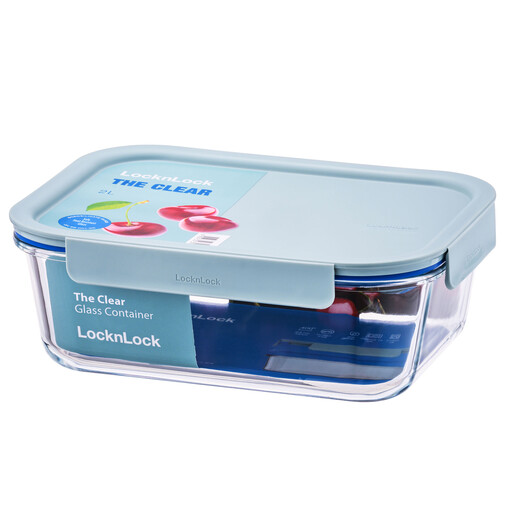
Why this product fits the profile: The 380 ml capacity is ideal for smaller portions, side dishes or leftovers. The rectangular shape measures 15 × 11 × 5.8 cm and is designed for the fridge, freezer and transport.
The product details mention an air-tight silicone seal and the need to remove the lid before heating.
380 ml, stackable design, suitable for oven, microwave and dishwasher without the lid.
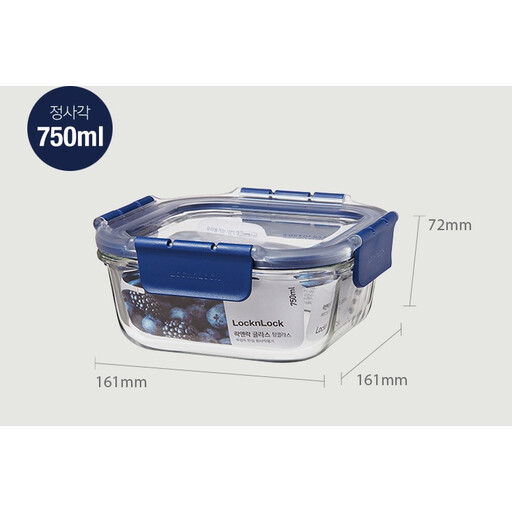
Why this product fits the profile: The square container combines a 750 ml capacity with a four-sided locking system. According to the product details, the glass container can be used up to 400 °C without the lid and is designed for the freezer down to −20 °C.
The closure with a silicone seal addresses the common weak point of loose-fitting lids. The lid is removed before heat applications.
Borosilicate glass, four-sided locking system, stackable shape and suitability for oven, microwave, freezer and dishwasher.
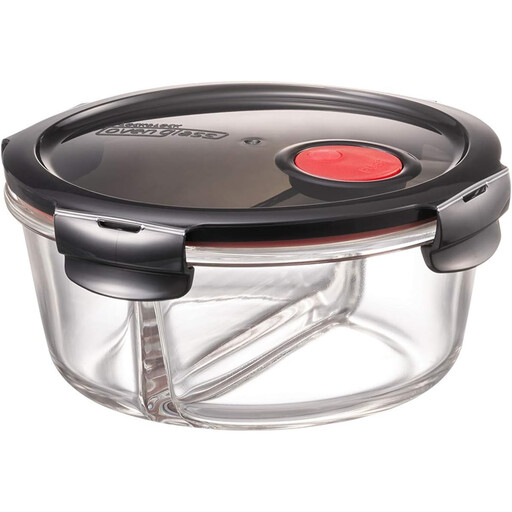
Why this product fits the profile: The round 900 ml container has an integrated divider, making it ideal for meals with two separate components. A steam vent in the lid is designed for microwave heating.
The product instructions clearly distinguish between microwave use with the steam vent open and oven use without the lid.
900 ml, divider, steam vent and suitability for oven, microwave, freezer and dishwasher.
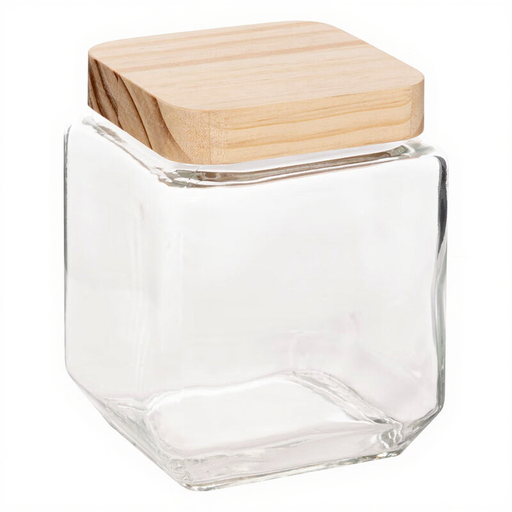
Why this product fits the profile: The square storage jar is designed for dry foods such as pasta, rice, spices and snacks. According to the product description, the pinewood lid has a silicone seal.
Its suitability is clearly focused on dry pantry goods. This avoids mistakenly using a wooden lid as a solution for liquid foods or heat applications.
1.25 l capacity, square shape, visible contents and dishwasher-safe glass.
We've put together a complete, regularly updated list of products that fully meet these strict selection criteria and the safety regulations in force in the EU.
That depends on the individual model. With the heat-resistant containers mentioned, the glass container is suitable for the oven and microwave according to the product details, but the lid must be removed. For microwave models with a steam vent, this must be opened. The manufacturer's instructions should be followed before each use.
The lifespan depends on impacts, scratches, temperature changes and care. Borosilicate glass is designed for certain temperature ranges but remains at risk of breakage. Containers with cracks, chips or damaged seals should not be used further. Replacement seals can extend the life of a lid, provided they are available for the model.
Glass can be reused repeatedly and, with proper cleaning, absorbs fewer odours or stains. However, it is heavier and can break. So the choice depends on the actual intended use, the durability of the seal and lid, and the likelihood of using the container regularly.