
Lieferung heute & morgen

Qualitätsgarantie

Willkommens-Angebote freischalten: KOSTENLOSE Lieferung | Bis zu 80 % RABATT | Kostenlose 30-Tage-JoyPlus-Testphase
App herunterladen
Rice, pasta, flour, sugar, coffee or biscuits can be stored neatly in transparent containers. Glass storage jars with airtight lids combine visible contents with a seal that reduces contact with air and moisture. But not every decorative storage jar suits every kitchen or every food item.
The label alone doesn’t explain how the lid seals. What matters is a silicone gasket, a hermetic seal, or a tightly closing lid with a clamp mechanism. With wooden lids, it should also be clearly stated that the gasket sits correctly and that the contact surfaces must remain clean and dry.
A glass kitchen container may look high-quality, but if the lid doesn’t fit properly, it can still let in moisture. This is particularly inconvenient for flour, sugar, tea or crispbread.
The litre measurement describes the volume of the container, not automatically the ideal amount of a particular food. A 0.4-litre jar, for example, is better suited to tea, spices, nuts or smaller baking ingredients. For pasta, rice or flour, 0.75 to 1.5 litres is often more practical.
Before buying, also check the external dimensions. Tall jars need enough clearance from shelf tops, while square shapes often make better use of the available shelf space.
Glass is easy to care for, but lids made of wood or bamboo usually need different treatment. With several models in the range, hand washing is recommended. Even if the glass body is dishwasher-safe, the wooden lid should be cleaned separately and dried thoroughly. If a damp lid is placed on a storage jar, condensation can form inside.
A glass storage jar should be intended for contact with food. Borosilicate glass is used in some models and is a practical material option for dry provisions. In normal use, glass does not absorb typical food odours and allows you to see the contents at a glance.
For decorative glass containers with embossed or engraved patterns, bear in mind that the surface can make cleaning more fiddly than with smooth glass. For frequently used foods like coffee or flour, easy access to the interior is therefore important.
Pay attention to the combination of lid material and seal:
Before closing, the glass rim and seal must be clean and dry. This is especially important for airtight storage jars for sugar, tea and baking ingredients.
Square containers can be arranged space-efficiently on straight shelves. Round shapes look decorative as a glass sweet jar or glass biscuit tin and are ideal for open shelves or worktops. Tall models offer plenty of volume with a small footprint, but can be impractical under wall cabinets.
For a pantry organiser, a consistent combination of sizes is recommended. Small jars suit tea, spices and nuts; medium containers for biscuits or sugar; and larger storage jars for rice or pasta.
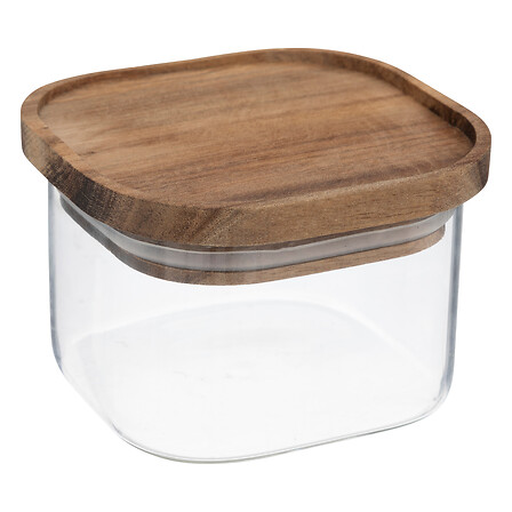
Why this product fits the profile: The 0.4-litre capacity is ideal for smaller quantities such as tea, nuts or spices. The square shape measures 11 x 11 x 7.4 cm and can be arranged on narrow shelves.
The product details mention an airtight seal and recommend drying the rim and lid before closing. It also explicitly advises against using a dishwasher and exposing it to extreme temperature changes.
Borosilicate glass, an acacia wood lid and a compact square design. According to the product description, the container is intended for dry foods.
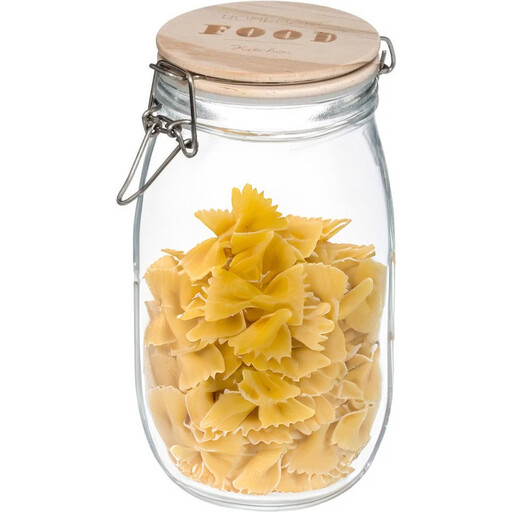
Why this product fits the profile: With a 1.5-litre capacity, this jar is designed for larger supplies such as rice, pasta, salt or sugar. The transparent body makes it easy to check stock levels in the pantry.
The product data lists silicone as the seal material and stainless steel for the clamp. This makes the seal construction clearer than with a purely decorative lid.
1.5-litre capacity, glass container with wooden lid and clamp mechanism. Care is by hand washing according to the details.
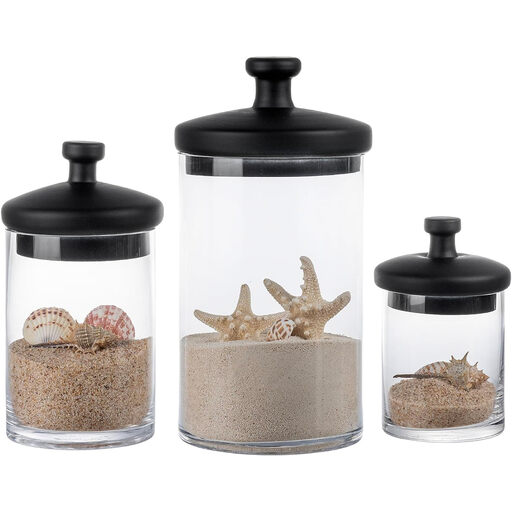
Why this product fits the profile: The set includes six jars and is designed for consistent organisation in the kitchen, bathroom or decorative displays. The black lid design suits both modern and neutrally decorated rooms.
The product description mentions thick clear glass, an airtight seal and hand washing. This clearly states the material, seal and care requirements.
Six containers in a set, transparent glass bodies and designated use for food, bathroom items or decoration.
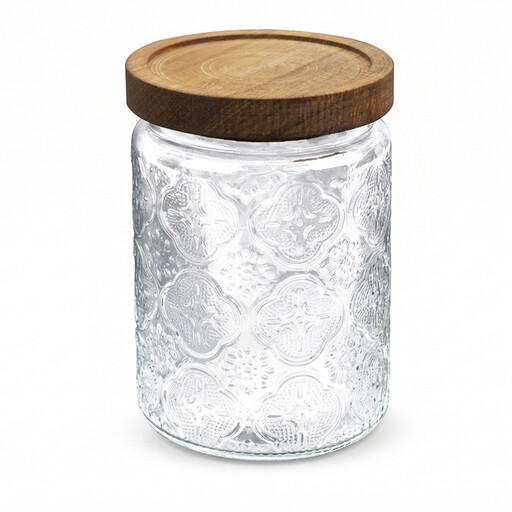
Why this product fits the profile: The 1,000 ml capacity combines decorative design with storage space for biscuits, coffee, pasta, flour or tea. The sunflower pattern is designed for open shelves and worktops.
The details specify an airtight seal, the volume and specific dry foods. It also advises hand washing the lid and drying it before closing.
1-litre capacity, food-safe clear glass and engraved sunflower decoration. According to the product details, the glass body can be cleaned separately.
We’ve put together a full, regularly updated list of products that fully meet these strict selection criteria and the safety regulations in force in the EU.
Only fill a storage jar when it is completely clean and dry. For dry foods, the container should not be permanently exposed to direct moisture or strong temperature fluctuations. Glass containers with wooden lids should generally not go in the dishwasher. Before first use, also check that the seal and lid are undamaged.
A label with the contents and purchase date makes rotation easier. This turns several storage jars for dry foods into a clear system rather than a collection of similar-looking containers.
Yes, provided the product in question is intended for dry foods and the lid closes properly. Flour and sugar should be added when dry. Before closing, the rim and seal must be free of any residue.
The glass body may be dishwasher-safe for some products, but the wooden or bamboo lid often is not. The manufacturer’s instructions for each product are what matter. Hand washing and then drying thoroughly protects the wooden parts from unnecessary moisture.
The lifespan depends on the glass thickness, seal, lid and how they are handled. With careful treatment, glass can be reused many times. Seals should be checked regularly for cracks, distortion and a secure fit. Damaged jars should no longer be used for food storage.