
Lieferung heute & morgen

Qualitätsgarantie

Willkommens-Angebote freischalten: KOSTENLOSE Lieferung | Bis zu 80 % RABATT | Kostenlose 30-Tage-JoyPlus-Testphase
App herunterladen
A glass teapot combines a clear view of the brewing process with a neutral material for everyday use. A glass teapot with infuser is particularly practical for loose-leaf tea: the tea leaves can unfurl in the water, while the transparent pot lets you see the colour and brewing process. Before buying, however, it is worth taking a closer look at details that can easily be overlooked in product images or marketing copy.
The Joybuy product recommendation team filters relevant information such as capacity, filter design, material and cleaning requirements. This makes it easier to choose a glass teapot to suit your household.
A specification such as 1-litre teapot usually describes the maximum capacity. In practice, the pot is not filled to the brim, as space is needed for the lid, filter and movement of the liquid when pouring. For two to three cups, an 800 ml teapot may be sufficient. Families or households with several people are better served by 1.1 to 1.5 litres.
An integrated infuser, a removable tea filter and a simple spout with a loose filter insert do not offer the same level of convenience. Check whether the filter can be removed, how fine the mesh is and whether it can be cleaned separately. For fine teas or smaller leaf particles, a fine-mesh tea filter is more practical than a coarsely perforated insert.
Even a borosilicate glass teapot should not automatically be placed on every heat source. Temperature changes, cold worktops or direct heating can put stress on the glass. The specific manufacturer’s instructions are what matter. Many transparent teapots are designed for use with hot water, but not on gas, electric or induction hobs.
Borosilicate glass is often used because of its resistance to temperature changes. This does not, however, make it completely shatterproof. A hot teapot should not be placed directly on a cold stone surface or filled with cold water. Also pay attention to the combination of materials: the lid, handle and filter are often made from stainless steel, bamboo, plastic or silicone and may have their own care instructions.
For loose-leaf tea, the filter should provide enough room. An insert that is too small can compress the leaves and make cleaning more difficult. A removable filter is useful when preparing different types of tea. For tea bags, on the other hand, a pot with a spacious interior and a well-fitting lid is often sufficient.
A dishwasher-safe teapot is only suitable for dishwasher cleaning if the manufacturer explicitly says so. The glass, filter, lid and seals may each have different requirements. A teapot with a bamboo lid will usually need to be washed by hand. Also check the opening: a wide neck makes it easier to remove tea residue and limescale.
A secure handle, a controlled-pour spout and a firmly fitting lid are more important in everyday use than purely decorative details. With a modern teapot, you should also make sure that its footprint suits your kitchen worktop or storage area. The dimensions in centimetres give you a better idea of its size than product photos alone.
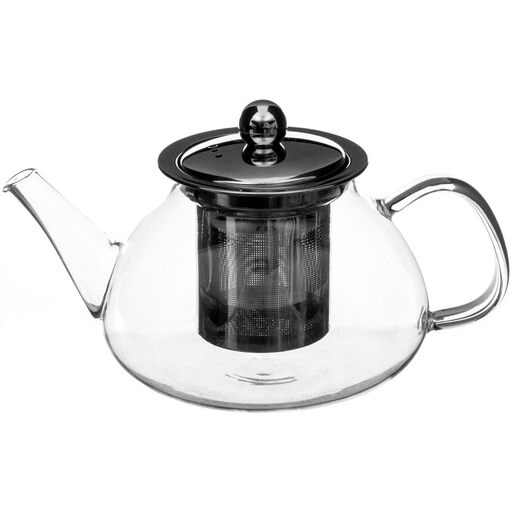
Why this product suits the profile: With a stated capacity of around 800 ml, this teapot is suitable for smaller households and two to three cups. According to the product description, a tea filter is included, and the pot is designed for both loose-leaf tea and tea bags.
The clearly stated capacity prevents a small serving pot from being mistaken for a family-sized model. Hand washing is explicitly specified.
Transparent glass, stainless steel components and an included filter; dimensions of approximately 21 × 14 × 11 cm.
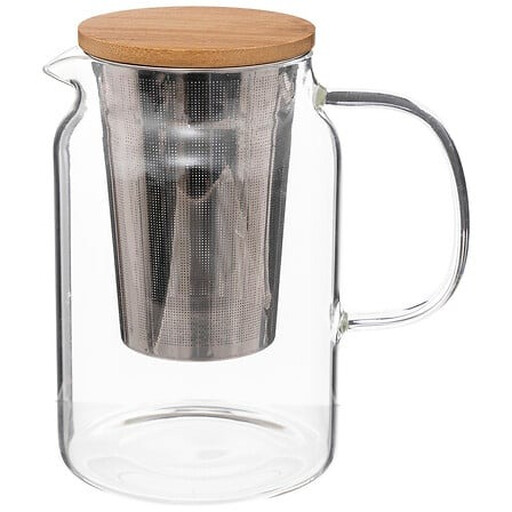
Why this product suits the profile: According to the product details, this teapot combines borosilicate glass with a bamboo lid and a filter. At 90 cl, it offers a little more capacity than 800 ml without being a large family-sized teapot.
The details list the components included in the set and point out that it should be hand-washed and protected from significant temperature changes.
Borosilicate glass, 90-cl capacity, plus a filter and bamboo lid included according to the description.
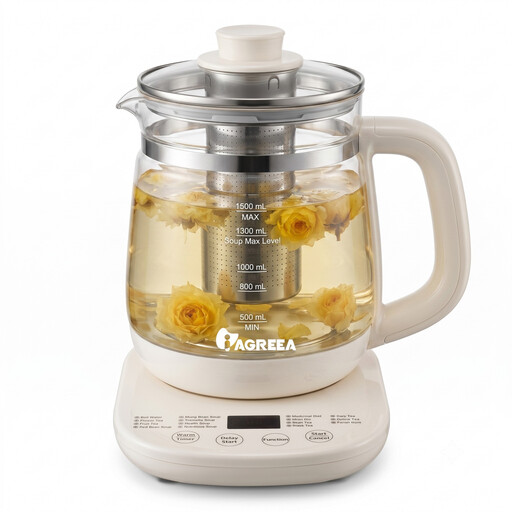
Why this product suits the profile: This electric glass appliance is aimed at households that want to prepare infusions and other hot drinks as well as tea. According to the product description, it has a 1.5-litre capacity, a removable stainless steel filter and several temperature settings.
The wider opening and removable parts make cleaning easier according to the product details. However, this is not a traditional serving teapot and requires a mains connection.
1.5-litre capacity, 800-W heating, removable stainless steel filter and six adjustable keep-warm temperatures according to the product description.
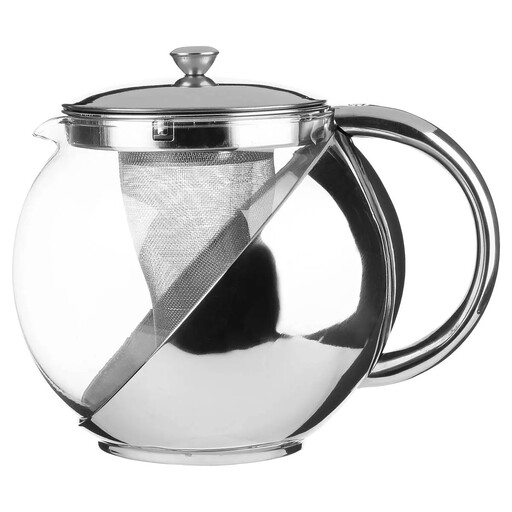
Why this product suits the profile: With a capacity of 1.1 litres, this teapot is suitable for several cups. The integrated stainless steel filter supports the preparation of loose-leaf tea at home, in the office or when serving guests.
The product details list the filter, material and capacity separately. They also warn against direct heat and sudden temperature changes.
1.1-litre capacity, transparent glass teapot, integrated stainless steel filter, plus stainless steel handle and lid according to the description.
We have put together a complete, regularly updated list of products that fully meet these strict selection criteria and the safety regulations applicable in the EU.
An 800 ml teapot is often sufficient for smaller households and around two to three cups. As the usable capacity may be lower than the maximum capacity, you should choose a teapot holding 900 ml to 1.1 litres if you use large mugs or are serving several people.
No. Suitability depends on the individual model and its separate components. Even if the glass is dishwasher-safe, the filter, bamboo lid or seals may be intended for hand washing only. The manufacturer’s instructions are decisive.
It is not possible to give a reliable fixed service life. It depends on the quality of the glass, frequency of use, cleaning and how temperature changes are handled. A teapot without cracks or chips can be used for a long time with proper care. It should no longer be used if there is any visible damage.